
Have you ever wondered about the crucial role that cowpox played in the development of vaccines? It may surprise you to learn that this unassuming virus, first identified in the 18th century, revolutionized the way we protect ourselves against infectious diseases. By exploring the fascinating history and groundbreaking discoveries surrounding cowpox, this article aims to shed light on the unsung hero that paved the way for modern vaccines. From its serendipitous discovery to its instrumental use in eradicating deadly diseases, cowpox proves that even the smallest and seemingly insignificant creatures can have a tremendous impact on human health. Get ready to be amazed by the extraordinary tale of cowpox and its contribution to vaccine development!
I. Introduction to Cowpox
A. Definition and History of Cowpox
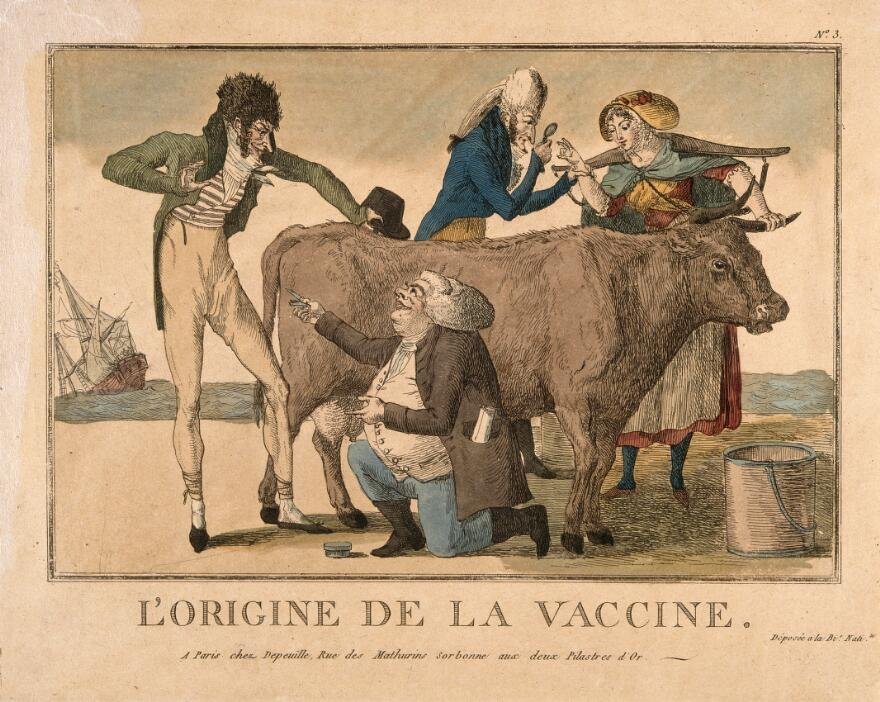
Cowpox is a viral disease that primarily affects cows and other animals, but can also be transmitted to humans. It belongs to the family of poxviruses and is characterized by the formation of lesions or sores on the affected animal’s udder or teats. Historically, cowpox was a common ailment among dairy cows, and it received its name from the Latin word “vacca,” meaning cow.
The earliest documented cases of cowpox in humans date back to the 18th century. It was during this time that farmworkers and milkmaids who regularly came into contact with infected cows started developing similar, milder skin lesions on their hands. These lesions were often painful but not life-threatening. Despite being a relatively mild disease, the significance of cowpox in the history of medicine cannot be undermined.
B. Transmission and Symptoms of Cowpox
Cowpox is mainly transmitted from infected animals to humans through direct contact with the lesions or through respiratory droplets. The virus can also be spread indirectly through contaminated objects, such as milking equipment. In humans, the initial symptoms of cowpox typically appear within 3 to 4 days of exposure and include localized redness, swelling, and the formation of a small blister. Over time, the blister develops into a crusty sore, which eventually heals, often leaving a scar. Although cowpox is generally self-limiting and resolves within a few weeks, it can cause more severe symptoms in individuals with compromised immune systems.
II. Discovery of Cowpox as a Vaccine
A. Edward Jenner’s Observations
The pivotal moment in the history of cowpox occurred when English physician and scientist Edward Jenner observed the immunity that milkmaids had acquired against smallpox after contracting cowpox. Jenner noted that these women, who previously suffered from cowpox, seemed to be protected from smallpox, a highly infectious and deadly disease of the time. Intrigued by this observation, Jenner embarked on a series of experiments to further investigate the link between cowpox and smallpox immunity.
B. Jenner’s Experiments with Cowpox and Smallpox
Jenner’s experiments led him to develop the concept of vaccination, a term derived from the Latin word “vacca” for cow. In his groundbreaking study, Jenner deliberately inoculated a boy, James Phipps, with fluid taken from a cowpox sore. After recovering from the cowpox infection, Jenner exposed the boy to smallpox. To his relief, James Phipps did not develop the symptoms of smallpox, indicating that the cowpox infection had conferred immunity against smallpox.
This discovery laid the foundation for the development of modern vaccines and revolutionized the field of immunization.

III. Mechanism of Cowpox Vaccination
A. Cowpox Virus and its Properties
The cowpox virus shares substantial genetic similarity with other poxviruses, including smallpox. However, cowpox is significantly less virulent and causes a less severe disease in humans. This reduced virulence makes cowpox an ideal candidate for vaccination purposes, as it can elicit an immune response without causing severe illness.
B. Immune Response to Cowpox
When a person is infected with cowpox, their immune system mounts a robust response, producing antibodies and immune cells that specifically target cowpox antigens. The immune response generated during the primary infection provides long-lasting protection against subsequent cowpox infections. Furthermore, due to the similarities between cowpox and smallpox, the immune response to cowpox also confers cross-protection against smallpox.
C. Cross-protection against Smallpox
The mechanism of cross-protection against smallpox is based on the concept of immunological memory. After vaccination with live cowpox virus or exposure to the natural cowpox infection, the immune system is primed to recognize and respond to similar antigens found in the smallpox virus. This cross-reactive immune response effectively protects vaccinated individuals from developing severe smallpox disease.
IV. Widely Recognized Cowpox Vaccination
A. Adoption of Cowpox Vaccination in Europe
Following Edward Jenner’s seminal work, the use of cowpox vaccination spread rapidly across Europe. The success and safety of the vaccine contributed to its widespread adoption. Vaccination campaigns targeted individuals at high risk of smallpox, such as healthcare workers and military personnel. These efforts led to a significant reduction in smallpox cases and, eventually, the eradication of smallpox globally.
B. Benefits and Success Rates
Cowpox vaccination demonstrated several significant benefits over previous vaccination methods. The vaccine’s effectiveness against smallpox was high, with research estimating a protection rate of around 95% in vaccinated individuals. Furthermore, it had a much lower rate of adverse effects compared to earlier inoculation techniques, reducing the risk of transmitting other infectious diseases.
C. Dissemination of Vaccination Technique
The success of cowpox vaccination sparked a global movement to adopt and disseminate the vaccination technique. Jenner’s findings and practices were widely disseminated through scientific publications and international collaborations, accelerating the implementation of vaccination programs in various countries. The introduction of cowpox vaccination had a profound impact on public health, paving the way for the development of future vaccines.

V. Cowpox Variants and Vaccine Improvements
A. Variations in Cowpox Strains
Over time, various strains of cowpox have been identified, which differ in their genetic makeup and virulence. These variants possess distinctive characteristics and may elicit varying degrees of immune response in vaccinated individuals. Scientists have continued to study and understand these variations to develop vaccines with improved efficacy and safety profiles.
B. Modern Methods of Cowpox Vaccine Production
Advancements in biotechnology and the genetic understanding of viruses have enabled the development of modern methods for producing cowpox vaccines. The original practice of inoculating individuals with fluid from cowpox sores has been replaced with standardized vaccine production techniques. These methods involve the propagation of specific cowpox strains in cell cultures or through genetic engineering approaches, resulting in consistent and purified vaccine formulations.
C. New Vaccines Derived from Cowpox
Building upon the knowledge gained from cowpox vaccination, researchers have developed new vaccines for diseases other than smallpox. Vaccines against related poxviruses, such as monkeypox and vaccinia virus, have been developed, leveraging the cross-reactivity and immune response observed during cowpox vaccination. These advancements highlight the far-reaching impact of cowpox research on vaccine development.
VI. Impact of Cowpox in Vaccine Development
A. Influence on Other Vaccines
The success of cowpox vaccination played a crucial role in shaping the field of vaccinology. It provided proof of concept that deliberate exposure to a milder pathogen could confer protective immunity against a more severe related infection. This concept laid the foundation for the development of numerous other vaccines, such as those against measles, mumps, rubella, and hepatitis, among others. The principles and lessons learned from cowpox vaccination continue to influence and guide vaccine development efforts today.
B. Lessons Learned from Cowpox Research
Cowpox research has provided invaluable insights into the intricacies of the immune system and the process of vaccination. Studying the immune response to cowpox has deepened our understanding of how vaccines work, including the mechanisms of immune memory, antigen recognition, and immune cell activation. These lessons have contributed to the refinement and improvement of vaccination strategies, aiding the development of more effective and targeted vaccines.
C. Acceleration of Future Vaccines
The impact of cowpox in vaccine development extends beyond the specific diseases for which vaccines were directly derived. The success of cowpox vaccination fueled optimism and confidence in the feasibility of vaccine development. This momentum has accelerated the discovery and development of vaccines against a wide range of infectious diseases, leading to significant advancements in public health worldwide.

VII. Controversies and Ethical Considerations
A. Ethical Dilemmas Surrounding Animal Research
The historical use of cowpox and other animal-derived viral strains in vaccine development has generated ethical debates. Animal welfare concerns, particularly in cases where animals are deliberately infected or sacrificed for research purposes, raise ethical dilemmas. However, advancements in cell culture techniques and genetic engineering have reduced the reliance on animal models in vaccine research, offering more ethical approaches to vaccine development.
B. Cowpox Eradication and Implications for Biodiversity
The widespread adoption of cowpox vaccination and subsequent eradication of smallpox have inadvertently impacted biodiversity. Smallpox, a natural host-specific virus, no longer circulates in the human population. Consequently, cowpox, which relies on a reservoir of small mammals for its survival, has also seen a decline in prevalence. The potential ecological consequences of disrupting this balance, particularly regarding the populations of small mammals, are areas of ongoing research and concern.
VIII. Future Prospects and Challenges
A. Potential Applications in Vaccination Strategy
The knowledge and lessons gained from cowpox research continue to shape future vaccination strategies. Cowpox-based vaccines have the potential to be adapted and utilized against emerging and re-emerging infectious diseases. The versatility of the cowpox virus and its ability to elicit cross-protective immune responses make it an attractive candidate for addressing new health challenges.
B. Addressing Vaccine Hesitancy and Misinformation
Despite the overwhelming evidence of the benefits and safety of vaccines, vaccine hesitancy and misinformation persist. Cowpox and its role in vaccine development provide an opportunity to educate the public about the positive impact of vaccination. By debunking myths and addressing concerns, health authorities and healthcare professionals can work towards increasing vaccine acceptance and combating vaccine hesitancy.

IX. Conclusion
Cowpox holds a significant place in the history of medicine and vaccine development. Edward Jenner’s groundbreaking work marked a turning point in our understanding of immunity and paved the way for the development of the first successful vaccine. Cowpox-based vaccination against smallpox demonstrated high efficacy, low adverse effects, and wide acceptance, resulting in the eradication of smallpox globally. The lessons learned from cowpox research continue to shape future vaccine strategies and contribute to the advancement of public health. As we move forward, we must address ethical considerations, leverage the potential of cowpox-based vaccines, and combat vaccine hesitancy to ensure the continued success of vaccination programs.