
Let’s talk about the latest advances in Ewing Sarcoma treatment for children. Ewing Sarcoma is a rare form of bone cancer that primarily affects children and adolescents. This article will provide an overview of the most recent breakthroughs in treatment options, highlighting the importance of early detection and personalized therapies. From targeted chemotherapy to immunotherapy, medical advancements are offering new hope for young patients and their families. So, let’s explore the cutting-edge strategies that are shaping the future of Ewing Sarcoma treatment for children.

Overview of Ewing Sarcoma
What is Ewing Sarcoma?
Ewing Sarcoma is a rare form of bone cancer that primarily affects children and adolescents. It is a type of cancer that arises in the bones or soft tissues around the bones, such as muscle or cartilage. Ewing Sarcoma most commonly occurs in the long bones of the body, such as the arms and legs, but it can also affect other bones like the ribs or pelvis. This aggressive tumor often spreads to other parts of the body, such as the lungs, before it is diagnosed.
Prevalence of Ewing Sarcoma in children
While Ewing Sarcoma is relatively rare, it is the second most common type of bone cancer in children and adolescents. It affects approximately 200 to 250 children and adolescents in the United States each year. Ewing Sarcoma can occur at any age, but it most commonly presents in individuals between the ages of 10 and 20, with a slight male predominance.
Symptoms of Ewing Sarcoma
The symptoms of Ewing Sarcoma can vary depending on the location and size of the tumor. Common symptoms include persistent pain and swelling in the affected area, limited range of motion, and fractures that occur with minimal trauma. Some individuals may also experience fever, weight loss, or fatigue. It is important to note that these symptoms may not be specific to Ewing Sarcoma and can resemble other conditions, so a thorough medical evaluation is necessary for an accurate diagnosis.
Diagnosis of Ewing Sarcoma
Physical examination and medical history
To diagnose Ewing Sarcoma, a healthcare provider will perform a physical examination and review the patient’s medical history. During the physical examination, the doctor will look for signs such as swelling, tenderness, or a palpable mass in the affected area. They will also ask about the patient’s symptoms, any previous injuries or illnesses, and whether there is a history of cancer in the family.
Imaging tests
Imaging tests are crucial in diagnosing and staging Ewing Sarcoma. X-rays, CT scans, MRI scans, or bone scans may be used to visualize the location and extent of the tumor. These tests help determine the size of the tumor, whether it has spread to other parts of the body, and whether the cancer has affected nearby structures.
Biopsy
A biopsy is necessary to confirm the presence of Ewing Sarcoma. During a biopsy, a small piece of tissue is removed from the tumor or affected area and analyzed under a microscope. This allows pathologists to examine the cellular characteristics of the tumor and determine if it is consistent with Ewing Sarcoma. The results of the biopsy will guide treatment decisions and help determine the stage and grade of the cancer.
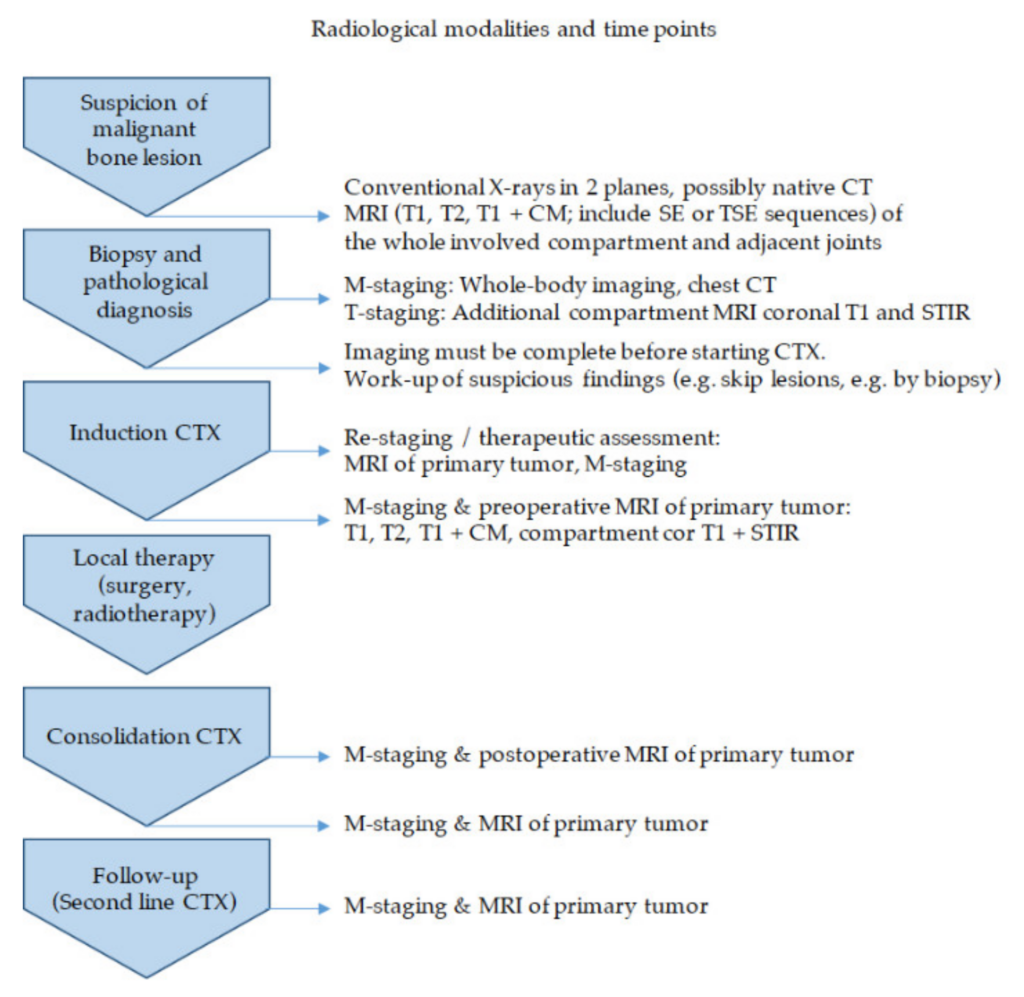
Standard Treatment Options
Chemotherapy
Chemotherapy is a cornerstone of treatment for Ewing Sarcoma. It involves the use of powerful drugs to kill cancer cells or prevent them from growing. Chemotherapy is usually administered before surgery to shrink the tumor or after surgery to kill any remaining cancer cells. High-dose chemotherapy may also be used in certain cases, followed by a stem cell transplant to restore healthy bone marrow.
Surgery
Surgery is often a crucial component of treatment for Ewing Sarcoma. Depending on the size and location of the tumor, surgical options may range from a simple biopsy to a limb-sparing surgery or amputation. The goal of surgery is to remove the tumor while preserving as much function and structure as possible. In some cases where the tumor has spread extensively or is in an inaccessible area, surgery may be limited to a biopsy or debulking procedure.
Radiation therapy
Radiation therapy uses high-energy beams to kill cancer cells or damage their DNA, preventing them from growing and dividing. It is often employed as part of the treatment plan for Ewing Sarcoma, either before or after surgery. Radiation therapy may help eliminate any residual cancer cells or reduce the risk of recurrence. However, it can also have long-term side effects, particularly in growing children, so careful planning and monitoring are crucial.
Targeted Therapies
Understanding the role of targeted therapies
Targeted therapies are a newer approach in the treatment of Ewing Sarcoma. These therapies work by targeting specific molecules or pathways that are involved in the growth and survival of cancer cells. By blocking these targets, targeted therapies can inhibit the growth of the tumor and potentially offer a more effective and less toxic treatment option. However, targeted therapies are still being studied in clinical trials, and their specific role in Ewing Sarcoma treatment is still evolving.
Tyrosine kinase inhibitors
Tyrosine kinase inhibitors are a type of targeted therapy that work by blocking the activity of proteins called tyrosine kinases, which are involved in cell signaling pathways. In Ewing Sarcoma, certain tyrosine kinases are overactive, promoting tumor growth and survival. By inhibiting these kinases, tyrosine kinase inhibitors can help slow down or stop the progression of the disease. Clinical trials are currently underway to evaluate the effectiveness of tyrosine kinase inhibitors in Ewing Sarcoma.
Immunotherapy
Immunotherapy is a promising treatment approach that harnesses the body’s immune system to fight cancer. It involves the use of drugs or other interventions to stimulate or enhance the immune response against cancer cells. In Ewing Sarcoma, immunotherapy aims to activate the immune system to recognize and attack the tumor cells. Several types of immunotherapy, such as immune checkpoint inhibitors and chimeric antigen receptor (CAR) T-cell therapy, are currently being explored in clinical trials for Ewing Sarcoma.

Emerging Treatment Approaches
Precision medicine
Precision medicine is a cutting-edge approach that tailors treatment based on the specific genetic characteristics of an individual’s tumor. By analyzing the genetic mutations and alterations unique to each patient’s cancer, doctors can select targeted therapies that are most likely to be effective. Precision medicine holds great promise for improving treatment outcomes in Ewing Sarcoma, as it allows for personalized and precise treatment strategies.
Gene therapy
Gene therapy is an innovative approach that involves introducing genetic material into a patient’s cells to correct or replace faulty genes. In Ewing Sarcoma, gene therapy aims to deliver therapeutic genes to tumor cells, making them more susceptible to treatment or triggering their destruction. While still in the early stages of development, gene therapy shows potential as a future treatment option for Ewing Sarcoma.
Nanotechnology
Nanotechnology involves the use of tiny particles or materials that are manipulated at the nanometer scale. In Ewing Sarcoma, nanoparticles can be designed to deliver drugs directly to the tumor site, enhancing their effectiveness and reducing systemic side effects. Additionally, nanotechnology can be utilized for tumor imaging or detecting cancer cells circulating in the blood. Although still in the experimental stage, nanotechnology holds promise for improving the diagnosis and treatment of Ewing Sarcoma.
Combination Therapy
Benefits of combination therapy
Combination therapy refers to the use of multiple treatment modalities simultaneously or in sequence. It is often employed in Ewing Sarcoma to maximize treatment effectiveness and minimize the risk of recurrence. By combining different treatment approaches, such as chemotherapy, surgery, radiation therapy, targeted therapies, or immunotherapies, doctors can target the tumor from multiple angles and increase the chances of a successful outcome.
Chemotherapy combined with targeted therapies
Some ongoing clinical trials are investigating the combination of chemotherapy and targeted therapies in the treatment of Ewing Sarcoma. The goal is to enhance the effects of traditional chemotherapy by adding targeted agents that specifically inhibit the growth or survival pathways of Ewing Sarcoma cells. These combination therapies have shown promising results in preclinical studies and are now being evaluated in clinical trials to determine their efficacy and safety.
Immunotherapy combined with radiation therapy
Combining immunotherapy with radiation therapy is another emerging treatment strategy for Ewing Sarcoma. Radiation therapy can induce immunogenic cell death, releasing tumor antigens and activating the immune system. By combining radiation therapy with immunotherapy, the immune response against the tumor can potentially be further boosted. Clinical trials are currently underway to investigate the safety and efficacy of this combination approach.

Promising Research and Clinical Trials
Advancements in understanding the genetics of Ewing Sarcoma
Significant progress has been made in understanding the genetic basis of Ewing Sarcoma. Researchers have identified specific genetic alterations and fusion genes that are characteristic of this disease. This knowledge has paved the way for targeted therapies and precision medicine approaches that specifically target these genetic abnormalities. Ongoing research aims to further unravel the genetic complexity of Ewing Sarcoma and develop more effective treatment strategies.
Novel drugs currently under investigation
Several novel drugs are currently being investigated in clinical trials for the treatment of Ewing Sarcoma. These drugs target specific molecular pathways or cellular processes involved in the growth and survival of cancer cells. By inhibiting these targets, they aim to inhibit tumor growth and increase treatment efficacy. The results of these trials will help determine whether these novel drugs can be adopted as part of standard treatment regimens for Ewing Sarcoma.
Use of immunotherapy in clinical trials
Immunotherapy has shown promise in the treatment of various cancers, and clinical trials exploring its use in Ewing Sarcoma are underway. These trials aim to evaluate the safety and efficacy of immunotherapeutic approaches, such as immune checkpoint inhibitors or CAR-T cell therapy, in patients with Ewing Sarcoma. Early results have demonstrated some exciting responses, highlighting the potential of immunotherapy as a valuable treatment option for Ewing Sarcoma.
Long-Term Side Effects and Supportive Care
Physical and psychological impacts
Ewing Sarcoma and its treatment can have long-term physical and psychological effects on patients. Physical side effects may include chronic pain, restricted mobility, growth abnormalities, and an increased risk of developing secondary cancers. Psychologically, survivors of Ewing Sarcoma may experience anxiety, depression, or post-traumatic stress disorder (PTSD) due to the diagnosis, treatment, and potential long-term impacts. Adequate support and follow-up care are essential to address these challenges and enhance the overall well-being of survivors.
Importance of survivorship care plans
Survivorship care plans have become an integral part of Ewing Sarcoma treatment. These plans outline the necessary follow-up care, surveillance for recurrence, and addressing long-term side effects and complications. Survivorship care plans not only help guide healthcare providers in delivering appropriate care but also empower survivors and their families to actively manage their health. It is essential to collaborate with a multidisciplinary team to develop a personalized survivorship care plan for each patient.
Supportive care options
Supportive care plays a vital role in managing the physical and emotional side effects of Ewing Sarcoma and its treatment. Palliative care, which focuses on improving the quality of life for patients and their families, may be integrated into the treatment plan early on. Supportive care options such as physical therapy, pain management, psychological counseling, and complementary therapies (e.g., acupuncture or art therapy) can help alleviate symptoms, promote healing, and enhance the overall well-being of patients.

Future Outlook for Ewing Sarcoma Treatment
Ongoing research and innovations
The future of Ewing Sarcoma treatment looks promising, with ongoing research and innovations continually shaping the field. Advances in understanding the genetics of Ewing Sarcoma, targeted therapies, immunotherapy, and combination therapies present exciting possibilities for improving treatment outcomes and survival rates. The ongoing collaboration between researchers, healthcare providers, and patients will contribute to further advancements and breakthroughs in Ewing Sarcoma treatment.
Improving treatment outcomes
Efforts are being made to improve treatment outcomes and reduce the side effects associated with Ewing Sarcoma therapy. Personalized treatment approaches, such as precision medicine and gene therapy, hold the promise of more effective and less toxic treatments. Combination therapies that target multiple pathways can potentially enhance treatment effectiveness. Additionally, ongoing research aims to identify predictive biomarkers or genetic signatures that can help tailor treatment decisions and improve overall outcomes.
Enhancing quality of life for Ewing Sarcoma survivors
Beyond achieving optimal treatment outcomes, there is a growing emphasis on enhancing the quality of life for Ewing Sarcoma survivors. Survivorship care plans, supportive care options, and ongoing surveillance for potential long-term side effects are integral components of comprehensive care. Psychosocial support, including counseling services and support groups, can help survivors and their families navigate the emotional and psychological challenges that arise during and after treatment. A holistic approach to care ensures that survivors receive the necessary support to thrive and live fulfilling lives.
Conclusion
Ewing Sarcoma is a rare but significant form of bone cancer that primarily affects children and adolescents. Traditional treatment options, such as chemotherapy, surgery, and radiation therapy, have been the mainstay of therapy. However, emerging treatment approaches, including targeted therapies, immunotherapy, and combination therapies, are showing promise in improving outcomes. Ongoing research and clinical trials aim to further refine treatment strategies and enhance the quality of life for Ewing Sarcoma survivors. With continued advancements and collaborative efforts, the future outlook for Ewing Sarcoma treatment holds great potential.