
If you’re someone who suffers from the discomfort and frustration of scalp psoriasis, you know all too well the impact it can have on your daily life. From the constant itching and flaking to the embarrassment and self-consciousness it can cause, finding an effective treatment is crucial. Luckily, there are a variety of treatment options available, including scalp psoriasis treatment creams. In this article, we will explore some of the most effective treatment options for scalp psoriasis, with a particular focus on the benefits and usage of scalp psoriasis treatment creams. So sit back, relax, and get ready to discover how you can finally find relief from the symptoms of this irritating skin condition.
Topical Treatments
Corticosteroids
Corticosteroids are commonly used in the treatment of scalp psoriasis. These medications work by suppressing the immune system and reducing inflammation. They come in various forms, including creams, gels, ointments, and foams. When applied to the scalp, corticosteroids effectively reduce redness, itching, and scaling associated with psoriasis. It is important to follow the instructions provided by your doctor, as prolonged use or high doses of corticosteroids can have side effects.
Vitamin D Analogues
Vitamin D analogues are another effective topical treatment for scalp psoriasis. These synthetic forms of vitamin D regulate the growth of skin cells and help to reduce inflammation. When applied to the scalp, vitamin D analogues can help to slow down the excessive skin cell production, leading to a decrease in scaling. They are available as ointments or creams and are typically used once or twice a day. Side effects are rare, but it is important to avoid excessive sun exposure when using these medications.
Retinoids
Retinoids are a class of medications derived from vitamin A that can be used topically to treat scalp psoriasis. These medications work by slowing down the growth of skin cells and reducing inflammation. When applied to the scalp, retinoids help to reduce scaling and discomfort associated with psoriasis. It is important to note that retinoids can cause skin irritation and increased sensitivity to sunlight, so it is essential to follow the instructions provided by your doctor.
Anthralin
Anthralin is a topical treatment option for scalp psoriasis that is believed to normalize DNA activity in skin cells, leading to a decrease in inflammation and scaling. It is usually applied as a cream, ointment, or paste and left on the scalp for a short period of time before being washed off. Anthralin can cause temporary skin irritation and staining of the scalp and hair, but these effects are usually reversible.
Topical Calcineurin Inhibitors
Topical calcineurin inhibitors, such as tacrolimus and pimecrolimus, are medications that work by modulating the immune system. They help to reduce inflammation and decrease the excessive skin cell production associated with scalp psoriasis. These medications are typically used as a second-line treatment when corticosteroids or other topical treatments have not been effective or are not suitable. Topical calcineurin inhibitors are available as ointments and have been found to be safe and effective for long-term use.
Shampoos and Ointments
Salicylic Acid Shampoos
Salicylic acid shampoos can be an effective treatment for scalp psoriasis, as they help to loosen and remove scales from the scalp. Salicylic acid is a keratolytic agent that works by softening the outer layer of the skin and promoting the shedding of dead cells. These shampoos are available over-the-counter and can be used in conjunction with other topical treatments. It is important to follow the instructions provided and avoid using salicylic acid shampoos on broken or irritated skin.
Coal Tar Shampoos
Coal tar shampoos have been used for many years as a treatment for various skin conditions, including scalp psoriasis. Coal tar has anti-inflammatory and anti-scaling properties, which help to alleviate the symptoms of psoriasis. These shampoos are available over-the-counter and can be used once or twice a week. It is important to note that coal tar can stain clothing and bedding, so it is advisable to cover the scalp with a shower cap while the shampoo is on.
Ketoconazole Shampoos
Ketoconazole shampoos are primarily used to treat fungal infections of the scalp, but they can also be beneficial for scalp psoriasis. Ketoconazole has anti-inflammatory properties and helps to reduce itching and scaling associated with psoriasis. These shampoos are available over-the-counter or with a prescription and can be used two to three times a week. It is important to follow the instructions on the label and consult a healthcare professional if there is no improvement after using ketoconazole shampoo for a few weeks.
Selenium Sulfide Shampoos
Selenium sulfide shampoos are commonly used to treat dandruff and seborrheic dermatitis, but they can also be effective for scalp psoriasis. Selenium sulfide helps to slow down the growth of skin cells and reduce inflammation. These shampoos are available over-the-counter and can be used twice a week or as directed by a healthcare professional. It is important to avoid contact with the eyes and seek medical attention if there is severe irritation or redness.
Salicylic Acid Ointments
Salicylic acid ointments can be applied directly to the scalp to help remove scales and reduce itching associated with psoriasis. These ointments work by softening the scales and promoting their shedding. Salicylic acid ointments are available over-the-counter and can be applied once or twice a day. It is important to avoid using these ointments on broken or irritated skin and to follow the instructions provided.
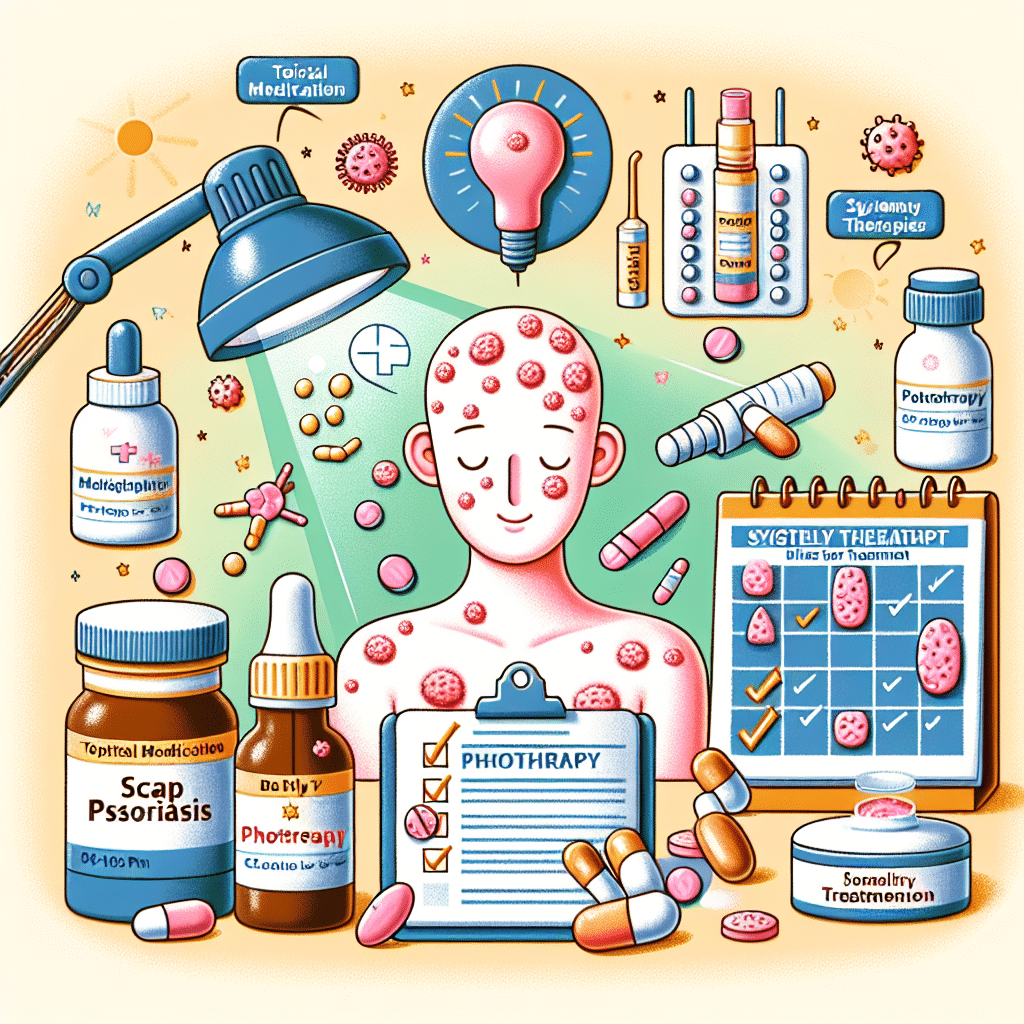
Systemic Medications
Methotrexate
Methotrexate is an immunosuppressant medication that can be taken orally or by injection to treat severe scalp psoriasis that has not responded to other treatments. It works by slowing down the growth of skin cells and reducing inflammation. Methotrexate is typically taken once a week under the supervision of a healthcare professional. Regular blood tests are necessary to monitor liver function while taking this medication, as it can have side effects.
Cyclosporine
Cyclosporine is an immunosuppressant medication that can be used to treat severe scalp psoriasis. It works by suppressing the immune system and reducing inflammation. Cyclosporine is usually taken orally and requires regular monitoring of blood pressure, kidney function, and liver function. This medication is not suitable for long-term use due to potential side effects, and it should be used under the supervision of a healthcare professional.
Acitretin
Acitretin is a retinoid medication that can be taken orally to treat severe scalp psoriasis. It works by slowing down the growth of skin cells and reducing inflammation. Acitretin is typically taken once a day and requires regular monitoring of blood lipids and liver function. Women of childbearing age should avoid becoming pregnant while taking acitretin, as it can cause birth defects.
Biologics
Biologics are a newer class of medications that can be taken by injection or infusion to treat moderate to severe scalp psoriasis. They work by targeting specific proteins in the immune system that are involved in the inflammatory response. Biologics are usually reserved for individuals who have not responded to other treatments or who cannot tolerate them. These medications require regular monitoring and should be used under the supervision of a healthcare professional.
Light Therapy
UVB Phototherapy
UVB phototherapy involves exposing the scalp to controlled doses of ultraviolet B (UVB) light to treat scalp psoriasis. This treatment works by slowing down the excessive skin cell production and reducing inflammation. UVB phototherapy can be administered in a hospital or clinic setting, or it can be done at home with a phototherapy unit prescribed by a healthcare professional. Regular sessions are necessary, and the duration and frequency of treatment will depend on the individual’s response and skin type.
PUVA (Psoralen plus Ultraviolet A) Therapy
PUVA therapy combines the administration of a photosensitizing medication called psoralen with exposure to ultraviolet A (UVA) light. Psoralen can be taken orally or applied topically to the scalp before UVA light exposure. This treatment helps to slow down the excessive skin cell production and reduce inflammation. PUVA therapy is usually administered in a hospital or clinic setting and requires regular monitoring. It is important to protect the eyes and genital area from exposure to psoralen and UVA light.
Excimer Laser
The excimer laser is a targeted light therapy option for scalp psoriasis that delivers high-intensity UVB light directly to the affected areas. This treatment helps to normalize the growth of skin cells and reduce inflammation. The excimer laser can be administered in a medical office or clinic and requires multiple sessions over a period of several weeks. It is a relatively quick and painless procedure, but certain precautions and protective measures are necessary.

Intralesional Steroids
Triamcinolone Acetonide
Triamcinolone acetonide is a corticosteroid medication that can be injected directly into the scalp to treat localized areas of psoriasis. It helps to reduce inflammation and alleviate symptoms such as redness, itching, and scaling. Intralesional steroid injections are typically performed by a healthcare professional in a medical office or clinic setting. Multiple injections may be necessary, depending on the severity and extent of scalp psoriasis.
Betamethasone
Betamethasone is another corticosteroid medication that can be injected into the scalp to treat localized scalp psoriasis. It works by reducing inflammation and suppressing the immune system. Betamethasone injections are typically administered by a healthcare professional in a medical office or clinic. The frequency and number of injections will depend on the individual’s response and the severity of the psoriasis.
Moisturizers and Emollients
Petroleum Jelly
Petroleum jelly is a commonly used moisturizer and emollient that can help to soothe and hydrate the scalp affected by psoriasis. It forms a protective barrier over the skin, preventing moisture loss and promoting healing. Petroleum jelly can be applied to the scalp after washing and gently massaged in for maximum absorption. Regular use can help reduce dryness and scaling associated with scalp psoriasis.
Coconut Oil
Coconut oil is a natural moisturizer that can help to alleviate the symptoms of scalp psoriasis. It has emollient properties, which means it helps to soften and soothe the skin. Coconut oil can be applied to the scalp before washing and left on for a few minutes. It can also be used as a leave-in treatment overnight. Regular use of coconut oil can help to reduce dryness, itching, and scaling associated with psoriasis.
Aloe Vera Gel
Aloe vera gel is known for its soothing and healing properties, making it a popular choice for scalp psoriasis treatment. It helps to reduce inflammation and itching, while also providing hydration to the scalp. Aloe vera gel can be applied directly to the scalp and gently massaged in. It can be used as a leave-in treatment or rinsed off after a few minutes. Regular use of aloe vera gel can help to improve the overall condition of the scalp.
Shea Butter
Shea butter is a rich and nourishing moisturizer that can help to alleviate the symptoms of scalp psoriasis. It has anti-inflammatory properties and helps to soothe and hydrate the scalp. Shea butter can be melted and applied to the scalp, focusing on the affected areas. It can be left on overnight or rinsed off after a few hours. Regular use of shea butter can help to reduce dryness, itching, and scaling associated with psoriasis.
Oral Retinoids
Acitretin
Acitretin is a retinoid medication that can be taken orally to treat severe scalp psoriasis. It works by slowing down the growth of skin cells and reducing inflammation. Acitretin is usually taken once a day and requires regular monitoring of blood lipids and liver function. Women of childbearing age should avoid becoming pregnant while taking acitretin, as it can cause birth defects.
Etretinate
Etretinate is another retinoid medication that can be taken orally to treat severe scalp psoriasis. It is similar to acitretin in its mechanism of action and requires similar monitoring and precautions. Etretinate is typically used as a last resort due to its long half-life and potential for long-term side effects.
Biologics
Adalimumab
Adalimumab is a biologic medication that can be administered by injection to treat moderate to severe scalp psoriasis. It works by targeting specific proteins in the immune system that are involved in the inflammatory response. Adalimumab is typically given every two weeks or once a month, depending on the individual’s response. Regular monitoring is necessary, and it should be used under the supervision of a healthcare professional.
Etanercept
Etanercept is another biologic medication that can be given by injection to treat moderate to severe scalp psoriasis. It works by blocking specific proteins in the immune system that contribute to inflammation. Etanercept is typically administered once or twice a week, depending on the individual’s response. Regular monitoring is necessary, and it should be used under the supervision of a healthcare professional.
Infliximab
Infliximab is a biologic medication that is administered by infusion to treat moderate to severe scalp psoriasis. It works by neutralizing specific proteins in the immune system that are involved in the inflammatory response. Infliximab is typically given in a hospital or clinic setting and requires regular monitoring. The frequency of infusions will depend on the individual’s response and the severity of the psoriasis.
Oral Medications
Methotrexate
Methotrexate is an immunosuppressant medication that can be taken orally or by injection to treat severe scalp psoriasis that has not responded to other treatments. It works by slowing down the growth of skin cells and reducing inflammation. Methotrexate is typically taken once a week under the supervision of a healthcare professional. Regular blood tests are necessary to monitor liver function while taking this medication, as it can have side effects.
Cyclosporine
Cyclosporine is an immunosuppressant medication that can be used to treat severe scalp psoriasis. It works by suppressing the immune system and reducing inflammation. Cyclosporine is usually taken orally and requires regular monitoring of blood pressure, kidney function, and liver function. This medication is not suitable for long-term use due to potential side effects and should be used under the supervision of a healthcare professional.
Apremilast
Apremilast is an oral medication that can be used to treat moderate to severe scalp psoriasis. It works by reducing inflammation and modulating the immune system. Apremilast is typically taken twice a day and requires regular monitoring of blood pressure and other laboratory parameters. It is important to follow the instructions provided by a healthcare professional while taking this medication.
Natural Remedies
Tea Tree Oil
Tea tree oil is a natural remedy that is believed to have anti-inflammatory and antifungal properties, making it beneficial for scalp psoriasis. It helps to reduce redness, itching, and scaling associated with psoriasis. Tea tree oil can be mixed with a carrier oil, such as coconut oil, and applied to the scalp. It is important to perform a patch test before using tea tree oil for the first time to check for any adverse reactions.
Apple Cider Vinegar
Apple cider vinegar is another natural remedy that is believed to have anti-inflammatory and antifungal properties. It can help to relieve itching and reduce scalp inflammation associated with psoriasis. Apple cider vinegar can be diluted with water and applied to the scalp as a rinse after shampooing. It is important to avoid using undiluted apple cider vinegar, as it can cause skin irritation.
Oatmeal
Oatmeal is well-known for its soothing properties and can provide relief from the itching and irritation caused by scalp psoriasis. Oatmeal can be added to a warm bath or used as a paste that is applied directly to the scalp. This natural remedy helps to moisturize and nourish the skin, reducing redness and inflammation.
Coconut Oil
Coconut oil is widely used for its moisturizing and soothing properties, making it a popular natural remedy for scalp psoriasis. It can be applied directly to the scalp to help reduce dryness, itching, and scaling associated with psoriasis. Regular use of coconut oil can help to improve the overall condition of the scalp and alleviate symptoms.
In conclusion, there are numerous treatment options available for scalp psoriasis, ranging from topical treatments and shampoos to systemic medications, light therapy, intralesional steroids, moisturizers, and natural remedies. It is important to consult with a healthcare professional to determine the most suitable treatment approach based on the individual’s specific needs and the severity of the condition. With the right treatment plan, scalp psoriasis can be effectively managed, providing relief from symptoms and improving overall scalp health.