
Have you ever wondered what causes burns and how they can be treated? In this article, we will explore the various causes of burns, ranging from thermal to chemical to electrical. We will also discuss the common symptoms associated with burns and the different treatment options available to alleviate the pain and promote healing. Whether you’ve experienced a burn yourself or simply want to be prepared in case of an emergency, this article will provide you with valuable information on burns and how to deal with them effectively.

Causes of Burns
There are several different causes of burns, which can be categorized into four main types: heat burns, chemical burns, electrical burns, and radiation burns.
Heat Burns
Heat burns are the most common type of burns and occur when the skin comes into contact with a hot object, such as boiling water, steam, or a flame. They can also be caused by exposure to extreme temperatures, such as a scorching hot surface or being out in the sun for too long.
Chemical Burns
Chemical burns occur when the skin or eyes come into contact with a corrosive substance, such as acids, alkalis, or solvents. These burns can be caused by accidents in the workplace, improper handling of chemicals, or even household cleaning products.
Electrical Burns
Electrical burns are caused by an electric current passing through the body. They can occur as a result of accidents involving electrical outlets, power lines, or exposed wiring. Electrical burns are particularly dangerous as they can cause internal injuries that may not be immediately apparent.
Radiation Burns
Radiation burns are less common but can be caused by exposure to various sources of radiation, such as the sun, X-rays, or radiation therapy for medical purposes. These burns can range from mild to severe, depending on the dose and duration of exposure.
Symptoms of Burns
Burns can vary in severity, and the symptoms experienced will depend on the degree of burn. Some common symptoms include:
Pain
Pain is one of the first symptoms to occur after a burn and is often an indicator of the severity of the burn. The pain may be mild, moderate, or severe, depending on the extent of the burn.
Redness
Redness is another common symptom of burns, particularly in the early stages. The affected area may appear red or pink, indicating inflammation and increased blood flow to the area.
Swelling
Swelling is a natural response to a burn and is the body’s way of protecting the affected area. When the skin is damaged, fluid and white blood cells accumulate in the area, causing swelling.
Blisters
Blisters are a sign of a more severe burn and occur when the outer layer of skin is damaged, causing fluid to accumulate beneath it. These fluid-filled blisters can be painful and may increase the risk of infection if they rupture.
Peeling Skin
As a burn begins to heal, the damaged skin may start to peel. This is a normal part of the healing process and should not cause alarm.
Shock
In severe burns, especially those covering a large area of the body, the body may go into shock. Symptoms of shock can include pale skin, rapid breathing and heartbeat, dizziness, and fainting. Immediate medical attention is necessary in cases of shock.

Classification of Burns
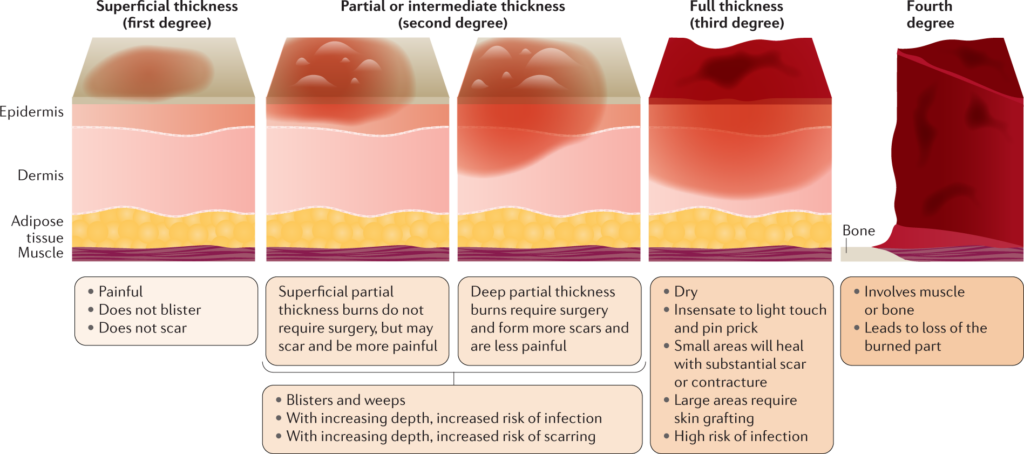
Burns are classified into four main degrees, depending on the depth and severity of the injury.
First-Degree Burns
First-degree burns are the mildest form of burns and only affect the outermost layer of skin, known as the epidermis. These burns usually result in redness, pain, and minor swelling. They can often be treated at home with appropriate first-aid measures.
Second-Degree Burns
Second-degree burns extend beyond the epidermis and involve the underlying layer of skin, known as the dermis. They are characterized by blistering, intense pain, swelling, and possible skin peeling. These burns require immediate medical attention.
Third-Degree Burns
Third-degree burns are the most severe and extend through all layers of the skin, including the fat, muscle, and possibly even bone. The burned area may appear leathery or charred and may be painless due to nerve damage. Third-degree burns require emergency medical treatment.
Fourth-Degree Burns
Fourth-degree burns are rare but involve damage to not only the skin but also the underlying structures, such as muscles, tendons, and bones. These burns are life-threatening and require immediate medical attention.
Immediate First-Aid for Burns
When a burn occurs, it is crucial to provide immediate first-aid to minimize further damage and promote healing. Here are some essential steps to take:
Remove the Source of Heat
If the burn was caused by flames or a hot object, remove the source of heat to prevent further injury. Move away from open flames and extinguish any burning clothing or objects.
Cool the Burn
Immediately cool the burned area by gently running cool (not cold) water over it for at least 10 to 20 minutes. Avoid using ice or very cold water, as these can further damage the skin.
Cover the Burn
Once the burn has been cooled, cover it with a clean, sterile dressing or non-stick bandage to protect the area from infection. Do not use adhesive bandages directly on the burned area as they may stick to the skin and cause further damage.
Do Not Use Ice or Cold Water
As mentioned earlier, using ice or very cold water can be detrimental to the healing process. These extreme temperatures can cause further damage to the skin and underlying tissues.
Do Not Pop Blisters
While it may be tempting to pop blisters that form as a result of a burn, it is important to resist the urge. Popping blisters can increase the risk of infection and slow down the healing process.

Medical Evaluation for Burns
In addition to immediate first-aid, burns should be evaluated by a medical professional to assess their severity and prevent complications. A thorough evaluation involves:
Assessment of Burn Severity
A healthcare professional will examine the burn and determine its depth and extent. This assessment helps guide treatment decisions and determines the need for specialized burn care.
Identification of Complications
Burns can lead to various complications, such as infection, scarring, and nerve damage. A medical evaluation will identify any potential complications and appropriate measures can be taken to prevent or manage them.
Prevention of Infection
Burns create an open wound that is vulnerable to infection. Medical professionals will prescribe or recommend appropriate antibiotics or other preventive measures to minimize the risk of infection.
Topical Treatments for Burns
Depending on the severity and degree of the burn, various topical treatments can be used to facilitate healing and alleviate symptoms. Some common topical treatments include:
First-Degree and Minor Second-Degree Burns
For mild burns, cool water and keeping the area clean and dry may be sufficient. Over-the-counter antibiotic ointments can also help prevent infection and promote healing.
Antibiotic Ointments
Antibiotic ointments, such as Bacitracin or Neosporin, are commonly used to prevent infection and promote healing in second-degree burns or wounds that are at risk of infection.
Silver Sulfadiazine Cream
Silver sulfadiazine cream is a widely used topical treatment for burns. It has both antibacterial and anti-inflammatory properties, making it effective in preventing infection and reducing pain.
Honey
Honey has natural antimicrobial properties and can be used as an alternative treatment for burns. It helps prevent infection and promotes healing. Medical-grade honey is recommended for this purpose.
Aloe Vera Gel
Aloe vera gel is known for its soothing and healing properties. When applied topically to burns, it can help reduce pain, inflammation, and aid in the healing process.

Systemic Treatments for Burns
In addition to topical treatments, systemic treatments may be necessary for more severe burns. These treatments are aimed at managing pain, preventing infection, and supporting overall healing.
Pain Medication
For moderate to severe burns, over-the-counter pain relievers may not be sufficient. Prescription pain medication may be required to manage pain effectively during the healing process.
Intravenous Fluids
In cases of extensive burns or burns that cover a large area of the body, intravenous fluids may be necessary to prevent dehydration and maintain hydration.
Tetanus Shot
If the burn is severe and there is a risk of tetanus infection, a tetanus shot may be administered to prevent this potentially serious bacterial infection.
Burn Creams and Dressings
In some cases, specialized burn creams and dressings may be used to facilitate healing and prevent infection. These products are often prescribed by a healthcare professional and tailored to the specific needs of the burn.
Wound Care for Burns
Proper wound care is crucial for the healing of burns. It involves cleaning the wound, debridement if necessary, grafting in severe cases, and appropriate dressing.
Cleaning the Wound
Regular cleaning with mild soap and water helps remove debris, prevent infection, and promote healing. Avoid using harsh cleansers or scrubbing the wound.
Debridement
In cases where dead or damaged tissue is present, debridement may be necessary to stimulate healing and prevent infection. Debridement can be done surgically or with the use of specialized dressings.
Grafting
For severe burns, skin grafts may be required to promote healing and minimize scarring. This involves taking healthy skin from another part of the body and transplanting it to the burned area.
Dressing the Wound
To protect the burn and promote healing, appropriate dressings should be applied. These dressings may include non-stick bandages, hydrogels, or specialized burn dressings.
Rehabilitation and Recovery
Following a burn injury, rehabilitation and recovery are important aspects of the healing process. Depending on the severity of the burn, different approaches may be taken to aid in recovery.
Physical Therapy
Physical therapy plays a vital role in restoring functionality and mobility after a burn. It involves exercises, stretches, and other interventions designed to improve strength, flexibility, and range of motion in the affected areas.
Psychological Support
Burn injuries can have a significant psychological impact, causing anxiety, depression, or post-traumatic stress disorder (PTSD). Psychological support, such as counseling or therapy, can help individuals cope with the emotional challenges associated with burn injuries.
Scar Management
Burns often result in scarring, which can have aesthetic and functional implications. Scar management techniques, such as massage, silicone sheets, or laser therapy, can help minimize the appearance of scars and improve their elasticity.
Functional Restoration
In more severe cases, where burns have caused loss of function or mobility, functional restoration may be necessary. This may involve additional surgical procedures, prosthetics, or assistive devices to maximize independence and quality of life.
Long-Term Complications and Management
Burn injuries can sometimes result in long-term complications that require ongoing management and treatment. Some of these complications include:
Scarring and Contractures
Severe burns often lead to significant scarring, which can restrict movement and cause contractures. Ongoing scar management techniques, physical therapy, and possible surgical interventions may be necessary to manage and minimize the impact of these complications.
Joint Stiffness
Burns that affect joints can lead to joint stiffness and limited mobility. Physical therapy, stretching exercises, and other interventions can help prevent and manage joint stiffness.
Psychological Effects
The psychological impact of burn injuries can be long-lasting. Ongoing counseling and support may be necessary to help individuals cope with the emotional challenges of their burn trauma.
Burn Prevention
One of the most important aspects of managing long-term complications is burn prevention. By taking necessary precautions and practicing burn safety, individuals can reduce the risk of future burn injuries and their associated complications.
In conclusion, burns can result from various causes, including heat, chemicals, electricity, and radiation. Their symptoms and severity can vary, and immediate first-aid measures should be taken to cool and cover the burn. Medical evaluation is necessary to assess the severity, identify complications, and prevent infections. Topical and systemic treatments, wound care, and rehabilitation play crucial roles in promoting healing and minimizing long-term complications. Remember, prevention is key to avoiding burn injuries, and practicing burn safety is essential for everyone’s well-being.