
In the world of healthcare, it is important for nurses to be well-versed in the various conditions they may encounter while caring for their patients. Hyperthyroidism, a condition characterized by an overactive thyroid gland, is one such condition that requires careful nursing considerations and management. This article aims to provide nurses with valuable insights and strategies to effectively care for individuals with hyperthyroidism, ensuring the best possible outcomes for their patients. From monitoring vital signs to educating patients on medication management, this article covers all aspects of nursing care for hyperthyroidism and equips nurses with the knowledge and tools necessary to provide exceptional care.

Assessment
Patient history
In assessing a patient with hyperthyroidism, it is crucial to obtain a comprehensive patient history. This includes gathering information about the client’s symptoms, medical history, and family history of thyroid disorders. Additionally, it is important to inquire about any history of thyroid surgeries or radioiodine therapy. Understanding the patient’s history will assist in formulating an appropriate care plan tailored to their specific needs.
Signs and symptoms
Hyperthyroidism is characterized by a variety of signs and symptoms that result from an overactive thyroid gland. These may include weight loss, increased appetite, heat intolerance, excessive sweating, anxiety, irritability, difficulty sleeping, palpitations, and menstrual irregularities. Other symptoms such as tremors, muscle weakness, and frequent bowel movements may also be present. Recognizing these signs and symptoms is essential in the diagnosis and management of hyperthyroidism.
Physical examination
The physical examination of a patient with hyperthyroidism should focus on assessing for specific clinical manifestations associated with the condition. These may include an enlarged thyroid gland (goiter), rapid heart rate (tachycardia), irregular heart rhythms (arrhythmias), fine tremors, increased reflexes, and warm and moist skin. Additionally, the nurse should assess for any signs of thyroid eye disease, such as protruding or bulging eyes. A thorough physical examination aids in confirming the diagnosis and guides appropriate management.
Diagnostic evaluation
Laboratory tests
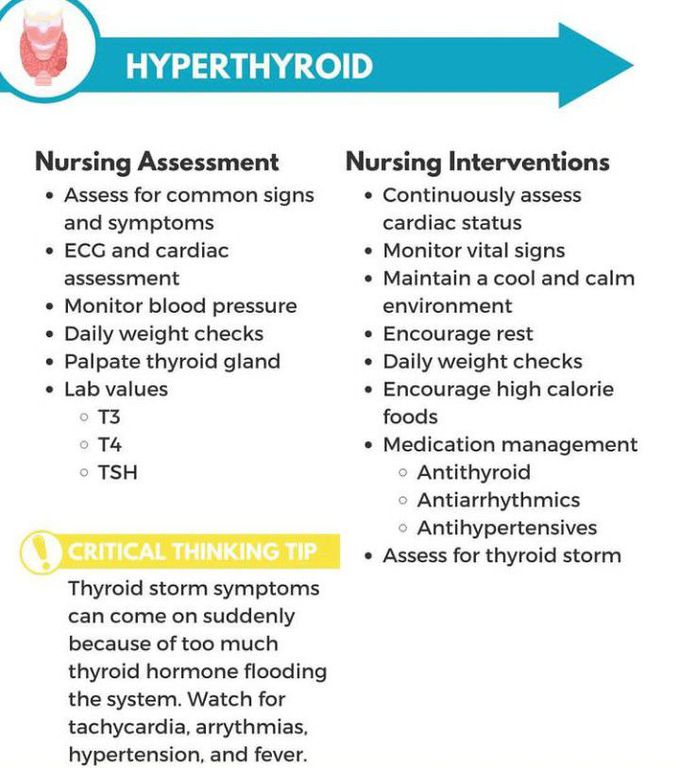
Laboratory tests play a crucial role in the diagnosis and monitoring of hyperthyroidism. The primary test is the measurement of thyroid-stimulating hormone (TSH) levels, which are typically decreased in individuals with hyperthyroidism. Additionally, thyroid hormone levels, including free thyroxine (T4) and triiodothyronine (T3), are assessed to determine the severity of the condition. Anti-thyroid antibody tests, such as thyroid peroxidase antibodies (TPOAb), may be performed to identify the underlying cause of hyperthyroidism.
Imaging studies
Imaging studies, such as thyroid ultrasound and nuclear medicine scans, are often used to evaluate the size and function of the thyroid gland. Ultrasound can help identify any structural abnormalities, while nuclear medicine scans, such as technetium-99m or iodine-123 scanning, provide information about the overall activity and functioning of the gland. These imaging studies assist healthcare professionals in determining the appropriate treatment approach for hyperthyroidism.
Other diagnostic procedures
In certain cases, additional diagnostic procedures may be required to further assess the thyroid gland. Fine-needle aspiration biopsy may be performed to evaluate any suspicious nodules or to rule out thyroid cancer. It is a minimally invasive procedure in which a small sample of cells is extracted for pathological examination. This procedure helps differentiate between benign thyroid nodules and potentially cancerous ones. The results of such procedures aid in determining the most appropriate management strategy for the patient.

Medical management
Antithyroid medications
Antithyroid medications, such as methimazole and propylthiouracil (PTU), are commonly prescribed to manage hyperthyroidism. These medications work by inhibiting the production of thyroid hormones and can provide rapid control of symptoms. It is crucial for nurses to educate patients about the potential side effects of these medications, such as rash, agranulocytosis, and hepatotoxicity. Regular monitoring of liver function and complete blood counts is essential during antithyroid drug therapy.
Radioactive iodine therapy
Radioactive iodine (RAI) therapy is a common treatment modality for hyperthyroidism, particularly in cases of Graves’ disease. In this procedure, a radioactive form of iodine is administered orally, which is selectively taken up by the overactive thyroid cells. The radiation destroys the hyperactive cells, resulting in decreased thyroid hormone production. Nurses should educate patients about the precautions necessary while undergoing RAI therapy, such as limiting close contact with others and careful disposal of bodily fluids.
Beta blockers
Beta blockers, such as propranolol or atenolol, are frequently utilized in the management of hyperthyroidism. These medications help alleviate the cardiovascular symptoms associated with hyperthyroidism, such as tachycardia, palpitations, and hypertension. Nurses should closely monitor vital signs when administering beta blockers and educate patients about potential side effects, including hypotension and dizziness. It is essential to ensure patient compliance with the prescribed dose and to educate them about the importance of not abruptly stopping these medications.
Surgical intervention
Surgical intervention, specifically thyroidectomy, may be recommended for certain patients with hyperthyroidism. This procedure involves the partial or complete removal of the thyroid gland. Nurses play a vital role in preparing the patient for surgery, ensuring informed consent has been obtained, and providing post-operative care. Post-operative care involves monitoring for the signs of complications, such as bleeding, infection, or thyroid storm, and supporting the patient’s comfort and recovery.
Nursing interventions
Maintaining patient comfort
Maintaining patient comfort is an essential aspect of nursing care for individuals with hyperthyroidism. Measures such as ensuring a calm and quiet environment, providing cool clothing and blankets, and promoting relaxation techniques can help alleviate anxiety and promote comfort. Additionally, addressing any discomfort related to hyperthyroidism symptoms, such as heat intolerance or tremors, can significantly improve the patient’s overall well-being.
Monitoring vital signs
Regular monitoring of vital signs is vital for patients with hyperthyroidism. Tachycardia, hypertension, and arrhythmias are common cardiovascular manifestations of hyperthyroidism. Nurses should closely monitor the patient’s blood pressure, heart rate, and rhythm to detect any abnormalities promptly. Additionally, monitoring body temperature and assessing for signs of elevated body heat can help identify hyperthyroidism-associated hyperthermia.
Administering medications
Nurses are responsible for administering medications as prescribed by healthcare providers accurately. In the case of hyperthyroidism, this may include antithyroid medications, beta blockers, or other prescribed medications. It is important to review medication orders and ensure patients understand the purpose, dosage, frequency, and potential side effects of each medication. Timely administration, documentation, and patient education regarding medication management are crucial to optimize treatment outcomes.
Educating the patient
Patient education is a vital component of nursing care for individuals with hyperthyroidism. Nurses should provide comprehensive and individualized education about the condition, including its causes, signs and symptoms, and treatment options. It is essential to assist patients in understanding the importance of adherence to medication regimens, potential side effects of medications, and when to seek medical attention. Furthermore, educating patients about the importance of follow-up appointments and regular monitoring of thyroid function is crucial for ongoing management.

Psychosocial support
Understanding emotional impact
Having a hyperthyroidism diagnosis can elicit a range of emotions for patients, including anxiety, frustration, and fear. Nurses should actively seek to understand the emotional impact of the condition on patients and provide empathetic support. The ability to validate and normalize these emotions can help patients cope more effectively and engage in their treatment plan. Encouraging open communication and offering a listening ear are crucial aspects of providing psychosocial support.
Encouraging open communication
Encouraging open communication between healthcare providers and patients is essential in managing hyperthyroidism effectively. Nurses should create a supportive and non-judgmental environment where patients feel comfortable expressing their concerns and asking questions. Active listening and effective communication skills can foster a strong therapeutic relationship and enable patients to actively participate in their care. Regularly assessing for patient understanding and providing clarification as needed are vital in ensuring patients are well-informed and empowered.
Providing resources and referrals
As part of psychosocial support, nurses should be aware of and provide patients with relevant resources and referrals they may need. This may include information on support groups, educational materials, or community resources that can help patients better manage their condition. Referrals to appropriate healthcare professionals, such as psychologists or social workers, may also be necessary for individuals who require additional mental health support. Collaborating with the interdisciplinary team and connecting patients with the appropriate resources can enhance their overall well-being.
Collaboration with interdisciplinary team
Consulting with endocrinologist
In the management of hyperthyroidism, collaboration with an endocrinologist is crucial. Endocrinologists specialize in diagnosing and managing disorders of the endocrine system, including hyperthyroidism. Nurses should work closely with endocrinologists to facilitate effective disease management. This may involve regular communication, sharing patient assessments, reporting medication-related concerns, and seeking specific guidance when necessary. Collaboration with the endocrinologist ensures a comprehensive approach to patient care and optimizes treatment outcomes.
Coordinating care with pharmacist
Pharmacists play a vital role in the management of hyperthyroidism by ensuring proper medication selection, dosing, and monitoring. Nurses should collaborate with pharmacists to ensure accuracy in medication administration, including any potential drug interactions or contraindications. Pharmacists can also provide valuable medication counseling to patients, reinforcing the importance of adherence and addressing any concerns or questions. Collaborating with the pharmacist helps ensure safe and effective pharmaceutical management of hyperthyroidism.
Involving dietitian for nutritional support
Hyperthyroidism can affect the body’s metabolism and nutrient needs. Involving a dietitian in the care of patients with hyperthyroidism can help address any nutritional deficiencies and promote overall health and well-being. The dietitian can assess the patient’s dietary intake, educate them about foods that support thyroid health, and provide personalized meal plans. Working collaboratively with a dietitian ensures that patients receive appropriate nutritional support, which can positively impact their overall management and quality of life.

Complications and potential complications
Thyroid storm
Thyroid storm is a life-threatening complication of uncontrolled hyperthyroidism. It is characterized by sudden and severe exacerbation of hyperthyroid symptoms, leading to multi-organ dysfunction. Nurses must be vigilant in monitoring for signs of thyroid storm, such as extremely high fever, tachycardia, confusion, and severe agitation. Early recognition and prompt intervention are vital in managing thyroid storm, including initiating cooling measures, administering antithyroid medications, and providing supportive care.
Cardiovascular complications
Hyperthyroidism can significantly impact the cardiovascular system, leading to various complications such as atrial fibrillation, congestive heart failure, and increased risk of myocardial infarction. Nurses should closely monitor patients for any signs of cardiovascular abnormalities, including irregular heart rhythms, chest pain, or shortness of breath. Prompt intervention, such as administration of beta blockers or anticoagulants, may be necessary to manage these complications effectively. Education on monitoring and managing cardiovascular symptoms is key to minimizing the risk of severe complications.
Ophthalmic complications
Thyroid eye disease is a common complication of hyperthyroidism, particularly in Graves’ disease. It is characterized by various eye abnormalities, including proptosis (bulging eyes), double vision, and eye redness or irritation. Nurses should assess patients for any ophthalmic complications and provide appropriate eye care interventions. Collaborating with ophthalmologists or eye specialists may be necessary to manage severe cases. Educating patients on the potential ophthalmic complications, proper eye hygiene, and preventive measures is crucial in promoting optimal eye health.
Patient education
Understanding the condition
Educating patients about their condition is essential for promoting self-care and adherence to treatment. Nurses should explain hyperthyroidism, its causes, and how it affects the body’s metabolism and overall health. Using simple and understandable language, nurses can help patients grasp the underlying mechanisms of hyperthyroidism and how it may manifest in various signs and symptoms. Providing educational materials and visual aids can further enhance patient understanding.
Managing medications
Managing medications is a critical aspect of self-care for patients with hyperthyroidism. Nurses should educate patients about the importance of taking medications as prescribed and provide instructions for proper administration. This includes discussing potential side effects, such as rash or liver toxicity, and when to seek medical assistance. Emphasizing the importance of adherence and explaining the purpose and expected benefits of each medication promotes patient compliance and optimal treatment outcomes.
Dietary considerations
Dietary considerations play a role in managing hyperthyroidism and optimizing overall health. Nurses should educate patients about the potential impact of certain foods, such as cruciferous vegetables or iodine-rich foods, on thyroid function. Encouraging a well-balanced diet that includes foods rich in vitamins and minerals can support overall health and promote thyroid function. Additionally, patients with hyperthyroidism may require increased caloric intake to compensate for increased metabolism, and nurses should educate patients on appropriate dietary adjustments.
Follow-up care
Follow-up care is crucial in monitoring the effectiveness of treatment and maintaining optimal thyroid function. Nurses should emphasize the importance of attending regular follow-up appointments with healthcare providers, including endocrinologists and primary care physicians. Follow-up visits typically involve assessing thyroid hormone levels and adjusting medication dosages if necessary. Reinforcing the significance of regular check-ups empowers patients in managing their condition and ensures ongoing clinical support.
Home care considerations
Monitoring for signs of recurrence
Monitoring for signs of thyroid hormone imbalances or recurrence of hyperthyroidism is an essential part of home care. Nurses should educate patients on potential warning signs, such as weight loss, sudden fatigue, or mood changes, that may indicate a need for medical evaluation. Encouraging patients to regularly assess their own vital signs, including heart rate and temperature, can also help identify any concerning trends. Promoting patient awareness of potential recurrence enables early intervention and proactive management.
Promoting self-care strategies
Promoting self-care strategies empowers patients to actively manage their hyperthyroidism outside of healthcare settings. Nurses can provide guidance on stress management techniques, such as meditation or deep breathing exercises, which can help reduce anxiety and promote relaxation. Encouraging regular exercise as tolerated can also support overall well-being and help regulate metabolism. By promoting self-care strategies, nurses foster patient autonomy and lay the foundation for long-term self-management.
Encouraging adherence to medication regimen
Adherence to the prescribed medication regimen is paramount to ensure optimal treatment outcomes for patients with hyperthyroidism. Nurses should reinforce the importance of taking medications as directed and educate patients about the potential consequences of noncompliance. Strategies such as using pill organizers, setting reminders, or enlisting the help of a family member or caregiver can aid in adherence. Nurses should tailor education and support to the individual patient, ensuring they understand the significance of adherence to medication therapy.
Follow-up and ongoing care
Regular monitoring of thyroid function
Regular monitoring of thyroid function is critical in the ongoing care of patients with hyperthyroidism. Nurses should educate patients on the importance of maintaining routine follow-up appointments with healthcare providers to assess thyroid hormone levels and adjust medication dosage if necessary. Monitoring thyroid function helps prevent recurrence of hyperthyroidism, ensures medication efficacy, and monitors any potential complications. By emphasizing the value of continued monitoring, nurses play a vital role in supporting the long-term well-being of patients with hyperthyroidism.
Evaluation of treatment efficacy
Evaluating treatment efficacy involves assessing the effectiveness of the chosen treatment options and monitoring the patient’s overall well-being. Nurses should collaborate with healthcare providers to regularly assess the patient’s symptoms, review laboratory results, and make necessary adjustments to the treatment plan. Evaluating treatment efficacy helps identify any potential challenges or adjustments required to ensure optimal management of hyperthyroidism. Regular communication with the interdisciplinary team and the patient supports the ongoing evaluation process.
Addressing patient concerns
Addressing patient concerns is a crucial aspect of ongoing care for patients with hyperthyroidism. Nurses should provide a safe and supportive environment where patients feel comfortable expressing their worries and asking questions. Active listening, empathy, and open communication can help nurses address patient concerns effectively. By providing reassurance, education, and appropriate referrals or resources, nurses can alleviate any anxieties or uncertainties patients may have, thus improving their overall experience and quality of care.