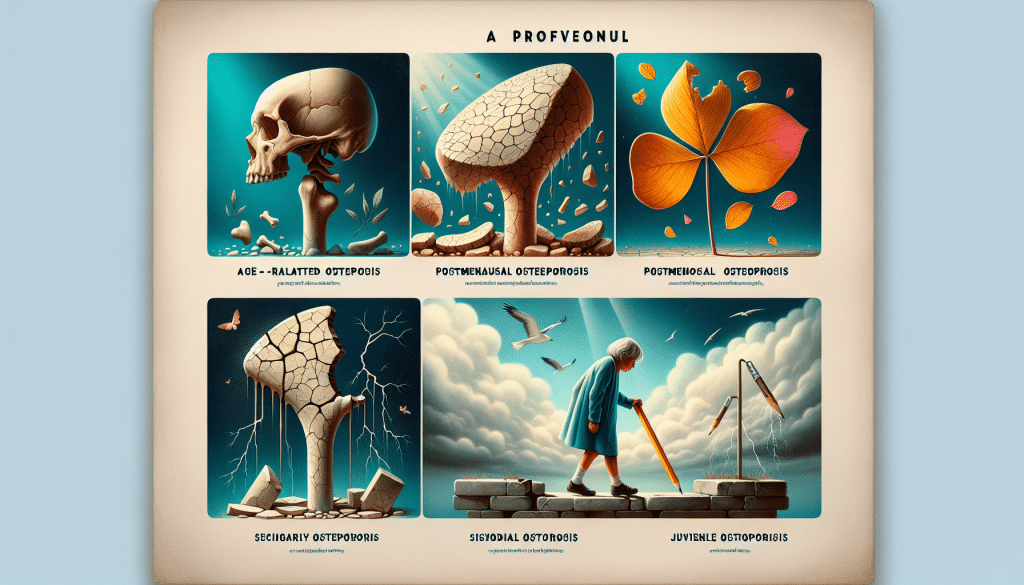
Hey there! Have you ever wondered about the different types of osteoporosis? Well, look no further! In this article, we will explore the 4 types of osteoporosis and delve into their unique characteristics and risk factors. Whether you’re already familiar with osteoporosis or just beginning to learn about it, this article will provide you with valuable insights on the four types and help you better understand this condition. So, let’s jump right in and explore the fascinating world of osteoporosis!

Primary Osteoporosis
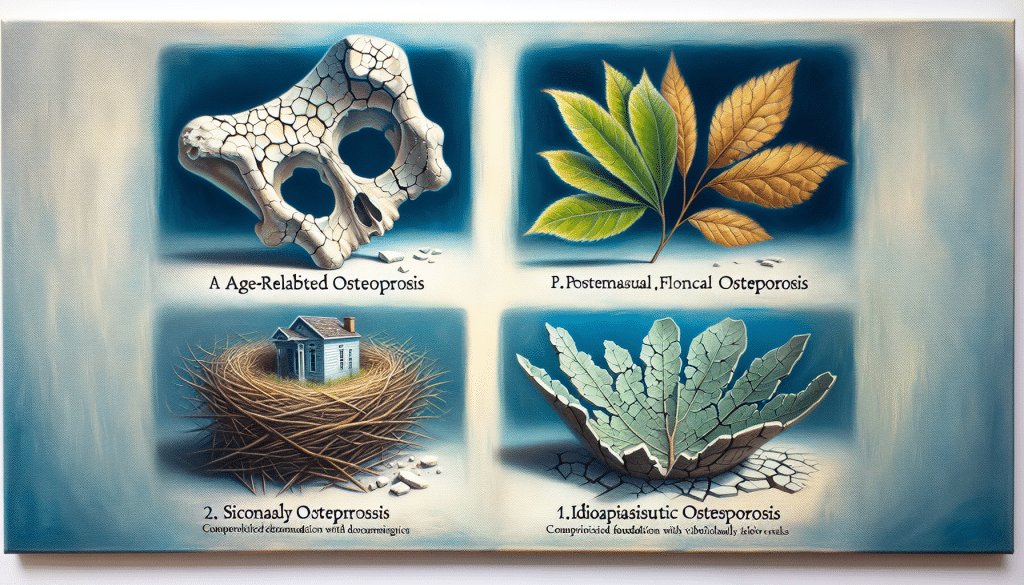
Primary osteoporosis refers to osteoporosis that occurs without any underlying medical condition or specific cause. It is the most common form of osteoporosis and is typically seen in postmenopausal women and elderly individuals. There are two main types of primary osteoporosis: postmenopausal osteoporosis and age-related (senile) osteoporosis.
Postmenopausal Osteoporosis
Postmenopausal osteoporosis is the most prevalent type of primary osteoporosis. It occurs due to the natural decline in estrogen levels that women experience after menopause. Estrogen plays a significant role in maintaining bone density and strength, so the decrease in estrogen levels can lead to accelerated bone loss. This type of osteoporosis typically affects women over the age of 50, although it can occur earlier in some cases.
Age-related (Senile) Osteoporosis
Age-related osteoporosis, also known as senile osteoporosis, is primarily associated with the aging process. As individuals grow older, their bones tend to become thinner and weaker, making them more susceptible to fractures. This type of osteoporosis affects both men and women and is commonly seen in individuals over the age of 70. While age-related osteoporosis can occur in the absence of any other factors, it may also be influenced by lifestyle choices and inadequate nutrition.

Secondary Osteoporosis
Secondary osteoporosis refers to osteoporosis that occurs as a result of an underlying medical condition or external factors. Various factors can contribute to the development of secondary osteoporosis, including prolonged use of certain medications, medical disorders, and lifestyle choices.
Glucocorticoid-induced Osteoporosis
Glucocorticoid-induced osteoporosis is a specific type of secondary osteoporosis caused by long-term use of glucocorticoid medications such as prednisone or cortisone. These medications, which are commonly used to treat inflammatory conditions like asthma, rheumatoid arthritis, or lupus, can have a detrimental effect on bone health. Glucocorticoids interfere with the normal bone remodeling process, leading to a reduction in bone mass and an increased risk of fractures.
Disuse Osteoporosis
Disuse osteoporosis occurs when bones are not subjected to the usual stress and weight-bearing activities, leading to decreased bone density and strength. This type of osteoporosis is commonly observed in individuals who are bedridden or have a sedentary lifestyle. Lack of physical activity and immobilization can result in bone loss, especially in weight-bearing bones like the hips, spine, and legs.
Inflammatory Osteoporosis
Inflammatory osteoporosis can develop in individuals with chronic inflammatory conditions, such as rheumatoid arthritis, Crohn’s disease, or systemic lupus erythematosus. The underlying inflammation and immune system dysfunction associated with these conditions can contribute to bone loss by promoting increased bone resorption. Inflammatory cytokines released during the inflammatory process can disrupt the balance between bone formation and breakdown, leading to osteoporosis.
Malabsorption-Related Osteoporosis
Malabsorption-related osteoporosis occurs when the body is unable to absorb sufficient amounts of essential nutrients, including calcium and vitamin D, necessary for maintaining healthy bones. Conditions like celiac disease, inflammatory bowel disease, or gastric bypass surgery can cause malabsorption, leading to compromised bone health. Calcium and vitamin D are vital for bone formation and mineralization, so their deficiency can contribute to the development of osteoporosis.
Endocrine Disorders-Related Osteoporosis
Endocrine disorders, such as hyperthyroidism, hyperparathyroidism, or Cushing’s syndrome, can affect bone health and lead to osteoporosis. These disorders disrupt the hormonal balance in the body, which plays a crucial role in maintaining bone density. For example, excess thyroid hormone production in hyperthyroidism can accelerate bone turnover and increase the risk of fractures.
Hematological Disorders-Related Osteoporosis
Certain hematological disorders, like multiple myeloma or sickle cell disease, can directly impact bone health and contribute to the development of osteoporosis. In multiple myeloma, cancerous plasma cells accumulate in the bone marrow, leading to bone destruction and compromised bone strength. Sickle cell disease, on the other hand, can cause chronic anemia and bone marrow dysfunction, further weakening the bone structure.
Rheumatologic Disorders-Related Osteoporosis
Rheumatologic disorders, such as ankylosing spondylitis or systemic lupus erythematosus, can increase the risk of osteoporosis. These conditions involve chronic inflammation, joint pain, and stiffness, which can limit physical activity and contribute to bone loss. Additionally, certain medications used to manage these rheumatologic disorders, such as corticosteroids, can also have a negative impact on bone health.
Idiopathic Juvenile Osteoporosis
Idiopathic juvenile osteoporosis is a rare form of osteoporosis that occurs in children and adolescents. It is categorized into two types: primary idiopathic juvenile osteoporosis and secondary idiopathic juvenile osteoporosis.
Primary Idiopathic Juvenile Osteoporosis
Primary idiopathic juvenile osteoporosis refers to osteoporosis that occurs spontaneously without any identifiable cause. It is usually diagnosed in children between the ages of 8 and 14 and can affect both boys and girls. The exact cause of primary idiopathic juvenile osteoporosis is unknown, although genetic factors may play a role. It is characterized by decreased bone density, increased fracture risk, and delayed skeletal development.
Secondary Idiopathic Juvenile Osteoporosis (IJO due to Therapy)
Secondary idiopathic juvenile osteoporosis, also known as IJO due to therapy, is a form of osteoporosis that develops as a result of specific medical treatments. These treatments may include long-term glucocorticoid therapy, chemotherapy, or radiation therapy for the management of various medical conditions. The medications and therapies used can adversely affect bone health, leading to decreased bone density and increased fracture risk in children and adolescents.
Osteogenesis Imperfecta
Osteogenesis imperfecta (OI), also known as brittle bone disease, is a genetic disorder characterized by fragile bones that are prone to fractures. It is caused by mutations in the genes responsible for the production of collagen, a key protein in bone formation. Osteogenesis imperfecta is classified into several types based on the severity of symptoms and inheritance patterns.
Type 1 OI
Type 1 OI is the mildest and most common form of osteogenesis imperfecta. Individuals with type 1 OI may experience frequent fractures but have a near-normal life expectancy. The severity of symptoms can vary, ranging from minimal bone deformities to significant bone fragility and growth impairment. Type 1 OI is usually inherited in an autosomal dominant pattern, meaning that a child has a 50% chance of inheriting the condition if one parent carries the gene mutation.
Type 2 OI
Type 2 OI is the most severe form of osteogenesis imperfecta and is usually evident at birth or prenatally. Infants with type 2 OI have extremely fragile bones, leading to life-threatening complications. Many newborns do not survive beyond the neonatal period due to severe respiratory or cardiac complications. Type 2 OI is usually caused by autosomal dominant mutations, but sporadic cases can also occur.
Type 3 OI
Type 3 OI is a severe form of osteogenesis imperfecta that is evident at birth or during early infancy. Individuals with type 3 OI have multiple fractures, significant bone deformities, and often experience breathing and mobility difficulties. Life expectancy can vary, and affected individuals may require ongoing medical interventions and support. Type 3 OI is typically inherited in an autosomal recessive pattern, meaning that both parents must carry the gene mutation for a child to be affected.
Type 4 OI
Type 4 OI is characterized by moderate to severe bone fragility and variable phenotypic presentation. Individuals with type 4 OI typically experience fractures during childhood and may develop bone deformities. Growth impairment and other complications can be present, but life expectancy is usually not significantly affected. Type 4 OI can be inherited in either an autosomal dominant or autosomal recessive pattern.
Type 5 OI
Type 5 OI is a rare form of osteogenesis imperfecta characterized by a milder phenotype compared to other types. Individuals with type 5 OI typically experience fractures but may also exhibit bone overgrowth and density abnormalities. The progression and severity of symptoms can vary, and affected individuals may have a near-normal life expectancy. Type 5 OI is inherited in an autosomal dominant pattern.
Type 6 OI
Type 6 OI is a rare and severe form of osteogenesis imperfecta with unique characteristics. Individuals with type 6 OI typically have severe bone fragility, short stature, and a distinctive phenotype that includes severe spinal deformities. The long-term prognosis and life expectancy for individuals with type 6 OI can vary. This type of OI is inherited in an autosomal recessive pattern.
Type 7 OI
Type 7 OI is another rare form of osteogenesis imperfecta with distinct features. It is characterized by severe bone fragility, growth deficiency, and various skeletal abnormalities. Type 7 OI is caused by mutations in the CRTAP gene and is inherited in an autosomal recessive pattern. The long-term prognosis for individuals with type 7 OI can vary, and supportive care is often necessary to manage the associated complications.
In conclusion, osteoporosis encompasses a wide range of conditions that affect bones and their strength. Understanding the different types of osteoporosis, including primary osteoporosis, secondary osteoporosis, idiopathic juvenile osteoporosis, and osteogenesis imperfecta, is crucial for proper diagnosis, management, and prevention. If you have any concerns about bone health or are at risk for osteoporosis, it is important to consult with a healthcare professional who can provide guidance and appropriate treatment options. Remember, taking proactive steps to protect and maintain bone health can lead to a healthier and more active future.