
If you have acne, you are far from alone. Acne is one of the most common skin conditions in the world, affecting millions of teenagers and adults every year. While many people think of acne as a normal part of adolescence, it can occur at any age and can significantly affect confidence, self-esteem, and quality of life.
The good news is that acne is treatable. Modern treatments, healthy skincare habits, and lifestyle adjustments can help many people reduce breakouts and improve their skin’s appearance. Even severe acne can often be managed successfully with the help of a healthcare professional.
In this comprehensive guide, you’ll learn:
- What acne is
- Why does it develop
- Common signs and symptoms
- Available treatment options
- Lifestyle habits that may help
- Foods that may affect acne
- When to seek medical care
- How to live confidently while managing acne
Whether you have recently developed acne, have struggled with it for years, or are caring for someone who has it, this guide will help you better understand the condition and take practical steps toward healthier skin.
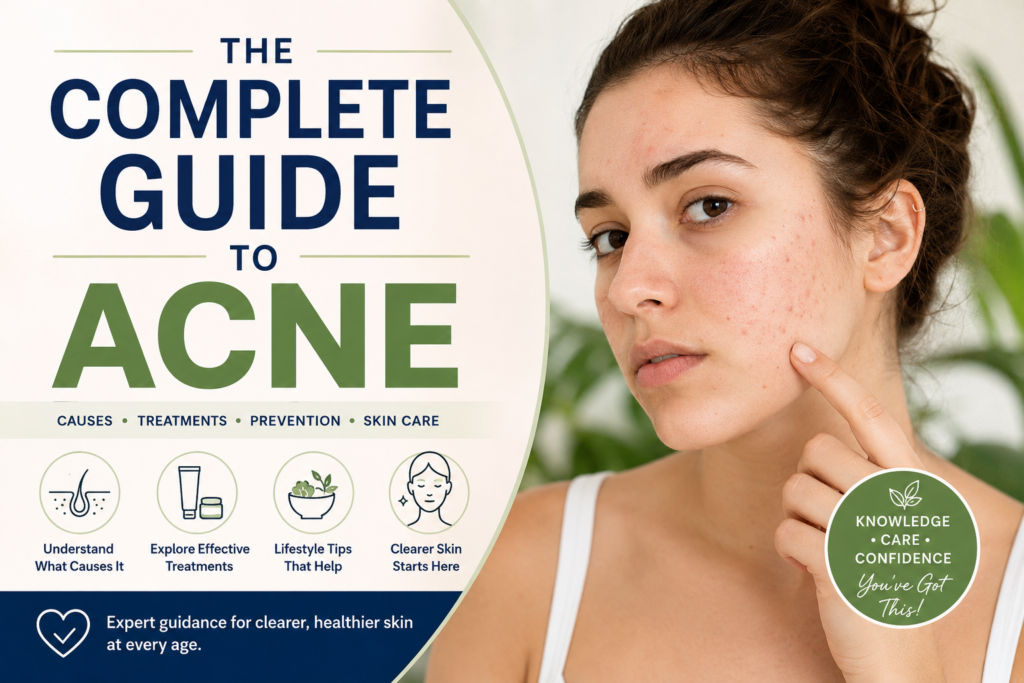
Section 1: What Is Acne?
Definition
Acne is a common skin condition that occurs when hair follicles become clogged with oil (sebum), dead skin cells, and sometimes bacteria. This blockage can lead to pimples, blackheads, whiteheads, cysts, and other skin lesions.
Acne is medically known as acne vulgaris.
Basic Overview
Your skin contains tiny openings called pores. Each pore is connected to a hair follicle and an oil-producing gland called a sebaceous gland.
Normally, these glands produce oil that helps keep the skin moisturized. Problems develop when:
- Too much oil is produced
- Dead skin cells build up
- Pores become blocked
- Bacteria multiply inside the follicle
- Inflammation develops
The result is acne.
How Common Is Acne?
Acne is extremely common.
Research suggests that:
- Approximately 85% of people experience acne at some point
- It is most common during adolescence
- Many adults continue to have acne into their 20s, 30s, 40s, and beyond
- Women are more likely to experience adult acne than men
Who Is Most Affected?
Acne can affect:
- Teenagers
- Young adults
- Adults over 30
- Pregnant women
- People with hormonal disorders
- Individuals with a family history of acne
Why Does Acne Develop?
Acne develops due to a combination of factors:
- Increased oil production
- Clogged pores
- Skin bacteria
- Hormonal changes
- Inflammation
Most people experience acne because several of these factors occur together.
Section 2: Signs and Symptoms
Acne can appear in different ways and vary from mild to severe.
Early Symptoms
Early signs may include:
- Oily skin
- Small bumps on the face
- Enlarged pores
- Occasional pimples
- Blackheads on the nose or forehead
Common Symptoms
Whiteheads
Small bumps that remain closed beneath the skin surface.
Blackheads
Open clogged pores that appear dark due to oxidation.
Papules
Small red, tender bumps.
Pustules
Pimples containing pus.
Nodules
Large, painful lumps deep beneath the skin.
Cysts
Large inflamed lesions filled with fluid or pus.
Less Common Symptoms
Some people may experience:
- Acne on the scalp
- Acne on the buttocks
- Chest acne
- Back acne
- Shoulder acne
Symptom Checklist
✓ Whiteheads
✓ Blackheads
✓ Red bumps
✓ Pimples with pus
✓ Painful bumps
✓ Oily skin
✓ Skin redness
✓ Acne on face, chest, shoulders, or back
✓ Skin tenderness
✓ Scarring from previous acne
Warning Signs That Need Medical Attention
Contact a healthcare provider if you experience:
- Severe painful cysts
- Extensive acne scarring
- Sudden severe acne in adulthood
- Signs of skin infection
- Acne causing emotional distress
- Acne that does not improve with treatment
Section 3: What Causes Acne?
Acne does not develop because someone is “dirty” or has poor hygiene. This is one of the most common myths about acne.
Main Causes
Excess Oil Production
When sebaceous glands produce too much oil, pores can become clogged.
Clogged Hair Follicles
Dead skin cells can mix with oil and block pores.
Bacteria
A naturally occurring skin bacterium, Cutibacterium acnes, can contribute to inflammation.
Inflammation
The body’s immune response contributes to redness, swelling, and tenderness.
Hormonal Changes
Hormones play a major role.
Common triggers include:
- Puberty
- Menstrual cycles
- Pregnancy
- Menopause
- Polycystic ovary syndrome (PCOS)
Genetics
Family history matters.
You may be more likely to develop acne if:
- One parent had acne
- Both parents had acne
- Close relatives experienced severe acne
Lifestyle Factors
Certain habits may worsen acne:
- Frequent touching of the face
- Heavy cosmetic products
- Poor sleep
- High stress levels
- Smoking
Environmental Influences
Examples include:
- Humid weather
- Excess sweating
- Friction from helmets or masks
- Exposure to oily substances
- Certain skin care products
Practical Example
A teenager going through puberty may experience increased oil production. Combined with dead skin buildup and bacteria, this creates the perfect environment for acne breakouts.
Section 4: Risk Factors
Several factors increase the likelihood of developing acne.
Age
- Teenagers
- Young adults
- Adults experiencing hormonal changes
Family History
- Parents with acne
- Siblings with acne
- Strong genetic predisposition
Lifestyle Factors
- High stress levels
- Poor sleep
- Smoking
- Use of oily skin products
Medical Conditions
- PCOS
- Hormonal imbalances
- Cushing syndrome
- Certain endocrine disorders
Medications
Some medications may contribute to acne:
- Corticosteroids
- Testosterone
- Certain seizure medications
- Lithium
Other Risk Factors
- Humid climates
- Frequent sweating
- Tight clothing
- Heavy makeup
- Friction from sports equipment
Section 5: How Doctors Diagnose Acne
Most acne can be diagnosed through a simple skin examination.
Typical Evaluation Process
Your healthcare provider may ask:
- When acne started
- Which areas are affected
- Previous treatments tried
- Family history
- Menstrual history (for women)
- Current medications
Physical Examination
The provider examines:
- Face
- Neck
- Chest
- Back
- Severity of lesions
- Presence of scars
Laboratory Testing
Most people do not need laboratory tests.
However, testing may be considered when:
- Acne is severe
- Hormonal problems are suspected
- Symptoms suggest PCOS
- Adult-onset acne develops suddenly
Possible tests include:
- Hormone levels
- Blood sugar testing
- Thyroid function testing
Imaging Studies
Imaging is rarely needed for acne.
Monitoring Tools
Healthcare providers may track:
- Number of lesions
- Severity scores
- Treatment response
- Scarring progression
What Patients Should Expect
A typical acne evaluation is:
- Quick
- Non-invasive
- Usually painless
- Focused on visual examination
Section 6: Treatment Options
Treatment depends on:
- Severity
- Type of acne
- Age
- Skin type
- Presence of scarring
Medical Treatments
Benzoyl Peroxide
Helps:
- Kill bacteria
- Reduce inflammation
- Prevent clogged pores
Benefits:
- Widely available
- Effective for mild acne
Limitations:
- Can cause dryness
- May bleach fabrics
Salicylic Acid
Helps remove dead skin cells and unclog pores.
Benefits:
- Useful for blackheads and whiteheads
Limitations:
- Can irritate sensitive skin
Retinoids
Derived from vitamin A.
Examples include prescription retinoids.
Benefits:
- Prevent clogged pores
- Improve skin texture
Limitations:
- May irritate initially
- Increased sun sensitivity
Topical Antibiotics
Used to reduce bacteria and inflammation.
Often combined with other treatments.
Oral Antibiotics
It may be used for moderate-to-severe acne.
Benefits:
- Reduce inflammation
Limitations:
- Not intended for long-term use
Hormonal Treatments
Some women benefit from:
- Birth control pills
- Anti-androgen medications
These help reduce hormone-related breakouts.
Isotretinoin
A powerful medication used for severe acne.
Benefits:
- Can dramatically improve severe acne
Limitations:
- Requires close medical supervision
- Potential side effects
- Pregnancy precautions are essential
Section 6 Continued: Procedures for Acne
Chemical Peels
Chemical peels use special acids to remove damaged skin layers and help unclog pores.
Benefits:
- Improves mild acne
- May reduce acne marks
- Can improve skin texture
Limitations:
- Usually requires multiple sessions
- Temporary redness may occur
Light and Laser Therapy
Certain light-based treatments may help reduce acne-causing bacteria and inflammation.
Benefits:
- Non-invasive
- It may help some patients who do not respond well to medications
Limitations:
- Can be expensive
- Results vary from person to person
Acne Extraction
A dermatologist may safely remove blackheads and whiteheads using sterile tools.
Benefits:
- Immediate removal of some clogged pores
Limitations:
- Not a long-term solution
- Should not be attempted aggressively at home
Corticosteroid Injections
Large painful cysts may occasionally be treated with injections directly into the lesion.
Benefits:
- Rapid reduction in swelling and pain
Limitations:
- Reserved for specific situations
Common Expectations During Treatment
One of the most important things to understand about acne treatment is that improvement takes time.
Many treatments require:
- 6 to 12 weeks before noticeable improvement
- Consistent daily use
- Patience and follow-up care
It is common for acne to appear slightly worse during the first few weeks of treatment before improving.
Do not stop treatment prematurely unless instructed by your healthcare provider.
Section 7: Lifestyle Changes That Help
Lifestyle changes alone may not cure acne, but they can support healthy skin and improve treatment results.
Nutrition
Focus on a balanced eating pattern that includes:
- Fruits
- Vegetables
- Whole grains
- Lean proteins
- Healthy fats
Drinking adequate water may also support overall skin health.
Exercise
Regular physical activity helps:
- Improve circulation
- Support hormone balance
- Reduce stress
- Improve sleep quality
Aim for at least 150 minutes of moderate activity each week.
Important Tip
Shower or wash your face after heavy sweating to reduce irritation and buildup of sweat and oil.
Sleep
Poor sleep can increase stress hormones and inflammation.
Aim for:
- 7 to 9 hours of sleep nightly
- Consistent sleep and wake times
- A comfortable sleep environment
Stress Management
Stress does not directly cause acne, but it can make breakouts worse.
Helpful strategies include:
- Deep breathing exercises
- Meditation
- Yoga
- Walking
- Journaling
- Spending time outdoors
Daily Habits That Support Healthy Skin
Wash Gently
Clean your face:
- Twice daily
- After heavy sweating
Avoid aggressive scrubbing.
Use Non-Comedogenic Products
Look for products labeled:
- Oil-free
- Non-comedogenic
- Won’t clog pores
Avoid Picking Pimples
Picking can:
- Increase inflammation
- Delay healing
- Cause scarring
- Increase infection risk
Keep Hair Clean
Hair products can transfer oil to the skin and contribute to breakouts around the forehead.
Change Pillowcases Regularly
Clean pillowcases help reduce exposure to oils, dirt, and bacteria.
Daily Acne-Friendly Habit Checklist
□ Wash face morning and night
□ Apply medications as directed
□ Avoid touching your face
□ Drink enough water
□ Eat balanced meals
□ Exercise or move your body
□ Manage stress
□ Get 7–9 hours of sleep
□ Avoid picking or squeezing pimples
□ Wear sunscreen daily
Section 8: Foods That Help and Foods to Limit
Research on diet and acne continues to evolve. Food is not the sole cause of acne, but certain eating patterns may influence breakouts in some individuals.
Foods That May Help
| Food | Why It May Help |
| Vegetables | Rich in antioxidants that support skin health |
| Fruits | Provide vitamins and anti-inflammatory compounds |
| Fatty Fish | Contains omega-3 fats that may reduce inflammation |
| Nuts and Seeds | Provide healthy fats and nutrients |
| Whole Grains | Support stable blood sugar levels |
| Beans and Lentils | High in fiber and protein |
| Green Tea | Contains antioxidants that may benefit skin |
| Yogurt With Live Cultures | May support gut health |
Foods That May Worsen Symptoms
| Food | Why It May Contribute |
| Sugary Drinks | May cause blood sugar spikes |
| Candy and Sweets | High glycemic load may worsen acne in some people |
| White Bread | Rapidly increases blood sugar |
| Sugary Cereals | May contribute to inflammation |
| Excess Fast Food | Often high in refined carbohydrates and unhealthy fats |
| Highly Processed Snacks | Limited nutritional value |
| Large Amounts of Dairy (for some individuals) | May trigger breakouts in certain people |
| Energy Drinks | Often contain large amounts of sugar |
Important Note
Food triggers vary greatly between individuals.
Consider keeping a food diary if you suspect certain foods worsen your acne.
Section 9: Complications If Left Untreated
Not everyone with acne will develop complications. However, untreated or poorly controlled acne can sometimes lead to physical and emotional consequences.
Understanding these risks can help encourage early treatment and proper skin care.
Short-Term Complications
Pain and Discomfort
Inflamed pimples, nodules, and cysts can become painful.
Some people experience:
- Tender skin
- Burning sensations
- Swelling
- Discomfort when washing the face
Skin Infections
Although uncommon, severely inflamed lesions can occasionally become infected.
Signs may include:
- Increased redness
- Warmth
- Swelling
- Drainage
- Fever
Worsening Breakouts
Without treatment, acne may become:
- More widespread
- More inflamed
- More difficult to control
Long-Term Complications
Permanent Scarring
Acne scars are among the most significant complications.
Types include:
- Ice-pick scars
- Boxcar scars
- Rolling scars
- Raised scars
Scars can remain for years or become permanent.
Dark Spots
After acne heals, some people develop:
- Post-inflammatory hyperpigmentation (dark marks)
- Post-inflammatory erythema (red marks)
These spots often fade over time but may persist for months.
Skin Texture Changes
Repeated inflammation can affect:
- Smoothness
- Elasticity
- Overall skin appearance
Emotional and Quality-of-Life Impacts
Acne affects more than the skin.
Many people experience:
- Embarrassment
- Frustration
- Social withdrawal
- Reduced confidence
- Anxiety
- Depression
These emotional effects can occur even with mild acne.
Remember
Acne is a medical condition—not a personal failure. Seeking treatment is an important step toward both physical and emotional well-being.
Section 10: Living Well With Acne
Acne management is often a long-term journey. The goal is not necessarily perfect skin but healthier skin and improved quality of life.
Daily Management Tips
Follow Your Treatment Plan
Use medications exactly as directed.
Common reasons treatment fails include:
- Skipping doses
- Using products inconsistently
- Stopping too early
Keep Skin Care Simple
Many people use too many products.
A basic routine often works best:
Morning:
- Gentle cleanser
- Acne treatment, if prescribed
- Moisturizer
- Sunscreen
Evening:
- Gentle cleanser
- Treatment product
- Moisturizer
Protect Your Skin From the Sun
Sun exposure can:
- Worsen discoloration
- Increase irritation
- Make some acne medications more irritating
Use a broad-spectrum sunscreen daily.
Mental Health Considerations
Living with acne can be emotionally challenging.
Consider:
- Talking with trusted friends or family
- Joining support communities
- Speaking with a counselor if acne affects your mental health
Seek help if acne is causing:
- Persistent sadness
- Anxiety
- Social isolation
- Low self-esteem
Family Support
Parents and caregivers can help by:
- Avoiding criticism
- Encouraging treatment adherence
- Offering emotional support
- Helping schedule medical appointments
Self-Monitoring
Track:
- Breakouts
- New products
- Medication use
- Potential triggers
- Menstrual cycle patterns
Patterns may become easier to identify over time.
Long-Term Success Strategies
Successful acne management often involves:
- Patience
- Consistency
- Realistic expectations
- Professional guidance
Remember that improvement usually happens gradually rather than overnight.
Section 11: Questions to Ask Your Healthcare Provider
Bringing questions to appointments can help you get the most out of your visit.
Consider asking:
- What type of acne do I have?
- How severe is my acne?
- What treatments do you recommend?
- How long before I see improvement?
- Are there side effects I should expect?
- Should I use over-the-counter products?
- Do I need prescription medication?
- Could hormones be contributing to my acne?
- Should I be tested for underlying conditions?
- What skin care products should I use?
- What products should I avoid?
- Will this treatment help prevent scarring?
- What should I do if my acne gets worse?
- Can diet affect my acne?
- How often should I follow up?
- Are cosmetic procedures appropriate for me?
- What can be done about acne scars?
- Is stress contributing to my breakouts?
- Should I see a dermatologist?
- When should I call your office between appointments?
SECTION 12: WHEN TO SEEK EMERGENCY CARE
Seek Immediate Medical Attention If You Experience:
Although acne itself is rarely a medical emergency, some situations require urgent evaluation.
Severe Allergic Reaction to Acne Medication
Call emergency services immediately if you develop:
- Difficulty breathing
- Wheezing
- Swelling of the face
- Swelling of the lips
- Swelling of the tongue
- Severe dizziness
- Fainting
Signs of Serious Infection
Seek urgent care if acne lesions are accompanied by:
- High fever
- Chills
- Rapidly spreading redness
- Significant swelling
- Severe pain
- Pus spreading beyond the lesion
Severe Medication Side Effects
Contact a healthcare professional immediately if you experience:
- Severe skin peeling
- Extensive blistering
- Serious rash
- Vision changes
- Severe headaches
- Severe mood changes
Mental Health Emergencies
Seek immediate help if acne-related distress leads to:
- Thoughts of self-harm
- Suicidal thoughts
- Severe depression
- Inability to function normally
Mental health concerns deserve prompt medical attention.
Section 13: Frequently Asked Questions
1. What causes acne?
Acne develops when pores become clogged with oil, dead skin cells, and bacteria, leading to inflammation.
2. Is acne caused by poor hygiene?
No. Acne is not caused by being dirty.
Overwashing may actually irritate the skin and worsen symptoms.
3. Can adults get acne?
Yes. Many adults continue to experience acne into their 30s, 40s, and beyond.
4. Does chocolate cause acne?
Chocolate itself is not proven to cause acne, but diets high in sugar may contribute to breakouts in some people.
5. Is acne contagious?
No. You cannot catch acne from another person.
6. Will acne eventually go away?
Many people improve with age, but some require ongoing treatment.
7. Does stress cause acne?
Stress does not directly cause acne, but it can worsen existing breakouts.
8. Can makeup cause acne?
Certain products may clog pores.
Choose non-comedogenic makeup whenever possible.
9. Is sunscreen safe for acne-prone skin?
Yes.
Look for oil-free, non-comedogenic sunscreens.
10. Can popping pimples make acne worse?
Yes.
Popping pimples can:
- Increase inflammation
- Spread bacteria
- Cause scarring
11. Does drinking more water cure acne?
Water supports overall health, but it is not a cure for acne.
12. Are acne scars permanent?
Some scars can be permanent, but treatments may improve their appearance.
13. What is hormonal acne?
Hormonal acne is acne influenced by hormone fluctuations, often appearing around the jawline and chin.
14. Can men and women both get acne?
Yes. Acne affects people of all genders.
15. How long does acne treatment take?
Most treatments require at least 6 to 12 weeks before significant improvement occurs.
16. Does sweating cause acne?
Sweat itself does not cause acne, but sweat combined with oil and friction may worsen breakouts.
17. Can acne affect self-confidence?
Absolutely.
Many people experience emotional distress related to acne.
18. Should I see a dermatologist?
Consider seeing a dermatologist if acne is severe, painful, causing scars, or not improving with basic treatments.
19. Can diet changes help acne?
Some people notice improvement with healthier eating patterns, though diet is not the sole cause of acne.
20. Can acne be cured permanently?
There is no guaranteed permanent cure, but effective treatments can help many people achieve long-term control.
Section 14: Helpful Resources
Symptom Trackers
Helpful information to record:
- Number of breakouts
- Severity of lesions
- Treatment use
- Trigger exposures
- Menstrual cycle changes
Skin Care Log
Track:
- Cleansers
- Moisturizers
- Sunscreens
- Prescription medications
- Cosmetic products
Educational Organizations
Reliable sources include:
- American Academy of Dermatology
- National Institute of Arthritis and Musculoskeletal and Skin Diseases
- American Academy of Pediatrics
- Mayo Clinic
Support Communities
Many patients find support through:
- Dermatology support groups
- Online patient communities
- Local health education programs
Lifestyle Tools
Helpful tools may include:
- Sleep tracking apps
- Stress management apps
- Food journals
- Habit trackers
- Medication reminders
Section 15: Related Health Topics
Readers interested in acne may also benefit from learning about:
- Rosacea
- Polycystic Ovary Syndrome
- Seborrheic Dermatitis
- Eczema
- Psoriasis
- Skin Cancer Prevention
- Sun Safety
- Hormonal Health
- Stress Management
- Healthy Sleep Habits
- Nutrition for Skin Health
- Self-Esteem and Mental Wellness
Section 16: What we learn from this article
Remember These Important Points
- Acne is one of the most common skin conditions worldwide.
- Acne is not caused by poor hygiene.
- Hormones, genetics, oil production, clogged pores, and inflammation all play important roles.
- Effective treatments are available for mild, moderate, and severe acne.
- Improvement often takes several weeks or months.
- Consistency is one of the most important factors for success.
- Avoid picking or squeezing pimples.
- Healthy sleep, stress management, and balanced nutrition may support skin health.
- Early treatment may reduce the risk of scarring.
- Emotional well-being is an important part of acne care.
- Seek professional medical advice if acne is severe, painful, or causing distress.
Acne Symptom Tracker
| Date | New Breakouts | Severity (1-10) | Location | Possible Trigger |
Acne Treatment Tracker
| Date | Medication/Product Used | Morning | Evening | Side Effects |
Skin Care Routine Worksheet
Morning Routine
□ Gentle Cleanser
□ Acne Treatment
□ Moisturizer
□ Sunscreen
Evening Routine
□ Gentle Cleanser
□ Acne Treatment
□ Moisturizer
Weekly Notes
Products Working Well:
Products Causing Irritation:
Questions for Next Appointment:
Appointment Preparation Worksheet
Current Concerns
Symptoms I Am Experiencing
Treatments I Have Tried
Questions for My Healthcare Provider
Final Encouragement from Ask The Nurse Expert
If you are dealing with acne, remember that you are not alone and that improvement is possible. Acne can be frustrating, but it does not define who you are. Many people experience setbacks during treatment, and progress often happens gradually rather than all at once.
Focus on consistency instead of perfection. Small daily habits—using your treatments as directed, caring for your skin gently, managing stress, and maintaining healthy routines—can add up to meaningful improvements over time.
Knowledge is a powerful tool. Understanding how acne develops and what treatment options are available can help you make informed decisions about your health.
Most importantly, do not hesitate to seek help from your healthcare team. A primary care provider or dermatologist can help create a treatment plan that fits your specific needs and goals.
At Ask The Nurse Expert, we encourage you to be patient with yourself, celebrate progress along the way, and remember that healthier skin is often achieved one step at a time.
Related Topics About The Complete Guide to Acne:
What Causes Acne,
Acne Risk Factors,
Hormonal Causes of Acne,
Genetic Causes of Acne,
Why Adults Get Acne,
Acne and Hormones,
Stress and Acne,
Acne Triggers Explained,
Common Acne Causes in Teens,
Adult Acne Causes,
Acne Symptoms,
Types of Acne,
Whiteheads vs Blackheads,
Papules and Pustules,
Nodular Acne,
Cystic Acne,
Mild vs Severe Acne,
Acne Severity Stages,
Inflammatory Acne,
Non-Inflammatory Acne,
Acne Treatment Guide,
Best Treatments for Acne,
Prescription Acne Medications,
Over-the-Counter Acne Treatments,
Topical Acne Treatments,
Oral Acne Medications,
Benzoyl Peroxide for Acne,
Salicylic Acid for Acne,
Retinoids for Acne,
Isotretinoin Treatment,
Hormonal Acne Explained,
Adult Female Acne,
Acne During Menstrual Cycles,
PCOS and Acne,
Chin and Jawline Acne,
Hormonal Acne Treatments,
Birth Control for Acne,
Hormone Imbalance and Acne,
Acne During Menopause,
Acne During Pregnancy