Hey there! If you or someone you know is a teenager or young adult dealing with a brain tumor, then you’ve come to the right place. In this article, we’ll be discussing the diagnosis and treatment options available for brain tumors specifically in this age group. From understanding the different types of brain tumors to exploring the advanced treatment options, we’ll provide you with valuable information that can help navigate this challenging journey. So let’s get started and empower ourselves with the knowledge we need to fight against brain tumors together!
Diagnosis of Brain Tumors in Teenagers and Young Adults
If you’re a teenager or a young adult dealing with persistent symptoms that may be related to a brain tumor, it’s important to understand the diagnostic process. Diagnosing brain tumors involves a variety of methods that are tailored to your specific situation. This article will guide you through the different steps involved in diagnosing brain tumors for teenagers and young adults, including the symptoms to look out for, physical and neurological examinations, imaging tests, and biopsies.
Symptoms of Brain Tumors in Teenagers and Young Adults
Brain tumors can cause a range of symptoms, and it’s essential to be aware of these signs as early detection can lead to better outcomes. Some of the common symptoms of brain tumors in teenagers and young adults include:
Headaches
Persistent headaches, especially if they are worse in the morning or occur alongside other symptoms, could be a signal of a brain tumor. It’s important to pay attention to the frequency, intensity, and duration of your headaches.
Seizures
Seizures, which can manifest as convulsions, muscle twitching, or loss of consciousness, are another indicator of a possible brain tumor. If you experience seizures for the first time or have a significant increase in seizure activity, it’s crucial to consult a healthcare professional.
Nausea and Vomiting
Brain tumors can disrupt the normal functioning of the brain, potentially leading to nausea and vomiting. If these symptoms occur without an obvious cause, such as a stomach virus, it’s worth getting them checked out by a medical expert.
Changes in Vision
Brain tumors can impact your vision, causing changes such as blurred vision, double vision, or loss of peripheral vision. If you notice any alterations in your eyesight, it’s important to have it evaluated by a healthcare professional.
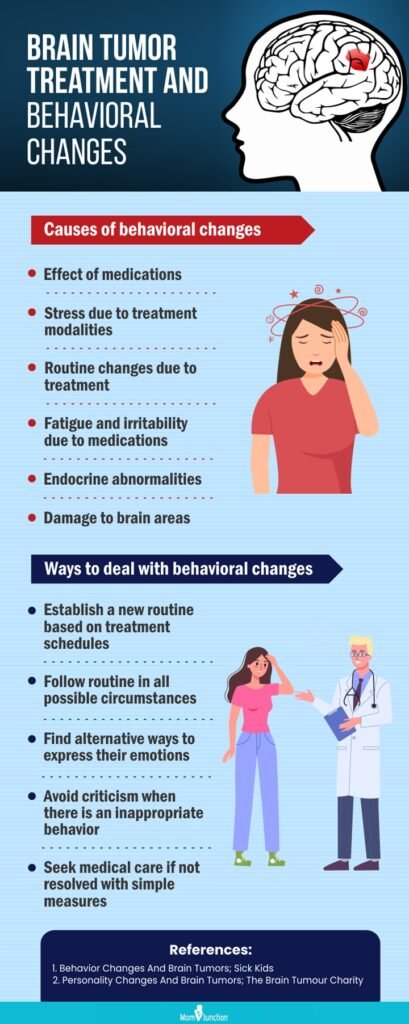
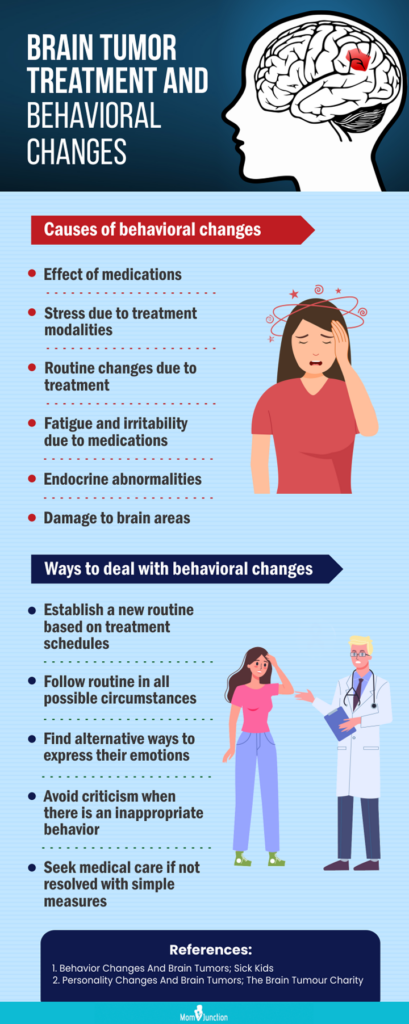
Changes in Personality
Brain tumors may affect your cognitive and emotional functioning, leading to personality changes. These changes can manifest as mood swings, irritability, or alterations in behavior. It’s important to discuss any significant shifts in your personality with a healthcare provider.
Difficulty with Balance and Coordination
If you find yourself experiencing unexplained difficulties with balance, coordination, or walking, it could be an indication of a brain tumor affecting the regions responsible for motor control. These symptoms should be addressed promptly by a medical professional.
Weakness or Numbness
The presence of weakness or numbness, particularly in one side of the body, may be linked to the presence of a brain tumor. Such symptoms should not be ignored and require evaluation by a healthcare expert.
Physical Examination
During the diagnostic process for brain tumors, your healthcare provider will conduct a physical examination to assess your overall health. This examination aims to gather information that can aid in the diagnosis and treatment planning.
General Physical Examination
The general physical examination includes assessing your vital signs, such as temperature, heart rate, blood pressure, and respiratory rate. The healthcare provider will also examine your head, neck, and body, checking for any abnormalities or signs which could be indicative of an underlying brain tumor.
Neurological Examination
The neurological examination focuses on assessing the functions of your nervous system, particularly the brain and spinal cord. It involves evaluating various aspects of your neurological functioning, such as:
Reflexes
During the examination, the healthcare provider will assess your reflexes by using a reflex hammer to tap specific areas of your body. This helps them evaluate the integrity of your nervous system.
Muscle Strength and Tone
The healthcare provider will evaluate your muscle strength and tone by asking you to perform different movements and resisting against their pressure. This helps determine if any weakness or abnormalities are present.
Sensory Function
Your sensory function will be assessed by testing your ability to feel different sensations, such as light touch, pinprick, and vibration. Any changes in sensation can provide valuable information about the possible presence of a brain tumor.
Coordination and Balance
The healthcare provider may ask you to perform specific tasks requiring coordination and balance, such as walking in a straight line or touching your finger to your nose. This assessment helps identify any deficits that may be related to a brain tumor.
Vision and Eye Movements
To evaluate your visual function, the healthcare provider may perform a series of tests, such as checking visual acuity, assessing the field of vision, and examining the movement of your eyes. These tests can help detect problems that may be caused by a brain tumor.
Cognitive Function
The healthcare provider may also assess your cognitive function, including memory, attention, language skills, and problem-solving abilities. Any cognitive changes that are present will be noted and considered during the diagnostic process.

Imaging Tests
Imaging tests play a crucial role in diagnosing brain tumors by providing detailed images of the brain. The following imaging tests are commonly used:
Computed Tomography (CT) Scan
A CT scan utilizes X-rays and computer technology to create cross-sectional images of the brain. It provides detailed information about the size and location of the tumor, helping healthcare providers make an accurate diagnosis.
Magnetic Resonance Imaging (MRI)
An MRI scan uses powerful magnets and radio waves to generate highly detailed images of the brain. This imaging technique is particularly useful in evaluating the different structures and tissues within the brain, aiding in the diagnosis and treatment planning.
Positron Emission Tomography (PET) Scan
A PET scan involves injecting a small amount of radioactive material into your bloodstream. This material highlights areas with increased metabolic activity, as brain tumors tend to exhibit higher metabolism compared to healthy brain tissue.
Angiogram
An angiogram is a specialized imaging test that involves injecting a contrast dye into your blood vessels to visualize the blood supply to the brain. This helps determine the presence and location of abnormal blood vessels that may be associated with a brain tumor.
Spinal Tap (Lumbar Puncture)
In some cases, a spinal tap may be performed to analyze the cerebrospinal fluid (CSF) for any signs of abnormality. This procedure involves inserting a thin needle into the lower back to collect a sample of the CSF, which is examined for tumor markers.

Biopsy
A biopsy is the definitive method for diagnosing a brain tumor. It involves removing a small sample of the tumor tissue or cells for examination under a microscope. Different biopsy procedures can be used:
Needle Biopsy
A needle biopsy involves inserting a thin needle through a small hole in the skull, guided by imaging techniques, to extract a sample of the tumor. This minimally invasive procedure helps determine the tumor’s type and grade.
Stereotactic Biopsy
Stereotactic biopsy is performed using three-dimensional imaging to precisely locate the tumor. A small hole is made in the skull, and a needle is inserted to collect a tissue sample. This procedure allows for accurate sample collection from deep-seated tumors.
Open Biopsy
In some cases, an open biopsy may be necessary, particularly for larger tumors or those in critical areas of the brain. This procedure involves making an incision in the scalp and creating an opening in the skull to access the tumor directly.
Determining the type and grade of the brain tumor through a biopsy is crucial for developing an effective treatment plan.
Stay tuned for the next section where we’ll discuss the different types of brain tumors in teenagers and young adults, as well as the available treatment options.