
If you’ve ever experienced the discomfort of dry mouth, you know just how bothersome it can be. From difficulty swallowing to constant thirst, it’s no fun at all. But fear not! In this article, we’ll explore some simple and effective strategies to help relieve dry mouth and restore comfort to your oral health. Whether it’s through adjusting your lifestyle habits or trying out some tried-and-true remedies, there’s sure to be a solution that suits you. So, read on and say goodbye to the annoyance of dry mouth! Dry mouth, also known as xerostomia, is a condition where there is a lack of saliva production in the mouth. This can be uncomfortable and can lead to various complications if left untreated. In this article, we will discuss the causes, symptoms, risk factors, complications, prevention tips, home remedies, over-the-counter products, prescription treatments, lifestyle changes, and when to see a doctor for dry mouth.
Causes of Dry Mouth
Medications
One of the common causes of dry mouth is the use of certain medications. Some medications, such as antihistamines, decongestants, and antidepressants, can reduce saliva production as a side effect. Additionally, medications used for treating high blood pressure and certain urinary incontinence drugs can also contribute to dry mouth.
Medical conditions
Several medical conditions can lead to dry mouth. Conditions such as diabetes, Sjogren’s syndrome, autoimmune disorders, HIV/AIDS, Parkinson’s disease, and Alzheimer’s disease can all cause a decrease in saliva production. It is important to speak with a healthcare professional to address the underlying medical condition causing dry mouth.
Dehydration
Dehydration can also be a potential cause of dry mouth. When the body does not have enough fluids, including water, it can impact saliva production. It is essential to stay hydrated by drinking an adequate amount of fluids throughout the day to prevent dry mouth.
Nerve damage
Nerve damage can disrupt the normal functioning of salivary glands, leading to decreased saliva production. This can occur due to certain medical procedures, such as head and neck radiation therapy, as well as conditions like nerve damage from oral surgeries or trauma.
Symptoms of Dry Mouth
Dryness or stickiness in the mouth
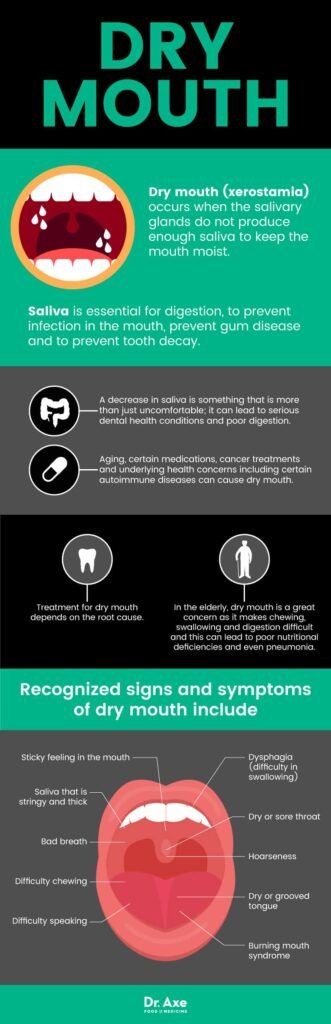
The primary symptom of dry mouth is a persistent feeling of dryness or stickiness in the mouth. The lack of saliva can result in discomfort and can make it difficult to perform regular oral functions such as speaking and swallowing.
Frequent thirst
People with dry mouth often experience an increased thirst. The lack of moisture in the mouth can lead to a constant feeling of thirst, even after drinking fluids.
Difficulty swallowing or speaking
Due to the reduced saliva production, individuals with dry mouth may find it challenging to swallow food or liquids. Speaking can also become more difficult, as there is not enough saliva to lubricate the mouth and make speaking easier.
Sore throat or hoarseness
Dry mouth can cause irritation and inflammation in the throat, leading to a sore throat or hoarseness. The lack of saliva to coat the throat can result in discomfort and a scratchy feeling.
Risk Factors
Age
As individuals age, the risk of developing dry mouth increases. Older adults tend to take more medications, and many of these medications can reduce saliva production. Additionally, the salivary glands may not function as efficiently with age.
Medication usage
The use of certain medications, as mentioned earlier, is a significant risk factor for dry mouth. It is essential to discuss potential side effects with a healthcare professional before starting any new medications.
Medical conditions
Certain medical conditions, such as diabetes, Sjogren’s syndrome, and autoimmune disorders, increase the risk of developing dry mouth. Regular check-ups with a healthcare professional are important for managing these conditions and addressing any accompanying symptoms.
Smoking or tobacco use
Smoking or using tobacco products is associated with a range of oral health problems, including dry mouth. Tobacco use can reduce saliva production and increase the risk of gum disease and oral infections.
Complications of Dry Mouth
Tooth decay
The lack of saliva in the mouth can result in an increased risk of tooth decay. Saliva helps to neutralize acids and protect the teeth from decay-causing bacteria. Without enough saliva, the teeth become more vulnerable to cavities and decay.
Gum disease
Dry mouth can contribute to the development of gum disease. Saliva plays a crucial role in cleaning the mouth and removing plaque and bacteria. When there is not enough saliva, bacteria can build up, leading to gum inflammation and infection.
Oral infections
The reduced saliva flow can make the mouth more susceptible to infections. Oral infections, such as thrush (a fungal infection), and other bacterial or viral infections, can occur more frequently in individuals with dry mouth.
Difficulty wearing dentures
For individuals who wear dentures, dry mouth can make it challenging to keep the dentures in place. The lack of saliva can result in a decrease in denture retention and discomfort while wearing them.

Prevention Tips
Stay hydrated
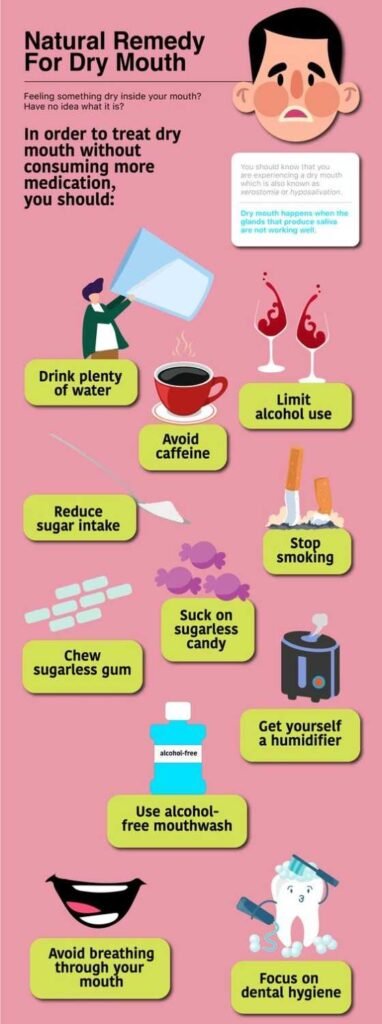
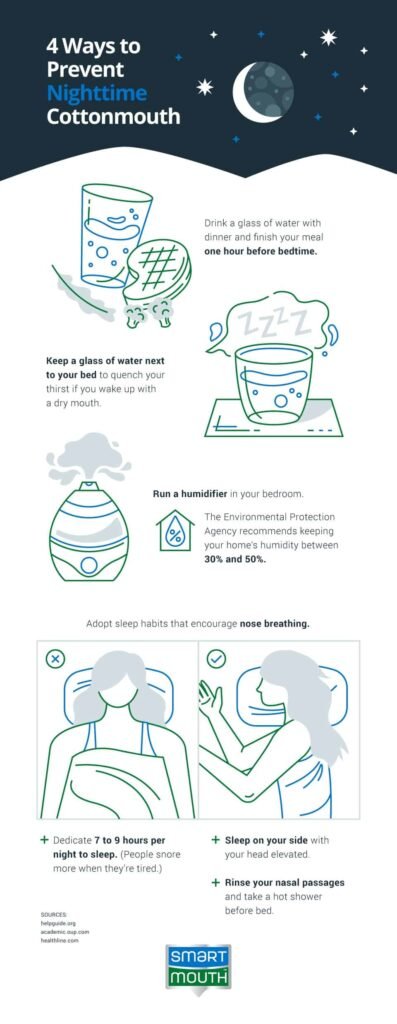
Ensuring adequate hydration is crucial in preventing dry mouth. Drink plenty of water throughout the day to keep your mouth moist. Sipping water regularly can help combat dryness.
Avoid tobacco and alcohol
Tobacco and alcohol can contribute to dry mouth. Avoiding or minimizing tobacco and alcohol use can help reduce the risk of developing dry mouth and related complications.
Maintain good oral hygiene
Practicing good oral hygiene is essential for preventing dry mouth and maintaining overall oral health. Brush your teeth at least twice a day, floss regularly, and use an antimicrobial mouthwash to keep bacteria at bay.
Use a humidifier
Using a humidifier in your living space can introduce moisture into the air, which can help alleviate dry mouth symptoms. Consider using a humidifier, especially during dry seasons or in environments with low humidity.
Home Remedies for Dry Mouth
Drink water frequently
Drinking water frequently can help keep the mouth moist and relieve dry mouth symptoms. Sip water throughout the day and especially during meals.
Chew sugar-free gum or suck on sugar-free candies
Chewing sugar-free gum or sucking on sugar-free candies can stimulate the production of saliva. Opt for xylitol-containing products, as xylitol has been shown to have dental benefits.
Avoid caffeine and alcohol
Caffeine and alcohol can contribute to dehydration and worsen dry mouth symptoms. Limit your consumption of beverages that contain caffeine and alcohol.
Use a saliva substitute
Saliva substitutes, available in the form of sprays or gels, can provide temporary relief for dry mouth symptoms. These products mimic the properties of saliva and help keep the mouth moisturized.
Over-the-Counter Products
Saliva-stimulating medications
There are over-the-counter medications available that can stimulate saliva production. These medications often contain ingredients such as pilocarpine or cevimeline and can provide temporary relief from dry mouth symptoms.
Mouthwashes and rinses
Using alcohol-free mouthwashes and rinses specifically designed for dry mouth can help alleviate discomfort and freshen the breath. Look for products that are gentle and soothing.
Oral moisturizing gels/sprays
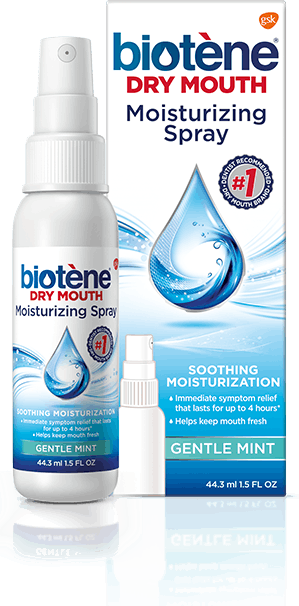
Oral moisturizing gels and sprays can provide instant relief for dry mouth. These products can be directly applied to the mouth to help lubricate and moisturize the tissues.
Toothpastes for dry mouth
Toothpastes specifically formulated for dry mouth can help combat oral dryness and protect against tooth decay. These toothpastes often contain ingredients that promote saliva production and provide extra moisture.
Prescription Treatments
Pilocarpine (Salagen)
Pilocarpine is a prescription medication that can stimulate saliva production. It is often prescribed for individuals with dry mouth caused by Sjogren’s syndrome or as a result of radiation therapy.
Cevimeline (Evoxac)
Cevimeline is another prescription medication that can effectively increase saliva production. It is commonly used for individuals with dry mouth due to Sjogren’s syndrome.
Lifestyle Changes
Breathing through the nose
Breathing through the nose instead of the mouth can help reduce dry mouth symptoms. Nasal breathing helps to retain moisture and prevent excessive evaporation of saliva.
Avoiding mouth breathing
Consciously avoiding breathing through the mouth can help prevent dry mouth. Keeping the mouth closed and breathing through the nose can help maintain a moist environment in the mouth.
Avoiding spicy or salty foods
Spicy and salty foods can exacerbate dry mouth symptoms. It is advisable to avoid or minimize the consumption of these foods to alleviate dryness and discomfort.
Using a lip balm
Using a lip balm can help prevent dryness and cracking of the lips. Choose a lip balm that provides moisturization and protection against the elements.
When to See a Doctor
Dry mouth persists for an extended period
If you experience persistent dry mouth that lasts beyond a couple of weeks, it is important to consult a healthcare professional. They can evaluate your symptoms, assess potential underlying causes, and recommend appropriate treatment options.
Accompanied by other concerning symptoms
If dry mouth is accompanied by other symptoms such as unexplained weight loss, extreme fatigue, or severe oral discomfort, it is advisable to seek medical attention promptly. These symptoms could be indicative of an underlying medical condition that requires medical intervention.
Worsening oral health despite self-care efforts
If you notice a decline in your oral health, such as an increase in cavities, gum disease, or oral infections, despite following good oral hygiene practices and utilizing home remedies, it is crucial to consult a dentist or medical professional for a comprehensive evaluation and tailored treatment plan.
Difficulty eating, swallowing, or speaking
If dry mouth significantly affects your ability to eat, swallow, or speak, it is important to seek prompt medical attention. Difficulties with these essential functions can impact overall well-being and quality of life.
In conclusion, dry mouth can be a bothersome condition that can lead to various complications if not addressed. It is crucial to identify and address the underlying causes, manage symptoms, and incorporate preventative measures to maintain optimal oral health. If dry mouth persists or is accompanied by concerning symptoms, it is advisable to seek medical attention for an accurate diagnosis and appropriate treatment. Taking proactive steps, such as staying hydrated, practicing good oral hygiene, and utilizing available remedies and products, can help alleviate dry mouth symptoms and improve overall oral health.