
Imagine a world where kids run around freely, playing and sharing toys without any worries. Sounds idyllic, right? Unfortunately, in reality, there is a contagious virus that can quickly put a damper on all the fun. Hand, Foot and Mouth Disease (HFMD) is a common illness that affects children, causing fever, mouth sores, and a rash. But fear not! With a few simple preventive measures, you can help protect your little ones from this pesky virus and keep the playgrounds a safe and joyful place for everyone.
What is Hand, Foot and Mouth Disease?
Hand, Foot and Mouth Disease (HFMD) is a common viral illness that primarily affects young children under the age of 5. It is characterized by a combination of symptoms including fever, sore throat, and a rash with blisters on the hands, feet, and mouth. While it is typically a mild and self-limiting illness, it can cause discomfort and inconvenience for those affected. Understanding the symptoms, transmission, treatment, and prevention of HFMD is essential for keeping yourself and your loved ones healthy.

Symptoms of Hand, Foot and Mouth Disease
The symptoms of HFMD usually begin with a mild fever, often accompanied by a sore throat. Shortly after, red spots may appear in the mouth, followed by a rash on the hands, feet, and sometimes the buttocks. The rash can develop into small, painful blisters. These blisters may break open and form ulcers, causing discomfort and making eating and drinking difficult. It’s important to note that not all individuals will experience every symptom, and the severity of symptoms can vary from person to person.

Transmission of Hand, Foot and Mouth Disease
HFMD is highly contagious and can spread easily from person to person. The primary modes of transmission include direct contact with an infected individual’s bodily fluids, such as saliva or mucus, and through respiratory droplets expelled during coughing or sneezing. Contaminated surfaces, such as toys, doorknobs, and utensils, can also harbor the virus and contribute to its spread. It’s crucial to take precautionary measures to reduce the risk of transmission and protect yourself and others.

Treatment of Hand, Foot and Mouth Disease
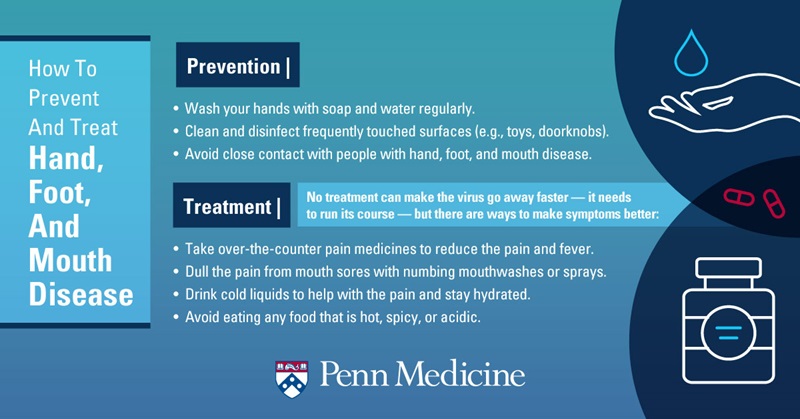
Currently, there is no specific antiviral treatment for HFMD. Most cases of the illness will resolve without medical intervention within a week to ten days. The focus of treatment is to alleviate symptoms and provide comfort. Drinking plenty of fluids and getting adequate rest can help support the immune system in fighting off the virus. Over-the-counter pain relievers, such as acetaminophen or ibuprofen, can help reduce fever, sore throat, and general discomfort. In severe cases or cases with complications, antiviral medication may be prescribed by a healthcare professional.
Preventing the Spread of Hand, Foot and Mouth Disease
Preventing the spread of HFMD is of utmost importance, especially in places where young children are present, such as schools and daycare centers. By implementing a few simple measures, you can significantly reduce the risk of transmission.
Maintaining good hygiene practices is key to preventing the spread of HFMD. Regular cleaning and disinfection of surfaces, especially frequently touched ones, can minimize the presence of the virus. It is recommended to use appropriate disinfectants and follow the manufacturer’s instructions.
Frequent handwashing is also crucial in preventing the spread of HFMD. Proper handwashing technique, using soap and water, should be followed. Hand sanitizers can be used as an alternative when soap and water are not available, but it’s important to note that hand sanitizers may be less effective against the HFMD virus.
Avoiding close contact with infected individuals is another effective measure in preventing the spread of HFMD. This includes minimizing physical contact, such as hugging or shaking hands, and avoiding crowded places, especially during outbreaks.
Covering the mouth and nose when coughing or sneezing is a simple yet effective way to prevent the spread of respiratory droplets containing the virus. Encourage the use of tissues or the elbow to cover the mouth and nose, and ensure proper disposal of used tissues.
Isolating infected individuals is crucial to prevent further transmission. Infected individuals should stay at home until they are no longer contagious, as determined by their healthcare provider. This will help prevent the spread of the virus to others, especially vulnerable populations such as infants and individuals with weakened immune systems.
Promoting vaccination against HFMD can help prevent the disease and reduce its spread. Speak to your healthcare provider about the availability of vaccines in your area and the recommended vaccination schedule.
Lastly, educating individuals about HFMD is essential in raising awareness and promoting prevention. Provide information about the symptoms, transmission modes, and preventive measures through various channels, such as schools, community centers, and healthcare facilities. Awareness campaigns can be organized to reach a wider audience and ensure that accurate information reaches those who need it.
By taking these preventive measures and staying informed, you can play an active role in reducing the spread of HFMD and protecting yourself and those around you. Remember, prevention starts with you!
