
Have you been experiencing persistent heartburn or chest pain? It could be due to a condition known as hiatus hernia. In this article, we will explore the various tests and procedures used to diagnose hiatus hernia. Understanding the diagnostic process can help you gain clarity and peace of mind, allowing you to take the necessary steps towards managing this condition effectively. So, let’s dive into the world of hiatus hernia diagnosis together and shed light on how these tests and procedures can provide you with the answers you seek.
Overview of Hiatus Hernia
Hiatus hernia refers to the condition in which a part of the stomach pushes upwards through the diaphragm into the chest cavity. The diaphragm is a large muscle that separates the chest cavity from the abdomen, and it has an opening called the hiatus through which the esophagus passes. Hiatus hernia can be classified into two types: sliding hiatus hernia and paraesophageal hiatus hernia. This condition leads to various symptoms such as heartburn, chest pain, difficulty swallowing, regurgitation, and frequent belching. To diagnose hiatus hernia, medical professionals rely on various tests and procedures that involve physical examinations, medical history reviews, imaging tests, and endoscopy.

Definition of Hiatus Hernia
Hiatus hernia occurs when part of the stomach protrudes into the chest cavity through the diaphragm’s opening called the hiatus. This displacement of the stomach can happen due to a weakened or enlarged hiatus. The two main types of hiatus hernia are sliding hiatus hernia and paraesophageal hiatus hernia. In the case of sliding hiatus hernia, the stomach and the junction where the esophagus meets the stomach (gastroesophageal junction) slide back and forth into the chest cavity. On the other hand, paraesophageal hiatus hernia involves the stomach squeezing through the hiatus and sitting alongside the esophagus. Hiatus hernia is a relatively common condition, especially amongst older adults.

Types of Hiatus Hernia
There are two main types of hiatus hernia: sliding hiatus hernia and paraesophageal hiatus hernia.
-
Sliding Hiatus Hernia: This is the most common type of hiatus hernia. It occurs when the stomach and gastroesophageal junction slide into the chest cavity. In this type, the junction between the stomach and the esophagus is above the diaphragm.
-
Paraesophageal Hiatus Hernia: This type of hiatus hernia is less common but can be more dangerous. It occurs when the stomach squeezes through the hiatus and sits alongside the esophagus, allowing the gastroesophageal junction to remain in its normal position. This type of hernia can lead to strangulation or obstruction of the stomach, which requires immediate medical attention.

Symptoms of Hiatus Hernia
Hiatus hernia can cause a variety of symptoms that may vary in severity between individuals. Some common symptoms associated with hiatus hernia include:
-
Heartburn: A burning sensation in the chest that may radiate towards the neck or throat.
-
Chest Pain: Discomfort or pain in the chest area, often mistaken for a heart condition.
-
Difficulty Swallowing: Feeling as though food is getting stuck or not passing easily down the esophagus.
-
Regurgitation: The backflow of stomach acid or undigested food into the mouth or throat.
-
Frequent Belching: Excessive burping or bloating, especially after meals.
These symptoms can be exacerbated by certain lifestyle factors, such as overeating, lying down after meals, or consuming acidic or spicy foods. If you experience persistent or severe symptoms, it is important to consult a healthcare professional for an accurate diagnosis and appropriate treatment.

Diagnosing Hiatus Hernia
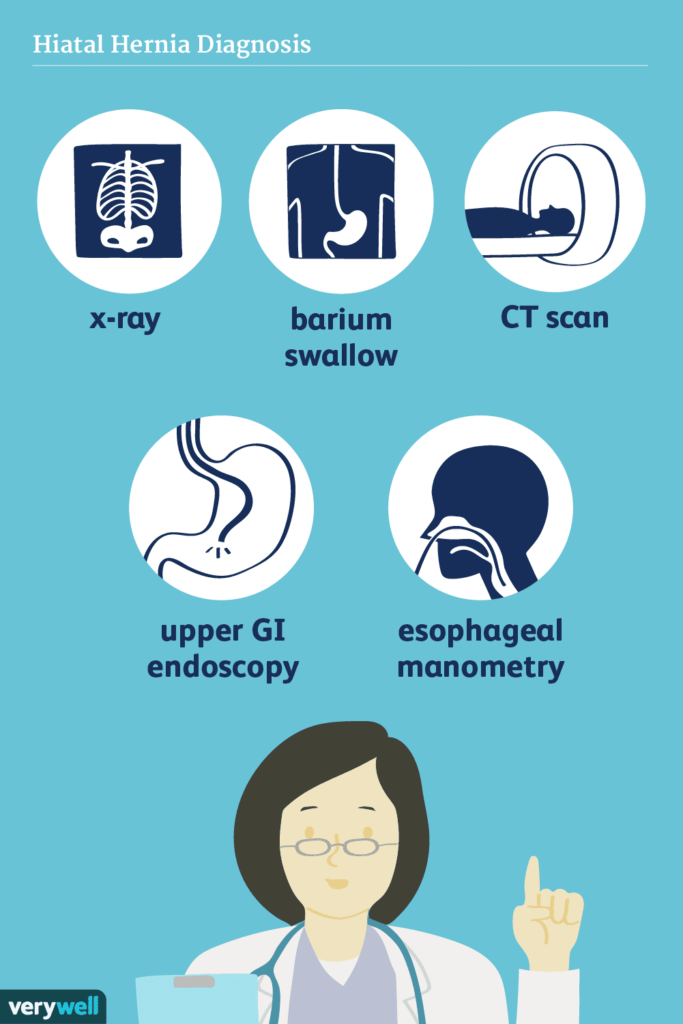
Diagnosing hiatus hernia involves a series of tests and procedures that help healthcare professionals assess the presence and severity of the condition. These diagnostic methods may include physical examinations, medical history reviews, imaging tests, and endoscopy.
Physical Examination
During a physical examination, the healthcare professional will perform various assessments to check for signs and symptoms of hiatus hernia. This may include visual examination, palpation, and auscultation.
Visual Examination
The healthcare professional will look for any visible signs of a hernia, such as a bulge or abnormality in the stomach or abdominal area. They may also observe for any external manifestations of symptoms, such as swelling or redness.
Palpation
Palpation involves gently feeling the abdomen in search of any unusual masses, tenderness, or pain. The healthcare professional may press on different areas to determine the location and size of the hernia.
Auscultation
Auscultation involves listening to sounds produced within the body. In the case of hiatus hernia, the healthcare professional may use a stethoscope to listen for any abnormal bowel sounds or reflux-like noises.
Medical History
Gathering relevant information about the patient’s medical history is crucial for diagnosing hiatus hernia. The healthcare professional will conduct a patient interview and review the patient’s symptoms and medical record.
Patient Interview
The healthcare professional will ask you about your symptoms, the duration and frequency of these symptoms, and any factors that may worsen or alleviate them. They may also inquire about your medical history, lifestyle habits, and any underlying conditions that could contribute to the development of hiatus hernia.
Review of Symptoms
A detailed review of symptoms helps the healthcare professional identify any patterns or specific indicators of hiatus hernia. This includes assessing the presence of heartburn, chest pain, difficulty swallowing, regurgitation, and belching.
Medical Record Review
Reviewing the patient’s medical records provides insight into past diagnoses, treatments, and any relevant medical conditions. This information helps healthcare professionals understand the patient’s overall health and can contribute to a more accurate diagnosis.
Imaging Tests
Imaging tests play a vital role in diagnosing hiatus hernia by providing visual confirmation of the condition and its severity. Common imaging tests employed in the diagnosis of hiatus hernia include barium swallow X-ray, upper gastrointestinal (GI) series, computed tomography (CT) scan, and magnetic resonance imaging (MRI).
Barium Swallow X-ray
A barium swallow X-ray involves consuming a contrast fluid containing barium, followed by X-ray imaging of the esophagus and stomach. This allows the healthcare professional to identify the presence of a hernia, assess its size and location, and observe the movement of the barium through the digestive system.
Upper Gastrointestinal (GI) Series
Also known as an upper GI series or barium meal, this test involves drinking a barium solution which coats the lining of the esophagus, stomach, and small intestine. X-rays are then taken to visualize the movement of the barium and identify any abnormalities, such as a hiatus hernia.
Computed Tomography (CT) Scan
A CT scan utilizes X-ray technology to create cross-sectional images of the body. This imaging technique provides detailed information about the structure of the diaphragm, esophagus, and stomach, helping to identify the presence and characteristics of a hiatus hernia.
Magnetic Resonance Imaging (MRI)
MRI uses a combination of strong magnetic fields and radio waves to create detailed images of internal structures. It can be helpful in diagnosing hiatus hernia as it provides clear images of the diaphragm, esophagus, and stomach, allowing healthcare professionals to assess for the presence of a hernia and any associated complications.
Endoscopy
Endoscopy is a minimally invasive procedure that allows direct visualization of the esophagus, stomach, and upper part of the small intestine. This procedure is commonly used to confirm the diagnosis of hiatus hernia and evaluate its severity.
Upper Endoscopy
Upper endoscopy, also known as esophagogastroduodenoscopy (EGD), involves inserting a thin, flexible tube with a camera and light source (endoscope) through the mouth and into the esophagus, stomach, and upper small intestine. This allows the healthcare professional to closely examine these structures and identify the presence and characteristics of a hiatus hernia.
pH Monitoring
pH monitoring involves placing a small, flexible tube through the nose and into the esophagus to measure the level of acidity. This procedure helps determine if gastroesophageal reflux disease (GERD) is present, which often coexists with hiatus hernia.
In conclusion, diagnosing hiatus hernia involves a thorough evaluation of symptoms, medical history, and the use of various tests and procedures. It is essential to consult a healthcare professional for an accurate diagnosis and appropriate treatment plan tailored to your specific condition.