
You’re about to discover simple yet effective ways to prevent the spread of the West Nile Virus. With the increasing concern about mosquito-borne diseases, it’s crucial to take necessary measures to protect yourself and your loved ones. In this article, you’ll find practical tips and valuable information on minimizing the risk of West Nile Virus infection. By following these guidelines, you can ensure a safer and healthier environment for everyone.
Understanding West Nile Virus
West Nile Virus is a mosquito-borne disease that primarily affects birds, but can also be transmitted to humans and other animals. It was first identified in the West Nile region of Uganda in 1937 and has since spread to various parts of the world, including North America, Europe, and Asia.
What is West Nile Virus?
West Nile Virus belongs to the family Flaviviridae and is transmitted through the bite of infected mosquitoes, primarily of the Culex species. The virus can cause a range of symptoms, from mild flu-like illness to severe neurological complications, such as encephalitis or meningitis. While most people infected with the virus do not develop symptoms, certain individuals, particularly the elderly and those with weakened immune systems, are at a higher risk for severe illness.
How is West Nile Virus transmitted?
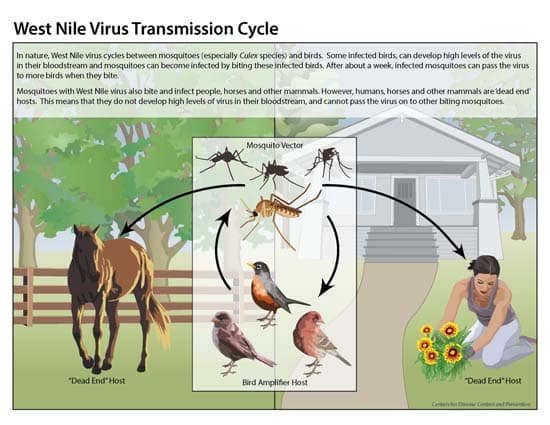
Mosquitoes become infected with West Nile Virus after feeding on infected birds that act as reservoir hosts for the virus. The infected mosquitoes then carry the virus and can transmit it to humans, horses, and other animals through subsequent bites. It is important to note that West Nile Virus is not directly contagious from person to person or from animal to person.
Symptoms of West Nile Virus infection
The majority of individuals infected with West Nile Virus do not exhibit any symptoms, with only about 20% developing mild flu-like symptoms, known as West Nile fever. These symptoms may include fever, headache, body aches, fatigue, and occasionally, a rash. In rare cases, around 1 in 150 individuals, the infection can progress to a severe form, leading to neurological complications, such as encephalitis or meningitis. Severe cases may present with symptoms like high fever, stiff neck, muscle weakness, tremors, disorientation, seizures, or even coma.
Risk factors for West Nile Virus infection
While anyone can contract West Nile Virus, certain factors put individuals at a higher risk for infection. The elderly, individuals with weakened immune systems, and those with pre-existing health conditions, such as cancer, diabetes, or kidney disease, are more susceptible to severe illness. Additionally, individuals who spend a significant amount of time outdoors, especially during peak mosquito activity times, are more likely to be bitten by infected mosquitoes and contract the virus.
Mosquito Control Measures
Preventing and controlling the mosquito population is crucial in reducing the transmission of West Nile Virus. Various measures can be implemented to minimize the breeding and presence of mosquitoes in areas where the virus is endemic.
Eliminating mosquito breeding sites
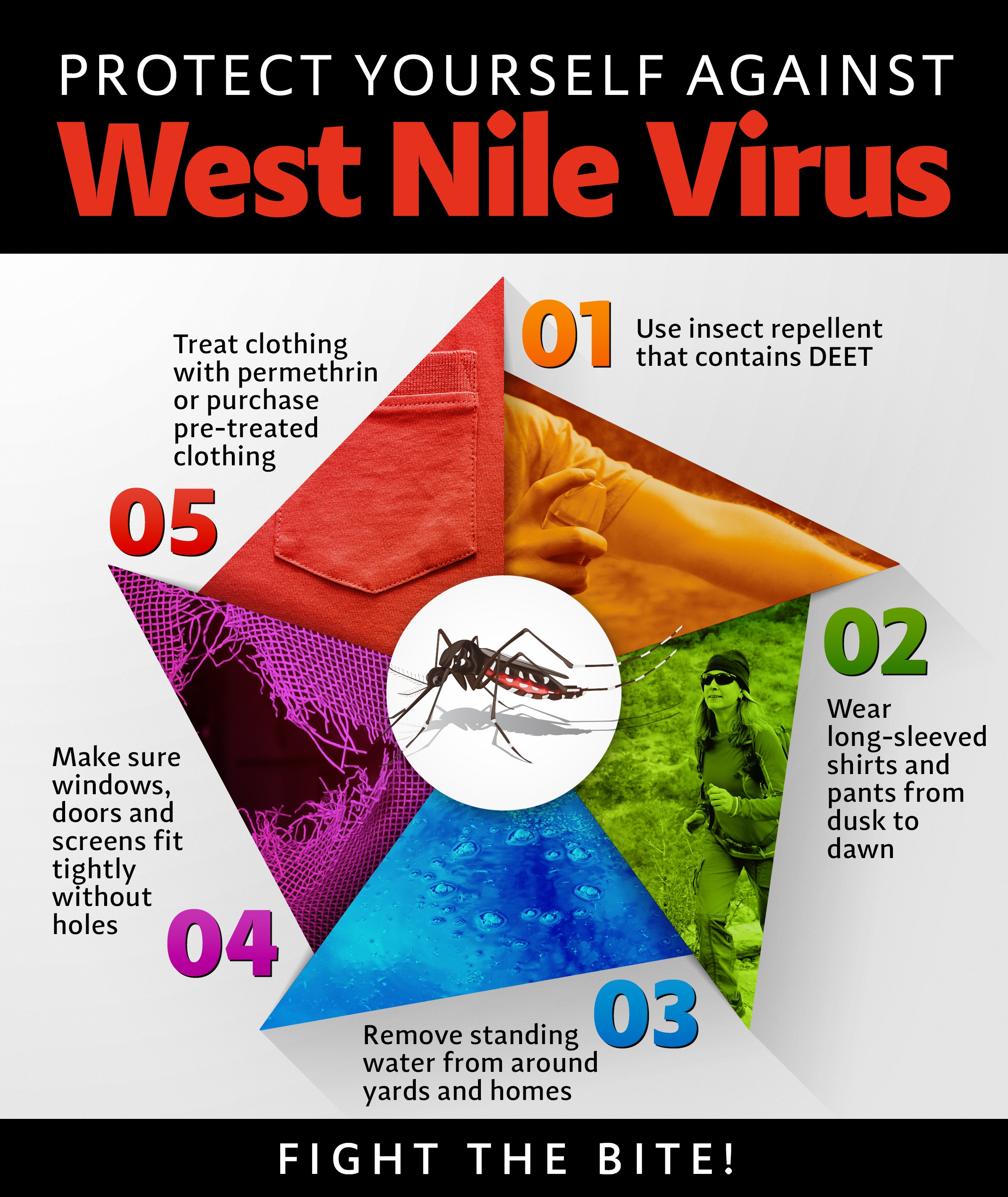
One of the most effective ways to control mosquitoes is by eliminating their breeding sites. Mosquitoes thrive in stagnant water, so removing any standing water sources around homes and communities is essential. This includes emptying and cleaning birdbaths, flower pots, buckets, gutters, and other containers that can collect water. Regular maintenance of swimming pools and ornamental ponds is also necessary to prevent mosquito breeding.
Using insect repellents
Applying insect repellents on exposed skin can provide significant protection against mosquito bites. Look for products containing ingredients such as DEET, picaridin, or oil of lemon eucalyptus, which have been proven effective in repelling mosquitoes. It is important to follow the instructions on the repellent’s label and reapply as needed, especially if spending a long time outdoors.
Wearing protective clothing
When venturing outdoors during peak mosquito activity times, such as dawn and dusk, it is advisable to wear long-sleeved shirts, long pants, socks, and shoes to minimize skin exposure. Light-colored clothing is also recommended, as mosquitoes are attracted to dark colors. Additionally, clothing treated with permethrin can provide an extra layer of protection against mosquito bites.
Avoiding peak mosquito activity times
Mosquitoes are most active during the early morning and evening hours, so avoiding outdoor activities during these times can significantly reduce the risk of mosquito bites. If outdoor activities are unavoidable, it is important to take necessary precautions, such as using insect repellents and wearing protective clothing, to minimize exposure to mosquitoes.
Vector Management Strategies
Vector management refers to the various strategies and techniques used to control the population of disease-carrying vectors, such as mosquitoes, and prevent the spread of diseases like West Nile Virus. These strategies can be applied at different stages of the vector’s lifecycle.
Vector surveillance and monitoring
A crucial aspect of vector control is ongoing surveillance and monitoring of mosquito populations. This involves regularly collecting data on mosquito abundance and species distribution to identify potential hotspots and prioritize control efforts. By monitoring mosquito populations, health authorities can detect changes in vector density, track the spread of West Nile Virus, and implement appropriate control measures.
Source reduction
Source reduction aims to eliminate or modify mosquito breeding sites to minimize the number of mosquitoes in a given area. This can involve activities such as draining and cleaning stagnant water bodies, properly disposing of discarded containers, and improving drainage systems to prevent water accumulation. By reducing the availability of suitable breeding sites, it becomes more challenging for mosquitoes to reproduce and increase their population.
Larviciding
Larviciding involves the application of insecticides to kill mosquito larvae in their breeding sites, including stagnant water bodies such as ditches, ponds, and marshes. This preventive measure can significantly reduce the number of adult mosquitoes and interrupt the life cycle of the vector. Larvicides are specifically designed to target mosquito larvae while having minimal impact on non-target organisms and the environment.
Adulticiding
Adulticiding refers to the use of insecticides to kill adult mosquitoes. This strategy is typically employed when there is a high density of mosquitoes or during outbreaks of mosquito-borne diseases like West Nile Virus. Adulticiding can be done through ground-based applications or aerial spraying. It is important to note that adulticiding should be used judiciously, taking into consideration the potential impacts on human health, non-target organisms, and ecosystem sustainability.
Public Education and Awareness
Public education and awareness campaigns play a crucial role in preventing the spread of West Nile Virus. By disseminating information about the disease and its prevention, individuals can be empowered to take proactive measures to protect themselves and their communities.
Educating the public about West Nile Virus
It is important to educate the public about the basics of West Nile Virus, including its transmission, symptoms, and potential complications. This can be done through various communication channels, such as social media, websites, brochures, community meetings, and educational materials distributed to healthcare facilities and schools. The information should be presented in a clear and accessible manner, targeting different age groups and cultural backgrounds.
Providing information on prevention methods
Public education efforts should emphasize the importance of personal protection measures to prevent mosquito bites and reduce the risk of West Nile Virus infection. This includes information on using insect repellents, wearing protective clothing, and avoiding peak mosquito activity times. Additionally, providing guidance on eliminating mosquito breeding sites at the household level can empower individuals to take proactive steps in their own environments.
Promoting community participation
Engaging the community through active participation can enhance the effectiveness of vector control efforts. Public health agencies can collaborate with community organizations, local schools, and neighborhood associations to spread awareness about West Nile Virus and mobilize community-driven initiatives for mosquito control. This can include organizing cleanup campaigns, conducting neighborhood inspections for potential breeding sites, and implementing community-wide mosquito control measures.

Public Health Measures
In addition to individual prevention strategies, public health measures are essential for controlling West Nile Virus and reducing its impact on communities. These measures focus on surveillance, early detection, treatment, and preventing the further spread of the virus.
Surveillance and reporting systems
Active surveillance systems are crucial for monitoring West Nile Virus activity and detecting any changes in the geographic distribution or intensity of the disease. Health authorities establish reporting mechanisms to ensure that healthcare providers promptly report suspected cases to public health agencies. This enables timely tracking of the disease, implementation of appropriate control measures, and allocation of resources for prevention and response efforts.
Early detection and diagnosis
Early detection and diagnosis of West Nile Virus cases are vital for providing appropriate medical care and initiating public health interventions. Healthcare professionals should be trained to recognize the symptoms of the disease, conduct diagnostic tests, and report confirmed cases to public health authorities. Rapid diagnostic tests and laboratory capacity building are crucial to facilitate prompt and accurate diagnosis.
Isolation and treatment of infected individuals
Once a West Nile Virus infection is confirmed, infected individuals should be isolated to prevent further transmission to mosquitoes or other humans. In severe cases requiring hospitalization, appropriate medical care should be provided to manage symptoms, control complications, and support the individual’s recovery.
Contact tracing and quarantine
Contact tracing is an important public health measure to identify individuals who may have been exposed to the virus through close contact with infected individuals. These contacts can be placed under quarantine or monitored for signs and symptoms of West Nile Virus. It is essential to trace and isolate potential sources of infection to break the chain of transmission and prevent further spread within the community.
Environmental Interventions
Environmental interventions focus on modifying the physical environment to reduce mosquito breeding sites and interrupt the transmission cycle of West Nile Virus. These interventions can be implemented at both individual and community levels.
Environmental modification to reduce mosquito breeding
Modifying the environment to eliminate potential mosquito breeding sites is an effective way to reduce the mosquito population. This can involve ensuring proper drainage of water bodies, removing discarded tires or containers that can collect water, and maintaining clean and well-maintained swimming pools. By creating a less favorable environment for mosquito breeding, the risk of West Nile Virus transmission can be significantly reduced.
Applying larvicides in stagnant water bodies
In certain cases, larvicides can be used to treat larger stagnant water bodies that are difficult to eliminate, such as stagnant ponds or artificial reservoirs. These larvicides effectively kill mosquito larvae, preventing them from developing into adult mosquitoes. However, the use of larvicides should be carefully planned and executed to ensure the safety of non-target organisms and the environment.
Mosquito control in urban and rural areas
Mosquito control efforts should be tailored to the specific needs and characteristics of both urban and rural areas. In urban areas, where human populations are densely concentrated, vector control programs may include intensified larviciding and adulticiding, targeted source reduction campaigns, and public education initiatives. In rural areas, where water bodies and agriculture are more prevalent, efforts may incorporate larval source management, biological control methods, and community-based interventions.
Vector Control Programs
Effective vector control programs require a coordinated effort between government agencies, local health departments, community organizations, and the allocation of appropriate funding and resources.
Government-led vector control initiatives
Governments play a central role in coordinating and implementing comprehensive vector control programs. This involves establishing policies, regulations, and guidelines for vector management, as well as allocating resources and providing technical support to local health departments and community organizations. Government agencies also collaborate with international partners to share best practices and coordinate responses to global outbreaks.
Role of local health departments
Local health departments are at the forefront of vector control efforts and have the responsibility of implementing prevention and control strategies within their jurisdictions. They conduct surveillance, respond to reported cases, and collaborate with other stakeholders to mobilize community-driven interventions. Local health departments also provide guidance and support to healthcare providers, distribute educational materials, and ensure that appropriate steps are taken to prevent the spread of West Nile Virus.
Collaboration with community organizations
Effective vector control programs rely on the active participation of community organizations, such as neighborhood associations, schools, and non-profit organizations. Collaborative efforts can include community outreach and education campaigns, neighborhood inspections for mosquito breeding sites, and community-driven clean-up activities. By involving the community in vector control initiatives, the sense of collective responsibility is strengthened, leading to more sustainable and impactful outcomes.
Funding and resources for vector control programs
Adequate funding is essential for the successful implementation of vector control programs. Governments and international organizations must allocate sufficient resources to support surveillance, research, training, equipment, and mosquito control measures. Furthermore, sustained funding ensures that vector control programs can be maintained over time, reducing the risk of recurring outbreaks and the burden on public health systems.
Role of Health Professionals
Health professionals, including physicians, nurses, and public health officials, play a critical role in the prevention, diagnosis, and treatment of West Nile Virus.
Screening and testing for West Nile Virus
Healthcare providers should be knowledgeable about the risk factors, symptoms, and diagnostic methods for West Nile Virus. They should conduct thorough screenings and inquire about travel history and potential exposure to mosquitoes in individuals presenting with relevant symptoms. Appropriate diagnostic tests, such as serology or polymerase chain reaction (PCR), should be conducted to confirm the presence of the virus.
Reporting cases and outbreaks
Health professionals have a duty to report suspected or confirmed West Nile Virus cases to local health departments or public health agencies. Timely reporting enables swift action in terms of surveillance, contact tracing, and implementation of control measures. Reporting also facilitates data collection and epidemiological investigations, leading to a better understanding of the disease and its impact.
Providing guidance and treatment
Health professionals should provide accurate information and guidance to individuals diagnosed with West Nile Virus, as well as their families and communities. This includes explaining the disease, discussing treatment options, and providing recommendations for symptom management and prevention of further transmission. Health professionals are also responsible for educating patients on the potential complications of the virus and the importance of seeking medical attention if symptoms worsen.
Community outreach and education
Health professionals are valuable resources for promoting public awareness and education about West Nile Virus. They can participate in community outreach events, give presentations at schools or community centers, and collaborate with local organizations to disseminate information on prevention methods. By engaging directly with the public, health professionals can address concerns, answer questions, and foster a sense of trust and partnership in the fight against West Nile Virus.
Research and Innovation
Continuous research and innovation are vital in improving our understanding of West Nile Virus, developing effective control strategies, and advancing treatment methods to combat the disease.
Developing vaccines and antiviral therapies
Research efforts are focused on the development of vaccines and antiviral therapies targeted at preventing West Nile Virus infection or treating those who are infected. Vaccines can provide long-term protection against the virus, while antiviral therapies can help alleviate symptoms and prevent complications. Ongoing research in this area aims to enhance our ability to control and manage the disease effectively.
Advancements in mosquito control technology
Researchers and scientists are continually exploring new approaches and technologies to control mosquito populations. This includes the development of innovative mosquito traps, genetic modification techniques to reduce vector capacity, and biocontrol methods that utilize natural enemies of mosquitoes. These advancements have the potential to revolutionize mosquito control strategies, making them more targeted, efficient, and environmentally friendly.
Surveillance methods and tools
Surveillance plays a crucial role in tracking the spread of West Nile Virus and identifying areas at high risk of transmission. Researchers are developing new surveillance methods and tools that can improve the accuracy and timeliness of data collection. This includes the use of remote sensing, geospatial analysis, and predictive modeling to identify mosquito breeding sites, monitor mosquito populations, and anticipate outbreaks.
Risk assessment and prediction models
Risk assessment models are essential in predicting the likelihood and severity of West Nile Virus outbreaks. By integrating data on environmental factors, mosquito abundance, bird populations, and human demographics, researchers can develop models that identify areas at high risk of transmission. These models can guide decision-making and resource allocation, optimizing the effectiveness of vector control programs and public health interventions.
International Cooperation
West Nile Virus is a global health concern, and international cooperation is crucial for sharing knowledge, resources, and best practices in the fight against the disease.
Sharing information and best practices
International organizations, such as the World Health Organization (WHO) and the Centers for Disease Control and Prevention (CDC), facilitate the exchange of information and best practices among countries affected by West Nile Virus. This includes sharing data on surveillance, disease trends, prevention strategies, and research findings. By promoting collaboration and mutual learning, the international community can enhance its collective ability to control and prevent West Nile Virus.
Collaborative research and development
Research collaboration between countries is essential for advancing our understanding of West Nile Virus and developing effective control measures. Scientists and researchers from different nations can pool their expertise and resources to conduct joint studies, exchange data, and share laboratory techniques. Collaborative research efforts can lead to breakthroughs in vaccine development, antiviral therapies, and mosquito control strategies that benefit global public health.
Responding to global outbreaks
The international community must be prepared to respond swiftly and effectively to global outbreaks of West Nile Virus. This involves coordinated surveillance, rapid sharing of information, and mobilization of resources to support affected countries. International organizations, governments, and public health agencies must work together to provide technical assistance, laboratory support, and funding to enhance the capacity of affected nations in responding to outbreaks.
Supporting resource-limited countries
West Nile Virus disproportionately affects resource-limited countries, where infrastructure, funding, and healthcare systems may be inadequate. International cooperation is crucial in supporting these countries by providing financial assistance, technical expertise, and capacity building to strengthen their vector control programs and public health infrastructure. By investing in resource-limited countries, the international community can help mitigate the impact of West Nile Virus and build resilience against future outbreaks.
In conclusion, understanding West Nile Virus, implementing mosquito control measures, conducting vector management strategies, promoting public education and awareness, implementing public health measures, implementing environmental interventions, establishing effective vector control programs, involving health professionals, fostering research and innovation, and encouraging international cooperation are all crucial elements in preventing the spread of West Nile Virus. By adopting a comprehensive and multi-faceted approach, we can work towards reducing the burden of this mosquito-borne disease and protecting the health and well-being of our communities.
