
When it comes to arthritis, maintaining joint health is crucial for managing the symptoms and improving overall quality of life. And what better way to keep those joints moving than with regular exercise? In this article, we explore the fascinating link between arthritis and exercise, and dive into the best physical activities that can help promote joint health, reduce pain, and increase mobility. So, if you’re ready to discover how staying active can benefit your joints, read on! Arthritis, a condition characterized by inflammation and stiffness in the joints, can significantly impact your daily life and overall well-being. However, incorporating regular exercise into your routine can provide numerous benefits for managing arthritis symptoms and improving joint health. In this article, we will explore the various benefits of exercise for arthritis, discuss different types of exercises that are suitable for individuals with arthritis, provide considerations for exercising with arthritis, and offer tips for starting and maintaining an exercise routine.

The Benefits of Exercise for Arthritis
-
Reduced joint pain: Engaging in regular exercise can help reduce joint pain associated with arthritis. Physical activity helps to lubricate the joints and increase blood flow, which can alleviate discomfort and reduce inflammation.
-
Improved joint flexibility: Regular exercise improves the range of motion in your joints, making them more flexible and less stiff. This can enhance your ability to perform daily activities and decrease joint tenderness.
-
Increased muscle strength: Strengthening the muscles around your joints can provide added support and stability, decreasing stress on the joints. Stronger muscles can also improve overall joint function and reduce the risk of injury.
-
Enhanced joint stability: Exercise that focuses on balance and stability, such as tai chi and yoga, can help improve joint stability. This can prevent falls and reduce the risk of joint injuries.
-
Weight management: Exercise plays a crucial role in weight management, which is particularly important for individuals with arthritis. Maintaining a healthy weight can significantly reduce the stress on your joints, resulting in decreased pain and improved joint function.
-
Improved mood and mental health: Regular exercise has been shown to boost mood, reduce anxiety and depression, and improve overall mental well-being. Engaging in physical activity releases endorphins, which are known as “feel-good” hormones, promoting a positive mindset.
Types of Exercises for Arthritis
-
Low-impact aerobics: Low-impact aerobic exercises, such as swimming or using an elliptical machine, are gentle on the joints while providing cardiovascular benefits. These exercises help to improve endurance, strengthen the heart, and increase overall fitness.
-
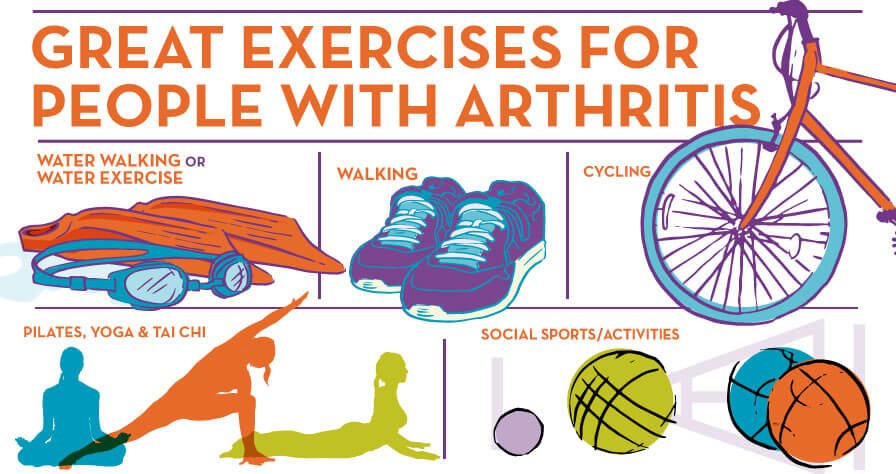
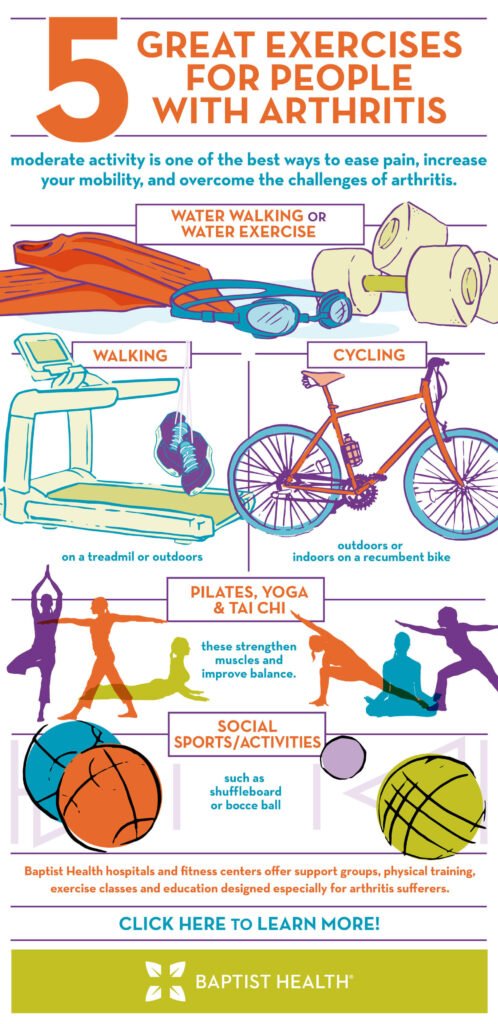
Water exercises: Water exercises or aqua aerobics are excellent options for individuals with arthritis. The buoyancy of the water reduces the impact on the joints, making it easier and more comfortable to move. Activities like swimming or water aerobics can help improve joint mobility and muscle strength.
-
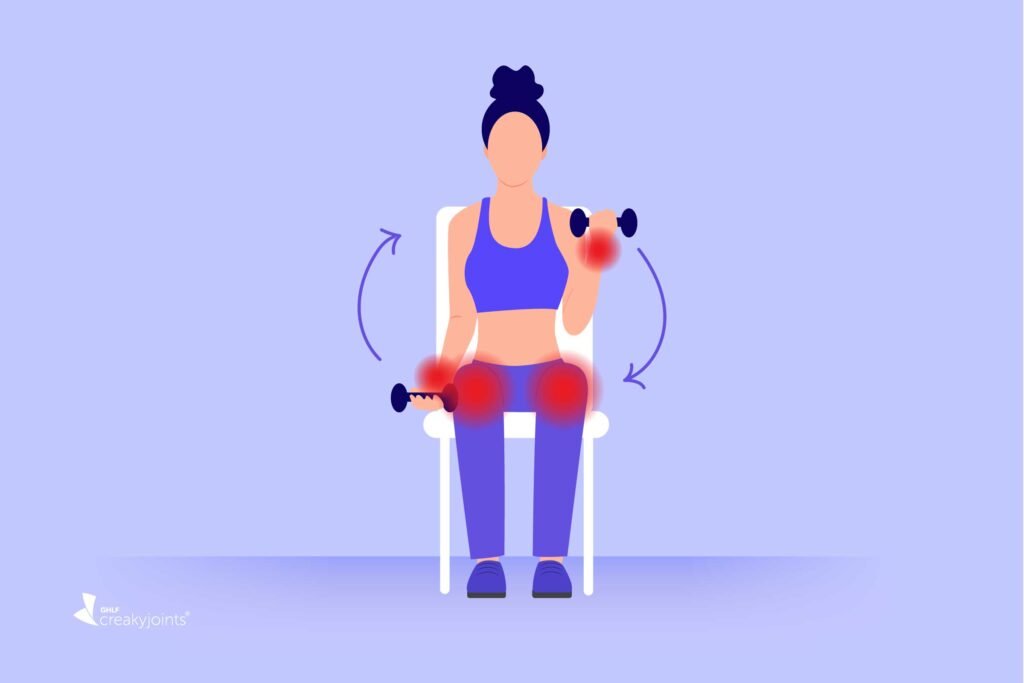
Strength training: Strength training exercises involve using resistance, such as weights or resistance bands, to build and tone muscles. Incorporating strength training into your exercise routine can help strengthen the muscles around your joints, providing added support and stability.
-
Range-of-motion exercises: Range-of-motion exercises focus on moving your joints through their full range of motion. These exercises help to maintain or improve joint flexibility and reduce stiffness. Examples of range-of-motion exercises include shoulder circles, leg swings, and wrist rotations.
-
Tai Chi: Tai chi is a gentle form of exercise that combines slow, flowing movements with deep breathing and mental focus. It promotes balance, flexibility, and relaxation while improving overall body awareness. Tai chi is particularly beneficial for individuals with arthritis as it gently works the joints without putting excessive stress on them.
-
Yoga: Yoga combines physical poses, breathing techniques, and meditation to promote physical and mental well-being. It can help improve joint flexibility, balance, and strength. Many yoga poses can be modified to accommodate individuals with arthritis.
-
Cycling: Cycling is a low-impact cardiovascular exercise that is gentle on the joints. Whether you prefer riding a stationary bike or going for a leisurely bike ride outdoors, cycling strengthens the leg muscles without putting excessive strain on the joints.
-
Walking: Walking is a simple and accessible exercise that can be tailored to your fitness level. It helps improve cardiovascular health, maintains joint flexibility, and strengthens the leg muscles. Start with shorter walks and gradually increase duration and speed.
-
Pilates: Pilates focuses on strengthening the core muscles, which play a crucial role in supporting the spine and maintaining good posture. This low-impact exercise can help improve balance, flexibility, and overall body strength.
-
Dancing: Dancing is a fun and energetic way to engage in physical activity. Whether it’s ballroom dancing, Zumba, or hip hop, dancing can help improve cardiovascular fitness, coordination, and joint flexibility. Choose dance styles that are low-impact and avoid excessive jumping or twisting movements.

Considerations for Exercising with Arthritis
Before starting any exercise program, it’s important to consider certain factors to ensure your safety and maximize the benefits of physical activity:
-
Consulting with a healthcare professional: If you have arthritis, it is essential to consult with a healthcare professional, such as a doctor or physical therapist, before beginning any exercise routine. They can provide personalized recommendations and guidance based on your specific condition and needs.
-
Choosing the right exercise intensity: Finding the right balance between challenging yourself and avoiding excessive strain is important. Start with low-impact exercises and gradually increase intensity and duration as tolerated. Moderate-intensity exercises that make you break a sweat while still being able to carry on a conversation are generally recommended.
-
Warming up and cooling down: Prior to exercising, it is crucial to warm up your muscles and joints with gentle movements and stretches. This helps to increase blood flow to the muscles and prepares your body for the upcoming activity. Cooling down with light stretches after exercise can also aid in preventing muscle soreness and stiffness.
-
Using proper techniques and equipment: Proper form and technique are essential to minimize the risk of injury and maximize the benefits of exercise. If necessary, work with a qualified fitness professional or physical therapist to ensure you are using correct techniques. Additionally, using appropriate and supportive equipment, such as well-fitting shoes, can further protect your joints.
-
Listening to your body’s signals: Pay attention to your body and any signs of pain or discomfort during exercise. While it is normal to experience some muscle soreness with new activities, sharp joint pain or unusual discomfort may indicate that you need to modify or adjust your exercise routine.
-
Taking rest days: Rest is an important part of any exercise routine, allowing your body time to recover and repair. Incorporate regular rest days throughout the week and listen to your body’s need for additional rest when necessary.
-
Modifying exercises: It is essential to modify exercises to suit your individual needs and abilities. If a certain movement or exercise causes pain or discomfort, try modifying it or consult with a healthcare professional for alternative options. Remember, everyone’s arthritis is unique, and what works for one person may not work for another.
Tips for Starting and Maintaining an Exercise Routine
Starting and maintaining an exercise routine can be challenging, but here are some tips to help you get started and stay motivated:
-
Setting realistic goals: Set achievable goals that align with your abilities and current fitness level. It’s better to start small and gradually increase intensity and duration over time.
-
Starting slowly and gradually increasing intensity: Ease into your exercise routine to avoid overexertion and excessive strain on your joints. Begin with shorter durations and lower intensity, and then gradually increase as your fitness level improves.
-
Finding enjoyable activities: Choose exercises that you enjoy and look forward to. When you engage in activities that you find fun and enjoyable, you are more likely to stick with your exercise routine in the long run.
-
Staying consistent: Consistency is key when it comes to reaping the benefits of exercise. Aim for a regular exercise schedule and make it a priority in your daily routine.
-
Joining classes or support groups: Consider joining exercise classes or support groups specifically designed for individuals with arthritis. Being part of a community with similar goals and challenges can provide motivation, support, and camaraderie.
-
Tracking progress: Keep track of your progress to stay motivated and celebrate your achievements. This could include recording the duration and intensity of exercises, noting improvements in joint flexibility or strength, or simply recognizing how exercise positively impacts your overall well-being.
-
Seeking social support: Engage in exercise with friends or family members who can provide support and encouragement along the way. Having a workout buddy helps make exercise more enjoyable and keeps you accountable.
Exercises to Avoid with Arthritis
While exercise is generally beneficial for managing arthritis, there are certain exercises and activities that may not be suitable or potentially harmful for individuals with arthritis. It’s important to avoid:
-
High-impact activities: Activities such as running, jumping, or high-impact aerobics can place excessive stress on the joints and potentially exacerbate arthritis symptoms.
-
Overly repetitive movements: Exercises that involve repetitive joint movements, such as certain cardio machines or repetitive weightlifting, can strain the joints and should be avoided or modified.
-
Heavy weightlifting: Lifting heavy weights without proper form and technique can lead to joint injuries. It’s important to focus on lighter weights and controlled movements to minimize joint stress.
-
Running and jumping: The high impact nature of running or jumping can be harmful to the joints, particularly if you already have joint pain or damage.
-
Contact sports: Participating in contact sports that involve physical contact or high-impact movements can increase the risk of joint injuries and exacerbate arthritis symptoms.
-
Exercises that cause joint pain: Any exercise or movement that causes significant joint pain during or after the activity should be avoided. Listen to your body and adjust or modify exercises accordingly.
Conclusion
Regular exercise is essential for managing arthritis and improving joint health. The benefits of exercise for individuals with arthritis include reduced joint pain, improved flexibility, increased muscle strength, enhanced joint stability, weight management, and improved mood and mental health. By choosing the right types of exercises, considering important factors for exercising with arthritis, and following some helpful tips, you can establish and maintain a safe and effective exercise routine. Remember to consult with a healthcare professional before starting any exercise program to ensure it is suitable for your condition and individual needs. With dedication and consistency, exercise can become an integral part of managing arthritis and improving your overall quality of life.