
Travel Tips for People with Diabetes
Traveling can be an exhilarating experience filled with exploration, adventure, and the joy of discovering new cultures. However, if you have diabetes, preparing for a trip might feel daunting. Fear not! With the right knowledge and foresight, you can navigate your journey smoothly and enjoy every moment. Here’s a comprehensive guide filled with friendly tips to help you travel confidently while managing your diabetes.
Preparing for Your Trip
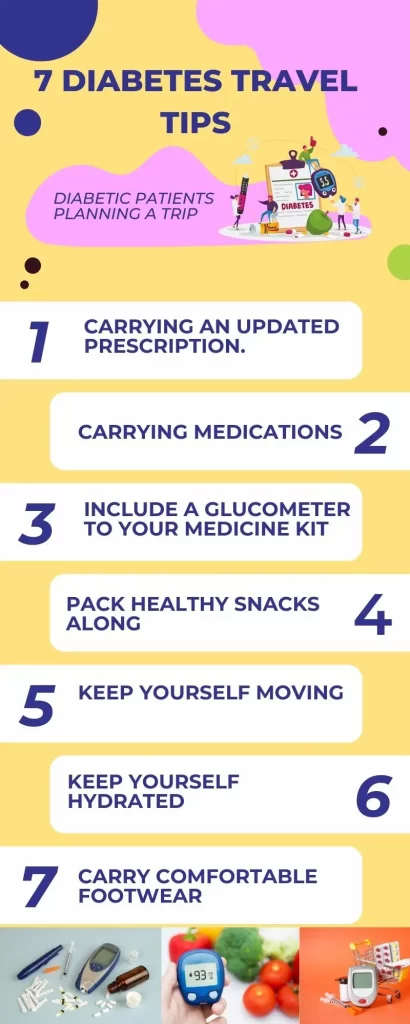
Preparation is key to ensuring that your travel experience is enjoyable. Start by considering your destination and the length of your trip. You’ll want to create a travel plan that includes your diabetes management strategy. If you’re flying, check for airline policies regarding diabetes supplies and medications. Make sure to pack extra medical supplies, including insulin, glucose tablets, and monitoring kits, as you never know when you might need them.
It might be prudent to consult with your healthcare provider before you travel. They can offer personalized advice and may suggest adjustments to your diabetes management plan based on the time zone change or physical activity level required during your trip. Getting a good understanding of what to do in case of emergencies can ease your anxiety and keep you focused on enjoying your journey.
Managing Your Medication
Once you’ve set your travel date, the next step is to ensure your medications are ready for the trip. Organize your insulin or oral medications in a way that makes it easy to access when you need them. Always keep them in their original packaging with labels intact. This protects you and makes it easier to explain your medical needs if required.
Also, it’s a smart idea to keep your medications in your carry-on luggage rather than checked luggage. The temperature in the cargo hold can fluctuate, compromising the integrity of your insulin. When you arrive at your destination, monitor your medication expiry dates and keep track of how much medication you have left during your trip, so you don’t run out unexpectedly.
Packing Essential Gear
In addition to your medications, think about packing essential gear for your diabetic management. You should consider bringing a travel-friendly diabetes kit that includes a glucometer, testing strips, a sharps container, alcohol swabs, and backup snacks that are low in sugar but high in fiber. Your kit should also include items for treating hypoglycemia — like glucose tablets or juice boxes — just in case your blood sugar drops unexpectedly while on the go.
Consider the climate of your destination when packing as well. If you’re heading to a warmer location, you may need insulated bags for your insulin, while a cooler climate calls for precautions to keep your medications at optimal temperatures. Tailor your travel kit to fit the environment you will be in, as this can make a significant difference in your comfort and health during your trip.
Staying Active on Your Trip
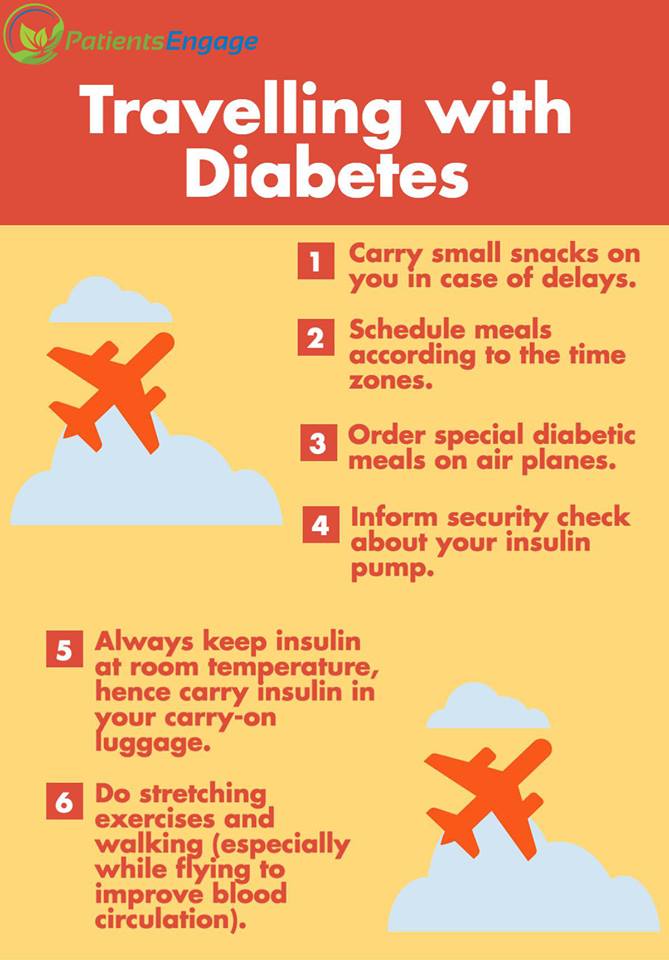
Travel often involves a lot of sitting – whether you’re on a plane, in a car, or attending events. Staying active during your travels is crucial, especially for managing blood sugar levels. Plan some time to walk around, stretch, or engage in light exercise. Many airports and cities have walking routes that you can opt for while waiting for your flight or exploring the area.
If you have an itinerary filled with activities that might cause you to be more sedentary, such as visiting museums or theaters, consider how you can incorporate some movement into these plans. Taking stairs instead of elevators, parking further away, or choosing active sightseeing tours can help boost your physical activity and give you an energy boost throughout the day.
Adapting to Time Zone Changes
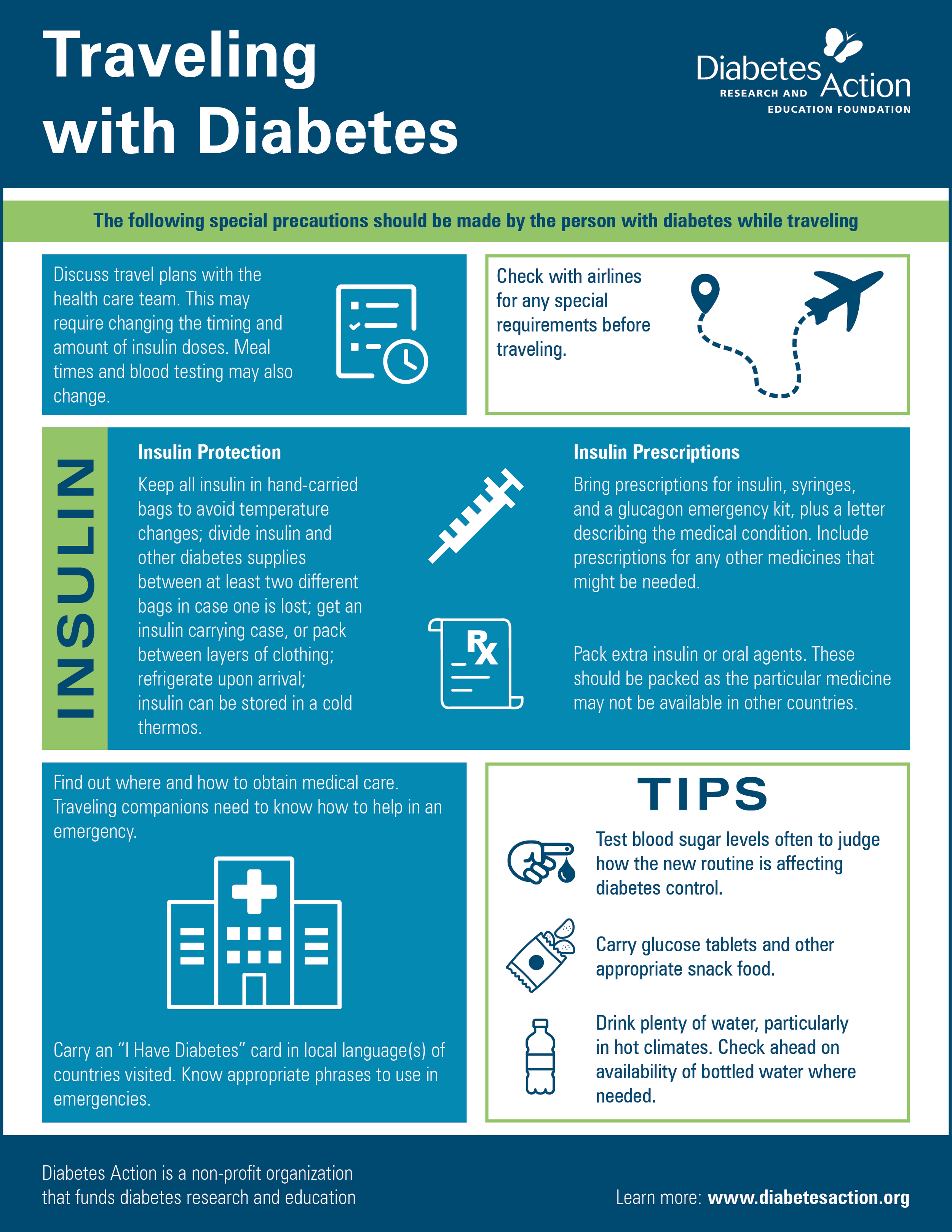
Traveling to a different time zone can disrupt your routine, and this is especially significant when it comes to managing diabetes. If you are crossing multiple time zones, plan to gradually adjust your medication and meal schedule to your new local time. This might involve taking your medications at different times or adjusting meal sizes.
Keep in mind that changes in meal timing can affect your blood sugar levels, which is why it’s essential to monitor them closely. Carry a glucose monitor and check your blood sugar levels more frequently when adjusting to a new time zone. Make sure to have snacks handy that you can consume in case you feel your blood sugar dipping. Similarly, adjust your insulin doses as necessary, based on the changes in timing and activity levels.
Navigating Different Cuisines
Exploring local cuisine can be one of the most thrilling aspects of travel, but it can also be a bit challenging when you have diabetes. Before heading out, take a moment to research typical foods at your destination. Look for restaurants with healthy options or local dishes that align better with your dietary needs. Familiarizing yourself with the cuisine will build your confidence when choosing meals.
Don’t hesitate to ask your server about menu options or modifications. Many restaurants can prepare meals according to dietary restrictions, so feel free to explain your needs. You can also estimate carbohydrate counts by learning about common ingredients in the local dishes. Consider carrying a food log app to help you track your meals or a pocket-sized carbohydrate guide. This way, you’ll have your own little assistant when it comes to deciding what to eat during your trip.
Keeping Hydration in Mind
Hydration is essential for everyone, but for someone with diabetes, it’s particularly important. As you travel, you might find yourself in different climates, some hotter and dryer than what you’re used to. Dehydration can affect blood sugar levels and your overall health, so it’s important to drink plenty of water.
As a general guideline, try to drink at least eight 8-ounce glasses of water daily, or more, depending on your activity level and environment. Carry a reusable water bottle with you so that you can stay hydrated while on the go. Remember that avoiding sugar-sweetened beverages is key, as they can cause rapid spikes in your blood sugar.
Managing Stress While Traveling
Travel can sometimes feel overwhelming, whether it’s dealing with crowded airports, unfamiliar locations, or a jam-packed itinerary. High-stress situations can indeed impact your blood sugar levels, so it’s essential to find ways to relax and manage stress during your travels.
Consider incorporating relaxation techniques no matter where you are. Simple activities like deep breathing, stretching, or mindfulness meditation can be useful. Apps designed for meditation or relaxation can be great companions during travel and help you create a calming routine, even when you’re away from home.
If you find yourself becoming stressed about your diabetes management, take a few moments to breathe and remind yourself that preparation is key. Knowing that you have your travel kit, a plan for meals, and a way to manage your medication can alleviate any anxiety. Being proactive will help you enjoy your travel experience instead of being sidelined by worry.

Finding Support on Your Journey
If you are traveling with family or friends, it can be helpful to share your diabetes management plan with them. Inform them about the signs of high and low blood sugar, so they know what to look for and how to respond. Creating a support system can enhance your travel experience, allowing you to focus more on enjoyable moments and less on the logistics of managing your diabetes.
Consider joining online forums or social media groups that cater to travelers with diabetes. Engaging with others who have similar experiences can offer not only practical advice but also emotional support. You can exchange tips, share stories, and learn from others that have navigated similar situations. Remember, you’re not alone in this journey.
Staying Flexible on Your Travel Plans
Traveling often involves a range of unpredictable situations, from flight delays to sudden weather changes. This is especially important for someone managing diabetes, as rigidity in your plans could lead to stress. Instead, embrace flexibility! Keeping an open mind and being willing to adapt will make your journey more enjoyable.
If you find that you can’t stick to your original meal plan or activity schedule, take a moment to evaluate your options. Approach last-minute changes with a positive attitude. Engage in new activities that don’t require much planning, like a spontaneous walk exploring the city or a quick visit to a local café.
Here’s a pro tip: consider keeping a cushion in your schedule to account for unexpected events. Whether it’s allowing extra time for meals, breaks, or even spontaneous adventures, having a little extra time can alleviate the pressure.

Post-Travel Health Check
Once you return from your travels, it’s a good idea to schedule a follow-up appointment with your healthcare provider. They can assist you in evaluating your blood sugar patterns during your trip and make any necessary adjustments to your treatment plan based on your experience.
Reflecting on your travel experience can help you refine your diabetes management strategies for future adventures. Take note of what worked well for you and what didn’t, so you can adapt your approach accordingly next time. Remember that every trip is a learning opportunity, and you’ll improve your travel skills with each experience.
Conclusion
Traveling with diabetes doesn’t have to feel overwhelming. With the right preparation, support, and adaptability, you can embark on exciting journeys while managing your health effectively. Remember to stay organized, monitor your blood sugar levels closely, and most importantly, allow yourself to enjoy every moment of your travel adventure.
If you found these tips helpful, please consider clapping for this article, leaving a comment with your thoughts, and subscribing to my Medium newsletter for the latest updates. Your engagement helps create a vibrant community of travelers who support one another on this journey of exploration and discovery. Safe travels!