
Have you ever wondered about the mysterious illness known as Mad Cow Disease? In this article, we’ll explore the details surrounding this condition that has been the subject of much curiosity and concern. From its origins to its impact on both animal and human health, we’ll delve into the intricacies of Mad Cow Disease and the measures being taken to prevent its spread. So, sit back, relax, and get ready to expand your knowledge about this fascinating topic.
What is Mad Cow Disease
Definition
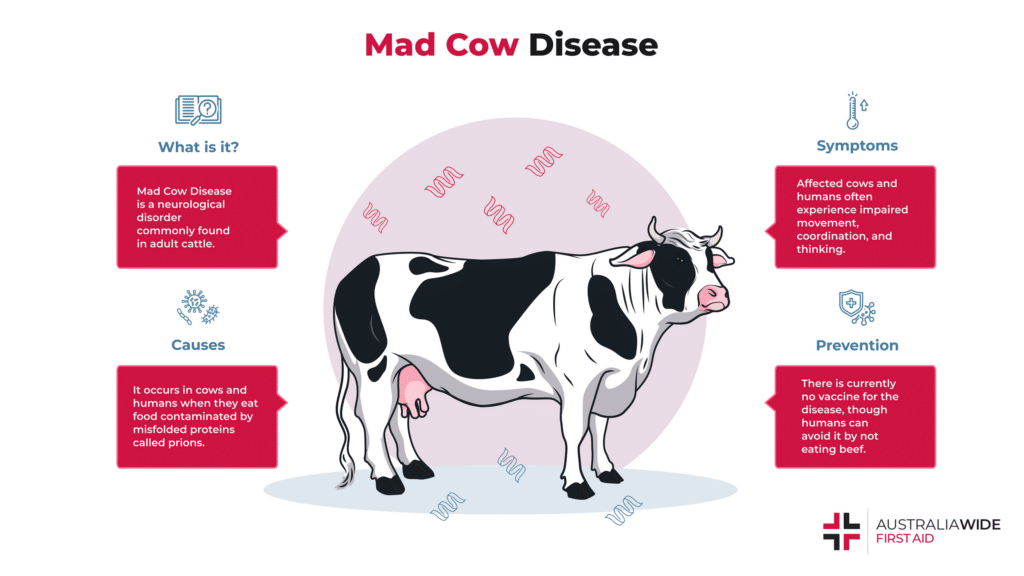
Mad Cow Disease, also known as bovine spongiform encephalopathy (BSE), is a transmissible, neurodegenerative disease that affects the central nervous system of cattle. It was first identified in the United Kingdom in the 1980s and quickly became a major concern in the livestock industry and public health sector. The disease is characterized by abnormal prion proteins that accumulate in the brain and spinal cord of infected animals, leading to neurological symptoms and, ultimately, death.
Causes
The exact cause of Mad Cow Disease is still not fully understood. However, it is believed to be caused by the ingestion of feed contaminated with infected animal tissue. The disease is thought to be naturally occurring in the cattle population, but the risk of transmission increases when infected cattle are fed with feed containing meat-and-bone meal derived from other infected animals. It is important to note that Mad Cow Disease is not directly caused by bacteria or viruses like most other infectious diseases.
Transmission
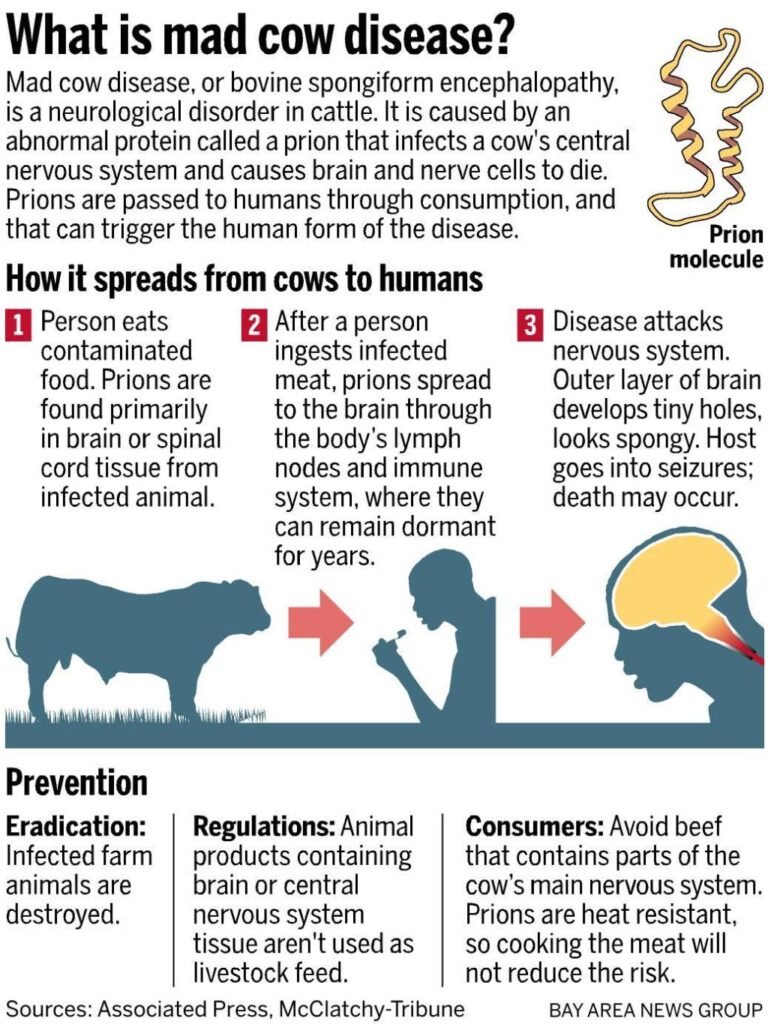
Mad Cow Disease can be transmitted within a herd through the consumption of contaminated feed. The disease can also spread horizontally between cattle through direct contact with infected bodily fluids, such as saliva or blood. Additionally, vertical transmission from an infected mother to her calf has been documented, but it is less common. There is also evidence to suggest that humans can contract the disease by consuming contaminated beef products, although this is much rarer and has significant public health implications.
Symptoms and Diagnosis
Early Symptoms
In the early stages of the disease, infected cattle may exhibit subtle signs such as changes in behavior, decreased milk production, and difficulty in coordination. These early symptoms are often overlooked or mistaken for other more common ailments. As the disease progresses, more severe symptoms start to appear.
Progression of Disease
As Mad Cow Disease progresses, affected cattle develop neurological symptoms including difficulty walking, muscle tremors, and loss of coordination. In advanced stages, they may experience aggression, weight loss, and an inability to stand. This leads to a rapid deterioration of the animal’s health, ultimately resulting in death.
Diagnostic Tools
Diagnosing Mad Cow Disease in live animals is challenging, as early symptoms are non-specific and can be mistaken for other conditions. Definitive diagnosis is often only possible through post-mortem examination of brain tissue. Specific tests, such as immunohistochemistry and Western blot, are used to detect the abnormal prion proteins in the brain, confirming the presence of the disease.
Prevention and Control
Banning Animal By-Products
One of the key strategies in preventing and controlling Mad Cow Disease is the implementation of regulations that ban the use of animal by-products in livestock feed. This eliminates the risk of cattle consuming infected tissues and reduces the chances of the disease spreading within herds.
Import Rules and Regulations
Countries that have experienced outbreaks of Mad Cow Disease have implemented strict import rules and regulations to prevent contaminated feed or animals from entering their territories. Scrutiny of incoming animals and feed sources helps to minimize the risk of introducing the disease to new regions.
Routine Testing
Regular surveillance and testing of animals in high-risk populations are vital to detect potential cases of Mad Cow Disease. This allows for early intervention and prevention of further transmission. Testing is typically conducted on fallen stock, animals exhibiting clinical signs, and specific groups deemed to be at higher risk.
Relationship to Variant Creutzfeldt-Jakob Disease (vCJD)
The Link
Variant Creutzfeldt-Jakob Disease (vCJD) is a human disease that is closely associated with Mad Cow Disease. It is believed to be caused by the consumption of beef products contaminated with the prion responsible for Mad Cow Disease. The connection between the two diseases was first identified in the late 1990s, leading to significant concerns over the safety of the food supply and potential public health risks.
Differences between Mad Cow Disease and vCJD
Although Mad Cow Disease and vCJD share similarities in terms of their pathology and transmission mechanisms, there are distinct differences between the two. Mad Cow Disease primarily affects cattle, while vCJD primarily affects humans. The symptoms and progression of the diseases also differ, with vCJD causing severe neurological deterioration in humans, often leading to death.
Public Health Concerns
The link between Mad Cow Disease and vCJD raised significant public health concerns worldwide. Governments and public health agencies have worked diligently to enhance food safety measures, increase surveillance, and educate the public about the potential risks associated with consuming contaminated beef products.
History of Mad Cow Disease
First Outbreak
The first recognized outbreak of Mad Cow Disease occurred in the United Kingdom in the mid-1980s. The disease was initially misdiagnosed and caused widespread concern when it was discovered that humans could contract vCJD from consuming contaminated beef products. The outbreak had a significant impact on the livestock industry, public trust, and governmental responses worldwide.
Government Response
In response to the outbreak, the UK government imposed strict regulations on the production and testing of livestock feed and the elimination of infected animals from the food chain. Stringent measures were implemented to minimize the risk of further transmission and regain consumer confidence in the safety of beef products.
International Impact
The discovery of Mad Cow Disease in the UK had far-reaching international consequences. Many countries implemented bans and restrictions on the importation of British beef products to protect their own livestock and public health. The outbreak served as a wake-up call for global cooperation and the need for more effective surveillance and control measures to prevent the spread of transmissible diseases.
Economic Consequences
Agricultural Industry
The Mad Cow Disease outbreak had a significant economic impact on the agricultural industry, particularly in countries heavily reliant on livestock production and exports. Cattle farmers suffered financial losses due to the culling of infected animals and the decline in consumer demand for beef. Stricter regulations and increased production costs further strained the economic viability of the industry.
Trade Restrictions
The discovery of Mad Cow Disease resulted in trade restrictions on beef exports from affected countries. Many governments imposed bans or imposed stringent testing requirements, making it increasingly difficult for exporters to access international markets. The loss of export revenue had severe implications for the agricultural economies of affected countries.
Consumer Confidence
The Mad Cow Disease outbreak severely eroded consumer confidence in beef products. Concerns over food safety and the potential risks associated with consumption of infected beef led to a decline in beef consumption. Rebuilding trust and restoring confidence in the safety of beef has been a long and challenging process for the industry.

Controversies and Ethics
Safe Slaughter Practices
The ethical treatment of animals and the use of safe slaughter practices have been subjects of controversy in relation to Mad Cow Disease. Critics argue that the disease could be prevented if stricter regulations were in place regarding the handling and processing of animals. Advocacy groups have called for improved animal welfare practices and increased transparency in the meat industry.
Animal Feed Regulations
Another area of controversy surrounding Mad Cow Disease involves the regulation of animal feed. Critics argue that stricter regulations are needed to ensure that animal feed does not contain contaminated ingredients. The control and monitoring of feed production and distribution have become key issues in the effort to prevent the introduction and spread of the disease.
Government Accountability
The Mad Cow Disease outbreak raised questions about government accountability and regulatory oversight in the agricultural and food industries. The delayed response and inadequate measures taken by some governments drew criticism and calls for greater transparency, accountability, and coordination between governmental agencies. The need for effective regulatory frameworks and enforcement mechanisms became more apparent.
Research and Advances
Understanding Prion Proteins
Research into the nature and behavior of prion proteins has advanced our understanding of the pathogenesis of Mad Cow Disease. Scientists have made significant progress in elucidating the mechanism by which abnormal prion proteins transform normal proteins in the brain, leading to the development of innovative diagnostic techniques and potential therapeutic approaches.
Identifying Risk Factors
Efforts to identify risk factors associated with Mad Cow Disease have been ongoing. Research has focused on evaluating the role of genetics, animal husbandry practices, and animal health in disease transmission. By identifying and addressing these risk factors, preventive measures can be implemented to minimize the occurrence and spread of the disease.
Potential Treatments
Developing effective treatments for Mad Cow Disease remains a significant scientific challenge. However, research has shown promising results in the development of potential therapeutic strategies. Experimental drugs and gene therapies are being explored to target and inhibit the accumulation of abnormal prion proteins in the brain, offering hope for the future management of the disease.

Global Efforts and Organizations
World Organization for Animal Health (OIE)
The World Organization for Animal Health (OIE) plays a crucial role in coordinating global efforts to prevent the spread of Mad Cow Disease. The OIE sets standards for animal health, promotes international cooperation, and provides support to member countries in the prevention, control, and eradication of transmissible animal diseases, including Mad Cow Disease.
Centers for Disease Control and Prevention (CDC)
The Centers for Disease Control and Prevention (CDC) in the United States closely monitors the occurrence of Mad Cow Disease and its potential impact on human health. The CDC collaborates with international partners, conducts surveillance and research, and provides guidance to health professionals and the public regarding the disease.
Strategies for Global Collaboration
International collaboration is essential in addressing the complex challenges posed by Mad Cow Disease. Through sharing of information, best practices, and resources, countries can work together to create effective surveillance systems, establish harmonized regulations, and enhance research efforts. Global collaboration is key to preventing future outbreaks and protecting both animal and human health.
Conclusion
Continued Surveillance
Given the potential risks associated with Mad Cow Disease, continued surveillance and monitoring of both animal populations and human cases remain critical. Rapid detection, diagnosis, and reporting are essential to prevent the introduction and spread of the disease, as well as to identify potential public health threats.
Educating the Public
Public education and awareness campaigns play a crucial role in preventing Mad Cow Disease and related human illnesses. Providing accurate and up-to-date information about the disease, its transmission, and the safety of beef products can help to dispel fears and rebuild consumer confidence. It is important for individuals to make informed decisions regarding their food choices.
Future Directions
Advancements in research and technology offer hope for improved prevention, diagnosis, and treatment of Mad Cow Disease. Continued scientific inquiry, international cooperation, and focused efforts towards understanding the disease pathology, identifying risk factors, and developing effective preventive and therapeutic strategies are essential to protect both animal and human health in the future.