
Erectile dysfunction (ED) is one of the most common health concerns affecting men, yet many people feel embarrassed or uncomfortable talking about it. If you are experiencing difficulty getting or maintaining an erection, you are far from alone. Millions of men around the world experience erectile dysfunction at some point in their lives.
The good news is that erectile dysfunction is often treatable. In many cases, it can even be improved or reversed when underlying causes are identified and addressed. ED is not simply a normal part of aging, and it should never be viewed as something you must “just live with.”
Erectile dysfunction can affect more than sexual health. It may influence self-confidence, relationships, emotional well-being, and overall quality of life. Sometimes it can also be an early warning sign of other health conditions such as heart disease, diabetes, or high blood pressure.
In this comprehensive guide, you will learn:
- What erectile dysfunction is
- Common signs and symptoms
- Why does it develop
- Risk factors and causes
- How doctors diagnose it
- Treatment options available
- Lifestyle changes that can help
- Foods that support sexual health
- When to seek medical care
- How to live well with ED
Most importantly, this guide is designed to provide practical, easy-to-understand information that can help you take positive steps toward better health and well-being.
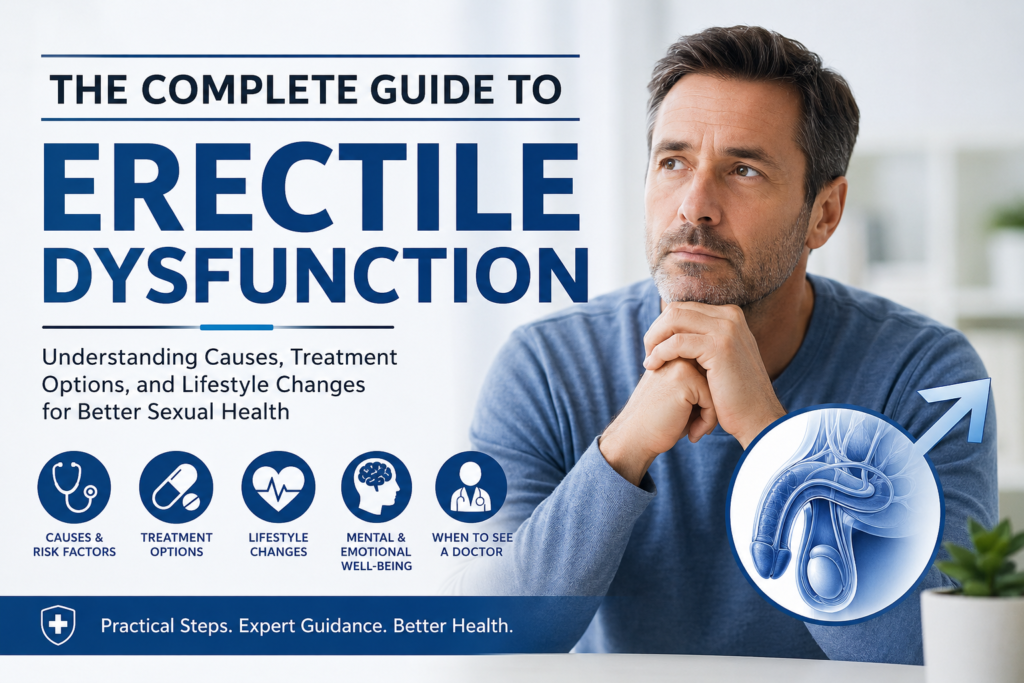
Section 1: What Is Erectile Dysfunction?
Definition
Erectile dysfunction (ED) is the ongoing inability to achieve or maintain an erection firm enough for satisfactory sexual activity.
Occasional difficulty getting an erection is common and usually not a cause for concern. However, when erection problems happen regularly or persist for several weeks or months, healthcare providers may diagnose erectile dysfunction.
Basic Overview
An erection is a complex process involving:
- The brain
- Hormones
- Blood vessels
- Nerves
- Muscles
- Emotional health
For an erection to occur, all of these systems must work together properly.
When any part of this process is disrupted, erectile dysfunction may occur.
How Common Is Erectile Dysfunction?
ED is extremely common.
Research suggests:
- About 30 million men in the United States experience ED.
- Risk increases with age.
- Younger men can also develop ED.
- Many cases go unreported because of embarrassment or stigma.
Who Is Most Affected?
ED can affect men of any age, but is more common among:
- Men over age 40
- Men with diabetes
- Men with heart disease
- Men with obesity
- Smokers
- Men with depression or anxiety
- Men with hormonal imbalances
Why Does It Develop?
ED usually develops because blood flow, nerve function, hormone levels, emotional health, or a combination of these factors becomes disrupted.
Common examples include:
- Narrowed arteries reduce blood flow
- Diabetes damages nerves
- Low testosterone levels
- Side effects of medications
- Stress or relationship difficulties
Section 2: Signs and Symptoms
Early Symptoms
Early signs may appear gradually.
These can include:
- Difficulty achieving erections occasionally
- Erections that are less firm than before
- Reduced sexual confidence
- Increased anxiety about sexual performance
- Reduced sexual desire
Common Symptoms
The most common symptoms include:
Difficulty Getting an Erection
You may find it harder to become erect despite sexual stimulation.
Difficulty Maintaining an Erection
You may achieve an erection but lose it before or during intercourse.
Reduced Rigidity
The erection may not be firm enough for penetration.
Reduced Sexual Satisfaction
Sexual experiences may become less satisfying because of erection difficulties.
Less Common Symptoms
Some men may also experience:
- Decreased libido
- Delayed ejaculation
- Emotional distress
- Relationship strain
- Loss of self-esteem
Warning Signs That Need Prompt Medical Evaluation
Contact a healthcare provider if you experience:
- Sudden onset of ED
- Significant decrease in sexual desire
- Symptoms of low testosterone
- Erectile problems after starting a new medication
- Symptoms of diabetes or heart disease
Erectile Dysfunction Symptom Checklist
✓ Difficulty getting an erection
✓ Difficulty keeping an erection
✓ Erections that are less firm
✓ Reduced interest in sex
✓ Anxiety about sexual performance
✓ Relationship stress related to intimacy
✓ Reduced sexual satisfaction
✓ Sudden change in erectile function
Section 3: What Causes Erectile Dysfunction?
ED often has multiple contributing causes.
Physical Causes
Reduced Blood Flow
Healthy erections depend on good blood circulation.
Conditions that reduce blood flow include:
- High blood pressure
- High cholesterol
- Heart disease
- Atherosclerosis (hardening of the arteries)
Diabetes
Diabetes can damage:
- Blood vessels
- Nerves
Both are critical for erectile function.
Hormonal Problems
Hormones help regulate sexual function.
Examples include:
- Low testosterone
- Thyroid disorders
- Elevated prolactin levels
Neurological Disorders
Conditions affecting nerves may interfere with erections.
Examples:
- Multiple sclerosis
- Parkinson’s disease
- Stroke
- Spinal cord injury
Psychological Causes
The brain plays a major role in sexual function.
Mental health factors include:
- Anxiety
- Depression
- Stress
- Relationship conflicts
- Performance anxiety
Sometimes ED can create anxiety, which then worsens the problem, creating a cycle that is difficult to break.
Medication-Related Causes
Certain medications may contribute to ED.
Examples include:
- Some blood pressure medications
- Certain antidepressants
- Some anti-anxiety medications
- Some prostate medications
- Certain antihistamines
Never stop prescribed medication without consulting your healthcare provider.
Lifestyle Factors
Lifestyle choices can significantly affect erectile function.
Examples include:
Smoking
Smoking damages blood vessels and reduces circulation.
Excessive Alcohol Use
Heavy drinking can interfere with:
- Hormones
- Nerve function
- Sexual performance
Drug Use
Certain recreational drugs may contribute to ED.
Physical Inactivity
Lack of exercise contributes to:
- Poor circulation
- Weight gain
- Cardiovascular disease
Genetics
Family history may influence risk factors such as:
- Diabetes
- Heart disease
- High blood pressure
These conditions can indirectly increase ED risk.
Environmental and Social Factors
Factors may include:
- Chronic stress
- Poor sleep
- Work-related pressure
- Financial concerns
- Relationship difficulties
Section 4: Risk Factors
The following factors increase the likelihood of developing erectile dysfunction.
Age-Related Risk Factors
- Age over 40
- Increasing age
- Age-related blood vessel changes
Family History
- Heart disease
- Diabetes
- High blood pressure
- Hormonal disorders
Lifestyle Risk Factors
- Smoking
- Physical inactivity
- Obesity
- Poor diet
- Excess alcohol use
- Drug use
Medical Conditions
- Diabetes
- High blood pressure
- High cholesterol
- Heart disease
- Kidney disease
- Liver disease
- Sleep apnea
- Depression
- Anxiety disorders
Other Risk Factors
- Pelvic surgery
- Radiation treatment
- Hormonal imbalances
- Certain medications
- Chronic stress
- Poor sleep quality
Section 5: How Doctors Diagnose It
Many men worry about what to expect during an evaluation. Fortunately, diagnosing ED is usually straightforward.
Medical History
Your healthcare provider will ask questions about:
- Symptoms
- Medical history
- Medications
- Lifestyle habits
- Mental health
- Sexual health
Be honest. These discussions are routine and confidential.
Physical Examination
The examination may include:
- Blood pressure measurement
- Heart and circulation assessment
- Examination of the penis and testicles
- Assessment of body hair and hormonal signs
Laboratory Testing
Common blood tests include:
Blood Sugar Testing
Used to screen for:
- Diabetes
- Prediabetes
Cholesterol Testing
Checks cardiovascular risk factors.
Testosterone Testing
Helps identify hormonal causes.
Additional Tests
Depending on symptoms:
- Thyroid testing
- Kidney function testing
- Liver function testing
- Complete blood count
Urine Testing
Urine tests may help detect:
- Diabetes
- Kidney disease
- Other medical conditions
Specialized Testing
Some patients may need additional evaluation.
Examples include:
Nocturnal Erection Testing
Measures erections during sleep.
Penile Ultrasound
Evaluates blood flow to the penis.
Psychological Evaluation
May help identify:
- Anxiety
- Depression
- Stress-related contributors
Section 6: Treatment Options
The best treatment depends on the underlying cause.
Prescription Medications
Several medications help improve blood flow to the penis.
Common options include:
- Sildenafil
- Tadalafil
- Vardenafil
- Avanafil
Benefits
- Effective for many men
- Convenient
- Well-studied
Limitations
- Do not work for everyone
- Require sexual stimulation
- May interact with certain medications
- Not suitable for some heart conditions
Hormone Therapy
Men with low testosterone may benefit from treatment if testing confirms a deficiency.
Benefits
- Improved libido
- Improved energy
- Possible improvement in erections
Limitations
- Only helps if low testosterone is present
- Requires monitoring
Counseling and Therapy
Psychological counseling can be very effective when emotional factors contribute to ED.
Benefits include:
- Reduced anxiety
- Better communication
- Improved confidence
- Relationship support
Vacuum Erection Devices
These devices create an erection by drawing blood into the penis.
Benefits
- Non-drug option
- Effective for many men
Limitations
- Requires preparation
- Some men find them inconvenient
Penile Injections
Medications can be injected directly into the penis.
Benefits
- Often highly effective
Limitations
- Requires training
- May cause discomfort
Section 7: Lifestyle Changes That Help
Lifestyle changes are one of the most powerful ways to improve erectile dysfunction. In some cases, healthy habits can significantly improve symptoms and may enhance the effectiveness of medical treatments.
The same habits that support heart health often support sexual health as well.
Improve Your Nutrition
A heart-healthy diet helps improve blood flow throughout the body, including the penis.
Focus on:
- Vegetables
- Fruits
- Whole grains
- Beans and legumes
- Nuts and seeds
- Fish
- Lean proteins
- Healthy fats
Try to limit:
- Processed foods
- Sugary beverages
- Excess salt
- Fried foods
Practical Tip
Aim to fill half your plate with vegetables at most meals.
Exercise Regularly
Physical activity improves:
- Blood circulation
- Blood pressure
- Cholesterol levels
- Weight management
- Stress levels
- Energy levels
Research consistently shows that regular exercise can improve erectile function.
Recommended Activities
- Brisk walking
- Cycling
- Swimming
- Strength training
- Light jogging
- Resistance exercises
Goal
Aim for:
- At least 150 minutes of moderate exercise per week
- Muscle-strengthening activities at least twice weekly
Achieve and Maintain a Healthy Weight
Excess body fat can contribute to:
- Diabetes
- High blood pressure
- Hormonal changes
- Inflammation
Even modest weight loss can improve erectile function in some men.
Stop Smoking
Smoking damages blood vessels and reduces blood flow.
Benefits of quitting include:
- Improved circulation
- Better heart health
- Reduced ED progression
- Improved overall health
Limit Alcohol
Heavy alcohol use can interfere with:
- Hormones
- Nerve function
- Sexual performance
If you drink alcohol:
- Do so in moderation
- Avoid binge drinking
Improve Sleep
Poor sleep can affect:
- Testosterone levels
- Energy
- Mood
- Sexual performance
Healthy Sleep Habits
- Keep a regular bedtime
- Limit screens before bed
- Avoid caffeine late in the day
- Create a cool, dark sleep environment
Aim for 7–9 hours of sleep per night.
Manage Stress
Chronic stress can affect:
- Hormones
- Sexual desire
- Erections
- Relationships
Helpful strategies include:
- Deep breathing exercises
- Meditation
- Prayer or spiritual practices
- Physical activity
- Spending time outdoors
- Counseling when needed
Strengthen Relationships
Open communication with your partner can reduce:
- Anxiety
- Misunderstandings
- Relationship tension
Many couples benefit from discussing concerns honestly and seeking support together.
Section 8: Foods That Help and Foods to Limit
Foods That May Help
| Food | Why It May Help |
| Leafy green vegetables | Contain nitrates that support healthy blood flow |
| Berries | Rich in antioxidants that protect blood vessels |
| Salmon and fatty fish | Provide omega-3 fats that support circulation |
| Nuts | Contain healthy fats and nutrients for heart health |
| Olive oil | Supports cardiovascular health |
| Whole grains | Help manage blood sugar and cholesterol |
| Beans and lentils | High in fiber and beneficial nutrients |
| Tomatoes | Contain antioxidants that support blood vessel health |
| Watermelon | Contains compounds that may support circulation |
| Citrus fruits | Rich in vitamin C and antioxidants |
Foods That May Worsen Symptoms
| Food | Why It May Be Problematic |
| Sugary beverages | Can contribute to diabetes and obesity |
| Excess sweets | May worsen blood sugar control |
| Fried foods | Can increase cardiovascular risk |
| Processed meats | Associated with poor heart health |
| Excess alcohol | May impair erections and hormone balance |
| Highly processed snacks | Often contain unhealthy fats and excess sodium |
| Fast food | Can contribute to obesity and vascular disease |
| Excessive salt | May worsen high blood pressure |
| Trans fats | Can damage blood vessel health |
| Large high-fat meals before intimacy | May reduce blood flow efficiency |
Section 9: Complications If Left Untreated
Erectile dysfunction itself is not usually life-threatening. However, untreated ED can have important consequences.
Short-Term Complications
These may include:
- Frustration
- Embarrassment
- Reduced confidence
- Anxiety related to sexual activity
- Relationship stress
Long-Term Complications
Long-term effects may include:
Persistent Relationship Difficulties
Communication problems may develop if concerns are not discussed openly.
Depression
Ongoing ED may contribute to:
- Sadness
- Isolation
- Reduced self-esteem
Reduced Quality of Life
Sexual health is an important part of overall well-being for many people.
Missed Medical Diagnoses
One of the most important concerns is that ED may be an early warning sign of:
- Heart disease
- Diabetes
- High blood pressure
- Hormonal disorders
Ignoring ED could delay diagnosis of these conditions.
Section 10: Living Well With Erectile Dysfunction
Many men successfully manage ED and maintain fulfilling relationships and healthy lives.
Daily Management Tips
- Follow your treatment plan
- Take medications as directed
- Keep follow-up appointments
- Track symptom changes
- Address underlying health conditions
Focus on Overall Health
Improving:
- Blood pressure
- Cholesterol
- Weight
- Blood sugar
- Fitness
often improves erectile function as well.
Support Mental Health
Mental health is closely connected to sexual health.
Consider:
- Counseling
- Support groups
- Stress reduction programs
- Couples therapy, when appropriate
Communicate With Your Partner
Helpful approaches include:
- Honest conversations
- Avoiding blame
- Discussing treatment plans together
- Focusing on intimacy, not just performance
Monitor Progress
Keep track of:
- Frequency of symptoms
- Medication effectiveness
- Lifestyle changes
- Emotional well-being
Progress may occur gradually over weeks or months.
Long-Term Success Strategies
- Stay physically active
- Maintain a healthy weight
- Avoid tobacco
- Manage chronic conditions
- Continue preventive healthcare visits
Section 11: Questions to Ask Your Healthcare Provider
Bring these questions to your appointment.
- What is the most likely cause of my ED?
- Could another medical condition be contributing?
- Do I need blood tests?
- Should my testosterone level be checked?
- Could my medications be affecting erections?
- What treatment options are available?
- What lifestyle changes would help most?
- Is my heart health affecting my symptoms?
- Is it safe for me to use ED medications?
- What side effects should I expect?
- How quickly should treatment work?
- Would counseling help?
- Do I need a referral to a specialist?
- Could sleep problems be contributing?
- Should I be screened for diabetes?
- Is weight loss likely to help?
- What exercise program is appropriate for me?
- Are supplements safe or effective?
- When should I follow up?
- What symptoms should prompt urgent evaluation?
Section 12: When to Seek Emergency Care
SEEK IMMEDIATE MEDICAL ATTENTION IF YOU EXPERIENCE:
Chest Pain During Sexual Activity
This could indicate a serious heart problem.
Call emergency services immediately.
Sudden Severe Neurological Symptoms
Including:
- Weakness on one side
- Facial drooping
- Difficulty speaking
- Sudden confusion
These may be signs of a stroke.
Priapism
A prolonged erection lasting more than 4 hours requires emergency treatment.
Untreated priapism can permanently damage erectile tissue.
Severe Allergic Reaction
Symptoms include:
- Difficulty breathing
- Swelling of the face or throat
- Severe rash
- Dizziness
Sudden Vision or Hearing Changes
Rarely, certain ED medications have been associated with:
- Sudden vision loss
- Sudden hearing loss
Seek immediate medical care.
Severe Shortness of Breath
Especially if associated with:
- Chest discomfort
- Dizziness
- Fainting
This may indicate a serious cardiovascular problem.
Section 13: Frequently Asked Questions
1. Is erectile dysfunction a normal part of aging?
No. ED becomes more common with age, but it is not an inevitable part of aging.
2. Can young men get ED?
Yes. Men of any age can develop ED.
3. Is ED usually permanent?
Not necessarily. Many cases improve with treatment and lifestyle changes.
4. Can stress cause ED?
Yes. Stress is a common contributor.
5. Can anxiety cause ED?
Yes. Performance anxiety is a well-known cause.
6. Does low testosterone always cause ED?
No. Low testosterone can contribute, but many men with ED have normal testosterone levels.
7. Can diabetes cause ED?
Yes. Diabetes is one of the most common causes.
8. Does smoking increase risk?
Yes. Smoking damages blood vessels and increases ED risk.
9. Can losing weight help?
For many men, yes.
10. Is ED a sign of heart disease?
Sometimes. ED may be an early warning sign of cardiovascular disease.
11. Do ED medications work for everyone?
No. Effectiveness varies depending on the underlying cause.
12. Are herbal supplements effective?
Some are marketed for ED, but evidence varies, and safety is not always clear.
Consult your healthcare provider before using supplements.
13. Can exercise improve ED?
Yes. Regular physical activity often improves symptoms.
14. Can relationship problems contribute?
Yes. Emotional and relationship issues may play a role.
15. Can depression affect erections?
Yes. Depression can affect desire, arousal, and erections.
16. Is counseling helpful?
Many men benefit from counseling, especially when psychological factors contribute.
17. How common is ED?
Very common. Millions of men experience it.
18. Should I see a doctor if symptoms are mild?
Yes. Even mild ED can signal underlying health concerns.
19. Can sleep apnea contribute to ED?
Yes. Poor sleep and sleep apnea can affect erectile function.
20. Can ED be prevented?
Not always, but healthy lifestyle habits can reduce risk.
Section 14: Helpful Resources
Symptom Tracker
Track:
- Frequency of erections
- Quality of erections
- Sexual satisfaction
- Medication use
- Lifestyle changes
Blood Pressure Log
Record:
- Date
- Time
- Blood pressure reading
- Notes
Blood Sugar Log
Especially important for people with diabetes or prediabetes.
Track:
- Fasting blood sugar
- Post-meal readings
- Medication changes
Weight Tracker
Record weekly:
- Weight
- Waist circumference
- Exercise goals
Sleep Tracker
Monitor:
- Bedtime
- Wake time
- Hours slept
- Sleep quality
Food Diary
Track:
- Meals
- Snacks
- Alcohol intake
- Water intake
Reputable Educational Organizations
- American Urological Association
- Urology Care Foundation
- American Heart Association
- National Institute of Diabetes and Digestive and Kidney Diseases
Section 15: Related Health Topics
Readers interested in erectile dysfunction may also benefit from learning about:
- Type 2 Diabetes
- Hypertension
- Coronary Artery Disease
- Weight management
- Heart disease prevention
- Testosterone deficiency
- Sleep apnea
- Men’s preventive health
- Cholesterol management
- Smoking cessation
- Stress management
- Depression and anxiety
- Healthy aging
- Exercise for cardiovascular health
Section 16: What we learn from this article
- Erectile dysfunction is common and often treatable.
- ED is not simply a normal part of aging.
- Blood vessel health plays a major role in erectile function.
- Diabetes, heart disease, obesity, and smoking are major contributors.
- Stress, anxiety, and depression can worsen symptoms.
- Lifestyle improvements often make a meaningful difference.
- Regular exercise supports circulation and sexual health.
- Healthy nutrition benefits both heart health and erectile function.
- Early evaluation may help identify hidden medical conditions.
- Treatment options include medications, counseling, devices, and procedures.
- Open communication with partners can reduce stress and improve outcomes.
- Persistent ED should be discussed with a healthcare professional.
- Emergency care is needed for prolonged erections lasting more than four hours.
- Small improvements over time can lead to meaningful results.
Daily Erectile Health Checklist
□ Took prescribed medications as directed
□ Exercised today
□ Ate vegetables and fruits
□ Avoided tobacco
□ Limited alcohol
□ Managed stress
□ Got 7–9 hours of sleep
□ Drank enough water
□ Monitored blood pressure if advised
□ Communicated openly with partner
Appointment Preparation Worksheet
Before Your Appointment, Write Down:
Symptoms
- When did symptoms begin?
- How often do they occur?
- Are symptoms getting worse?
Current Medications
- Prescription medications
- Over-the-counter medications
- Supplements
Health Conditions
- Diabetes
- High blood pressure
- Heart disease
- Sleep apnea
- Depression or anxiety
Questions for Your Provider
Final Encouragement from Ask The Nurse Expert
If you are struggling with erectile dysfunction, remember that you are not alone and that help is available. ED is a medical condition, not a personal failure. Many men experience it, and effective treatments exist for a wide range of causes.
Try not to judge yourself based on temporary challenges. Instead, focus on learning about your health, seeking appropriate medical care, and taking small steps toward improvement. Often, positive changes in sleep, nutrition, exercise, stress management, and chronic disease control can improve both sexual health and overall well-being.
Progress matters more than perfection. Every healthy choice you make can contribute to better health over time. Knowledge empowers you to make informed decisions, ask meaningful questions, and work closely with your healthcare team.
Most importantly, remember that your healthcare providers are there to help—not judge. With proper evaluation, support, and treatment, many people with erectile dysfunction can improve their symptoms, protect their overall health, and enjoy a fulfilling quality of life.
Ask The Nurse Expert is committed to helping you understand your health so you can make confident, informed decisions for yourself and your loved ones.
Related Topics About The Complete Guide to Erectile Dysfunction:
Erectile Dysfunction Symptoms,
Causes of Erectile Dysfunction,
Erectile Dysfunction Treatment Options,
Natural Remedies for Erectile Dysfunction,
Preventing Erectile Dysfunction,
Erectile Dysfunction and Diabetes,
Erectile Dysfunction and Heart Disease,
Psychological Causes of Erectile Dysfunction,
Best Diet for Erectile Dysfunction,
Exercises for Erectile Dysfunction,
Low Testosterone and Erectile Dysfunction,
Erectile Dysfunction Medications,
Erectile Dysfunction in Young Men,
Erectile Dysfunction After Age 50,
How Doctors Diagnose Erectile Dysfunction,
Lifestyle Changes for Erectile Dysfunction,
Relationship Impact of Erectile Dysfunction,
Erectile Dysfunction Risk Factors,
Erectile Dysfunction and Mental Health,
When to See a Doctor for Erectile Dysfunction