
Living with diabetes can be a challenging journey, but taking care of your feet is a crucial aspect that should not be overlooked. Diabetes Mellitus and Foot Care go hand in hand, as this chronic condition can lead to various foot complications if not properly managed. In this article, we will explore the importance of foot care for individuals living with diabetes and provide valuable tips to keep your feet healthy and happy. So, grab a cup of tea, sit back, and let’s dive into the world of Diabetes Mellitus and Foot Care together!
Diabetes Mellitus and Foot Care
Understanding Diabetes Mellitus
Diabetes Mellitus is a chronic condition characterized by high levels of blood sugar due to the body’s inability to produce or effectively use insulin. Type 1 diabetes occurs when the body does not produce insulin, while Type 2 diabetes occurs when the body cannot effectively use insulin. Regardless of the type, diabetes can lead to various complications, including foot problems.
Diabetes Mellitus and Foot Complications
Foot complications are a common concern for individuals with diabetes. The condition can cause damage to the nerves in the feet, a condition known as peripheral neuropathy. Poor blood circulation, another common complication, can also prevent proper healing of foot injuries. When both neuropathy and poor circulation affect the feet, it increases the risk of developing serious foot complications such as foot ulcers, infections, and even amputations.

Prevalence of Foot Complications in Diabetes Mellitus
Foot complications are a significant concern in diabetes. Studies have shown that individuals with diabetes are at a higher risk of developing foot ulcers and infections compared to those without diabetes. In fact, it is estimated that diabetic foot ulcers occur in approximately 15% of individuals with diabetes at some point in their lives. Furthermore, about 85% of diabetes-related lower limb amputations are preceded by a foot ulcer.
Risk Factors for Foot Complications in Diabetes Mellitus
Several factors increase the risk of developing foot complications in individuals with diabetes. Poor blood sugar control plays a significant role in the development and progression of these complications. Other risk factors include:
-
Neuropathy: Damage to the nerves can lead to a loss of sensation in the feet, making it easier for injuries to go unnoticed.
-
Peripheral artery disease: Reduced blood flow to the legs and feet can impair the healing process and increase the risk of infections.
-
Smoking: Smoking restricts blood flow, further exacerbating the effects of poor circulation.
-
Foot deformities: Conditions such as bunions, hammertoes, and Charcot foot increase the pressure and strain on certain areas of the feet, making them more susceptible to injuries.

Importance of Foot Care in Diabetes Mellitus
Proper foot care plays a crucial role in managing diabetes and preventing serious foot complications. Regular foot care can help detect and address potential problems before they worsen. By incorporating a routine foot care regimen into your daily life, you can minimize the risk of developing foot ulcers, infections, and other complications.
Guidelines for Foot Care in Diabetes Mellitus
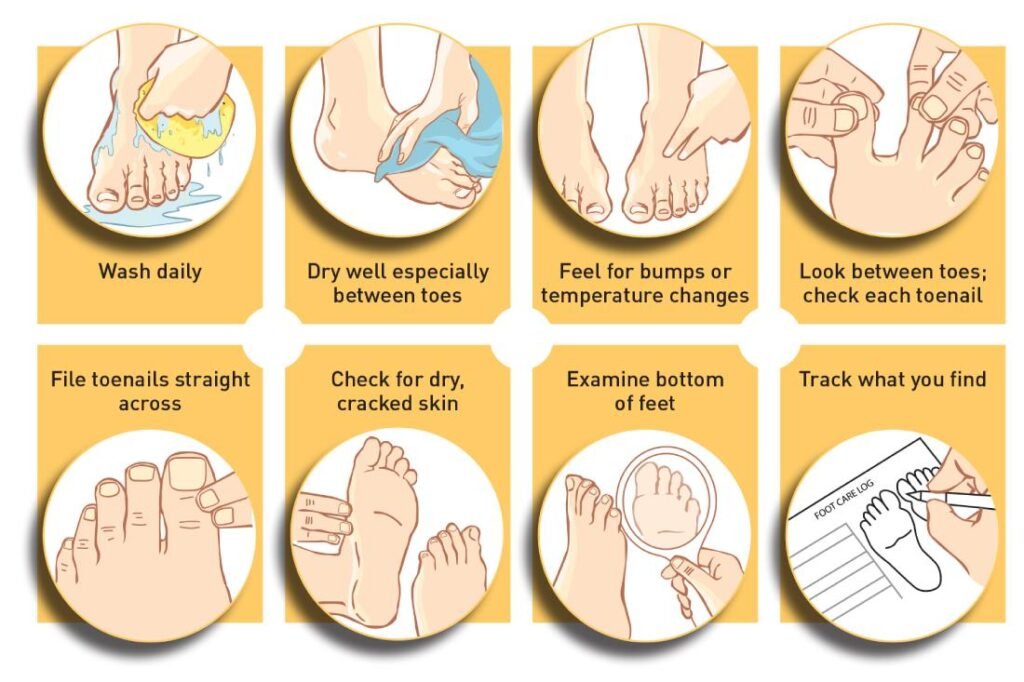
To maintain healthy feet, individuals with diabetes should follow specific guidelines for foot care. These guidelines include:
-
Inspect your feet daily: Check your feet for any signs of cuts, sores, blisters, redness, swelling, or other abnormalities. Use a mirror if needed to examine the bottom of your feet.
-
Wash your feet daily: Use warm water and mild soap to wash your feet thoroughly. Avoid soaking them for extended periods, as it may lead to drying and cracking of the skin.
-
Keep your feet moisturized: Apply a moisturizing lotion or cream to your feet daily, excluding between the toes. Moisturizing helps prevent dry skin and the formation of cracks.
-
Trim toenails carefully: Cut your toenails straight across and avoid rounding the corners. If you have difficulty trimming your nails, seek professional help from a podiatrist.
-
Wear appropriate footwear: Choose shoes that provide proper support and cushioning for your feet. Opt for well-fitting, breathable shoes with enough room for your toes.

Daily Foot Care Routine
In addition to the guidelines mentioned above, it is essential to establish a daily foot care routine. This routine should consist of the following steps:
-
Wash your feet with warm water and mild soap.
-
Pat your feet dry gently, paying extra attention to the spaces between your toes.
-
Inspect your feet for any signs of cuts, blisters, or other abnormalities.
-
Apply a moisturizing lotion or cream to your feet, excluding between the toes.
-
Put on clean, moisture-wicking socks.
-
Wear properly fitting shoes.
By following this daily routine, you can ensure the health and well-being of your feet.
Identifying Foot Problems
Early detection of foot problems is crucial in preventing complications. If you notice any of the following signs, it is recommended to seek medical attention promptly:
-
Persistent pain or discomfort in your feet.
-
Changes in foot color or temperature.
-
Swelling or fluid accumulation in your feet or ankles.
-
Open sores or wounds that are slow to heal.
-
Ingrown toenails or fungal infections.

Treating Foot Problems
If you experience any foot problems, seeking timely medical attention is essential. A healthcare professional, such as a podiatrist, can provide appropriate treatment and guidance based on your specific condition. Treatment options may include:
-
Wound care: Cleaning and dressing open sores or wounds to promote healing and prevent infections.
-
Offloading: Using protective pads, inserts, or special shoes to relieve pressure on specific areas of the foot.
-
Antibiotics: Prescribing antibiotics to treat infections that may arise due to foot complications.
-
Surgery: In some cases, surgical intervention may be required, especially for severe infections or foot deformities.
Preventing Foot Problems
Preventing foot problems is crucial for individuals with diabetes. By adopting healthy lifestyle habits and following the guidelines mentioned earlier, you can reduce the risk of complications. Additional preventive measures include:
-
Maintaining good blood sugar control: Monitor your blood sugar levels regularly and work with your healthcare team to keep them within target ranges.
-
Managing other health conditions: Properly manage conditions such as high blood pressure and high cholesterol, as they can contribute to foot complications.
-
Engaging in physical activity: Regular exercise helps improve blood circulation and overall foot health.
-
Avoiding smoking: Smoking has detrimental effects on circulation, further increasing the risk of foot complications.
In conclusion, taking care of your feet is essential for individuals with diabetes. By understanding the risks and implementing proper foot care routines, you can minimize the chances of developing foot complications. Remember to seek medical attention promptly if you notice any changes or problems with your feet. Your healthcare team and a podiatrist can provide valuable guidance and support to ensure the health and well-being of your feet.