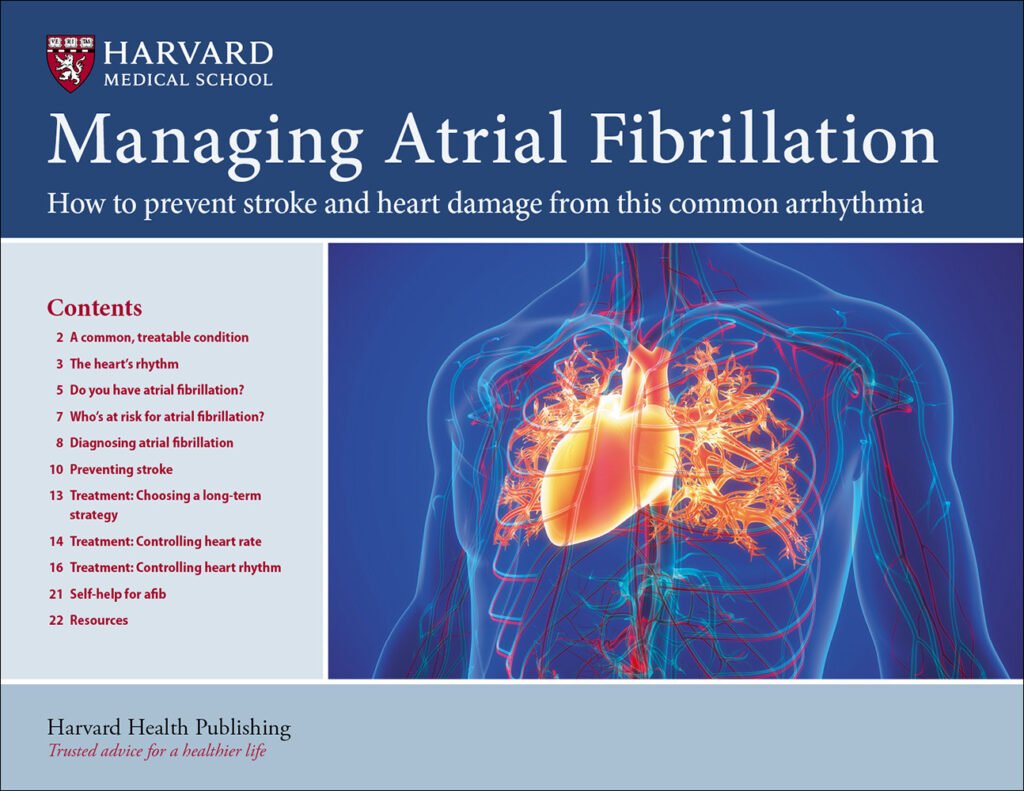
You want to take charge of your health and effectively manage the symptoms of atrial fibrillation. Luckily, there are various treatment options available that can provide you with relief and improve your quality of life. From medications to lifestyle changes, finding the right combination of treatments for your specific needs can help you regain control over your heart rhythm and minimize the impact of atrial fibrillation on your daily activities. In this article, we will explore the different treatment options for managing atrial fibrillation and discuss how each option can help you lead a healthier, more balanced life.

Diagnosis of Atrial Fibrillation
Atrial Fibrillation (AF) is a heart condition characterized by irregular heart rhythm. If you suspect you might have AF, your doctor will conduct several diagnostic tests to confirm the condition. These tests are essential in determining the most appropriate treatment plan for you.
Electrocardiogram (ECG)
An ECG is a simple and painless test that measures the electrical activity of your heart. Electrodes attached to your chest, arms, and legs record the heart’s electrical signals. This test is commonly used to diagnose AF as it can detect the irregular heart rhythm characteristic of this condition.
Holter Monitor
A Holter monitor is a portable device that you wear for a day or more to continuously record your heart’s activity. It’s beneficial in capturing intermittent episodes of AF that may not be detected during a short ECG. By analyzing the data collected by the Holter monitor, your doctor can assess the frequency and duration of your AF episodes.
Event Monitor
Similar to a Holter monitor, an event monitor is a portable device used to record your heart’s activity. However, you only wear it when you experience symptoms. When you feel symptoms of AF, you press a button on the device to record the heart’s activity during that time. This allows your doctor to evaluate whether the symptoms you are experiencing are related to AF.
Echocardiogram
An echocardiogram is a non-invasive test that uses sound waves to create detailed images of your heart. It provides valuable information about the size, structure, and function of your heart. Echocardiography can help identify underlying structural heart disease or other issues that may contribute to AF.
Blood Tests
Blood tests can provide valuable information about your overall health and help identify underlying conditions that may be triggering or contributing to AF. These tests may include a complete blood count, thyroid function tests, kidney function tests, and blood clotting tests.
By thoroughly evaluating your symptoms and using these diagnostic tests, your doctor can diagnose AF accurately and develop an individualized treatment plan for you.
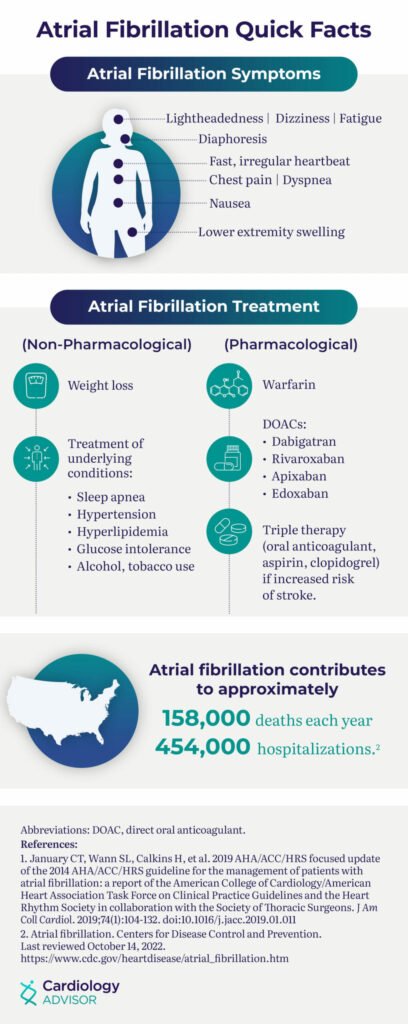
Non-Pharmacologic Management of Atrial Fibrillation
Managing AF involves a combination of medications and non-pharmacologic interventions. Non-pharmacologic management aims to control symptoms, improve quality of life, and reduce the risk of complications associated with AF.
Lifestyle Modifications
Certain lifestyle modifications can help improve AF symptoms and reduce the frequency and duration of episodes. These modifications may include:
- Avoiding triggers such as excessive alcohol consumption, smoking, caffeine, and stress.
- Maintaining a healthy weight through regular exercise and a balanced diet.
- Managing underlying health conditions like high blood pressure, diabetes, and sleep apnea.
- Developing stress management techniques, such as meditation or yoga.
- Avoiding excessive physical exertion or strenuous activities that may trigger AF episodes.
Cardioversion
Cardioversion is a procedure that restores your heart’s normal rhythm. It can be achieved through electrical cardioversion or chemical cardioversion.
Electrical cardioversion involves delivering an electric shock to your chest while you are under sedation. This shock momentarily stops your heart’s electrical activity and allows it to resume a normal rhythm. Electrical cardioversion is typically reserved for AF episodes that have lasted for a short duration.
Chemical cardioversion involves the administration of antiarrhythmic medications to restore the heart’s normal rhythm. These medications work by suppressing the abnormal electrical signals in the heart.
Catheter Ablation
Catheter ablation is a minimally invasive procedure that aims to eliminate the source of abnormal electrical signals causing AF. During the procedure, a catheter is inserted into a blood vessel and guided to the heart. Energy is delivered through the catheter to create scar tissue and disrupt the abnormal electrical pathways in the heart.
Surgical Ablation
Surgical ablation is a more invasive procedure performed during an open-heart surgery, usually in combination with other cardiac surgeries. It involves creating scar tissue on the heart to interrupt the abnormal electrical pathways that cause AF.
Pharmacologic Management of Atrial Fibrillation
Pharmacologic management of AF involves the use of medications to control heart rate, restore normal rhythm (if necessary), and reduce the risk of blood clots.
Rate Control Medications
Rate control medications are used to slow down the heart rate in AF. They help to improve symptoms and reduce the risk of complications associated with a fast heart rate. Common rate control medications include:
- Beta blockers: These medications block the effects of adrenaline on the heart, slowing down the heart rate.
- Calcium channel blockers: These medications decrease the amount of calcium that enters the heart muscle cells, resulting in a reduced heart rate.
- Digoxin: Digoxin strengthens the contractions of the heart, helping to slow down the heart rate.
Rhythm Control Medications
Rhythm control medications are used to restore and maintain a normal heart rhythm. They can be prescribed if rate control medications fail to adequately control AF. Antiarrhythmic drugs are the mainstay of rhythm control medications. They work by suppressing the abnormal electrical signals in the heart. In certain cases, electrical cardioversion may be performed to restore the heart’s normal rhythm.
Anticoagulation Therapy
Anticoagulation therapy is essential in AF to reduce the risk of blood clot formation and associated complications, such as stroke. Blood thinners, like warfarin, prevent the formation of blood clots by inhibiting the clotting factors in the blood. Warfarin requires careful monitoring and dose adjustment to maintain the desired anticoagulation effect.
Novel Oral Anticoagulants
Novel oral anticoagulants, also known as Direct Oral Anticoagulants (DOACs), have emerged as an alternative to warfarin for anticoagulation therapy in AF. DOACs include medications such as dabigatran, rivaroxaban, apixaban, and edoxaban. These medications have shown similar effectiveness in reducing stroke risk with fewer dietary and drug interactions compared to warfarin.
Electrical Cardioversion
Electrical cardioversion is a procedure used to restore the heart’s normal rhythm in AF that has been present for a short duration and is causing severe symptoms.
Procedure
During electrical cardioversion, you will be administered a short-acting general anesthesia or sedation. Pads or electrodes are placed on your chest, and an electrical shock is delivered to your heart through the pads. The shock helps to reset the electrical signals in your heart and restore a normal rhythm. The entire procedure usually takes only a few minutes.
Risks and Benefits
The main benefit of electrical cardioversion is the rapid restoration of a normal heart rhythm, alleviating symptoms such as palpitations, shortness of breath, and fatigue. However, electrical cardioversion carries some risks, including the potential for blood clots, heart rhythm disturbances, and skin burns from the electrical shock. Your doctor will carefully evaluate the risks and benefits before recommending electrical cardioversion as a treatment option for you.

Catheter Ablation
Catheter ablation is a minimally invasive procedure that aims to eliminate the source of abnormal electrical signals causing AF.
Procedure
During catheter ablation, a long, flexible tube called a catheter is inserted into a blood vessel in your groin or arm and carefully threaded to your heart. Energy, such as radiofrequency or cryoablation, is delivered through the catheter to create scar tissue and disrupt the abnormal electrical pathways in the heart. This scar tissue prevents the abnormal electrical signals from propagating, restoring a normal heart rhythm.
Risks and Benefits
Catheter ablation is effective in reducing or eliminating AF episodes in many patients, resulting in improved quality of life and symptom relief. However, it carries potential risks such as bleeding, blood vessel damage, heart rhythm disturbances, and rarely, damage to the heart valves or blood vessels. Your doctor will evaluate the risks and benefits to determine whether catheter ablation is the right treatment option for you.
Surgical Ablation
Surgical ablation is a more invasive procedure performed during an open-heart surgery to treat AF.
Maze Procedure
The Maze procedure is a surgical ablation technique that creates a series of carefully placed incisions in the atria (upper chambers) of the heart. These incisions create scar tissue that diverts abnormal electrical signals and forces the electrical activity to follow the intended path. The Maze procedure is highly effective in restoring normal heart rhythm but requires open-heart surgery and is typically performed in combination with other cardiac surgeries.
Mini-Maze Procedure
The Mini-Maze procedure is a less invasive surgical ablation technique that uses small incisions or small ports to access the heart. A special device, such as a catheter or robotic instrument, is used to create scar tissue similar to the Maze procedure. The Mini-Maze procedure offers shorter recovery times and reduced post-operative complications compared to traditional open-heart surgery.
Risks and Benefits
Surgical ablation procedures, including the Maze and Mini-Maze procedures, have shown excellent success rates in restoring normal heart rhythm and reducing AF episodes. However, they are associated with the risks typically associated with any open-heart surgery, such as bleeding, infection, and anesthesia-related complications. The benefits and risks of surgical ablation will be evaluated by your doctor to determine the best course of treatment for you.
In conclusion, the management of AF involves various diagnostic tests to confirm the condition, lifestyle modifications, pharmacologic interventions, and non-pharmacologic procedures. Your doctor will work closely with you to develop a personalized treatment plan that suits your specific needs and aims to improve your symptoms, reduce the frequency of AF episodes, and lower the risk of associated complications. With proper diagnosis and individualized treatment, the management of AF can significantly improve your quality of life.