
Measles, a highly contagious disease that has plagued humanity for centuries, is a serious ailment with potentially severe complications. From its unmistakable rash to its ability to spread swiftly in communities, measles poses a significant threat to individuals of all ages. In this article, we will explore the symptoms, transmission, and potential complications of measles, shedding light on the importance of prevention and vaccination. So, fasten your seatbelt as we embark on an informative journey that will equip you with the knowledge to stay safe and protected against this contagious disease.
Measles: A Contagious Disease with Serious Complications
Measles is a highly contagious viral illness that can lead to serious health complications. It is caused by the measles virus, which is spread through droplets from the nose, mouth, or throat of an infected person. Measles is characterized by a rash, high fever, cough, runny nose, and red, watery eyes. While most people recover from measles without any lasting effects, it can lead to severe complications, especially in young children and individuals with compromised immune systems. In this article, we will explore the definition and overview of measles, its causes and transmission, symptoms and diagnosis, complications, epidemiology, vaccination, current outbreaks and public health response, prevention and control measures, as well as treatment options.
Definition and Overview of Measles
Measles, also known as rubeola, is a highly infectious disease that primarily affects children but can occur at any age. It is caused by the measles virus, which belongs to the family Paramyxoviridae. Measles is easily transmitted from person to person through respiratory droplets when an infected individual sneezes or coughs. The virus can live on surfaces for up to two hours, making it highly contagious. Measles is known for its classic symptoms, including the characteristic reddish rash that typically starts on the face and then spreads to the rest of the body.
Causes and Transmission of Measles
The measles virus is primarily transmitted through respiratory droplets and direct contact with an infected person. When an infected individual coughs or sneezes, they release tiny infectious droplets into the air. These droplets can remain suspended in the air or land on surfaces where they can infect others. Measles is highly contagious, and even a short period of exposure can lead to transmission. People with measles are most contagious about four days before to four days after the rash appears.

Symptoms and Diagnosis of Measles
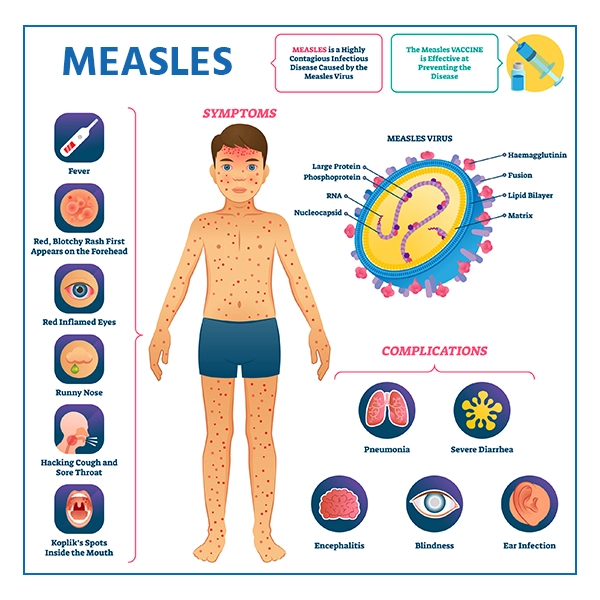
The symptoms of measles usually develop about 10 to 14 days after exposure to the virus. Initially, individuals may experience a high fever, cough, runny nose, and red, watery eyes. These symptoms are followed by the appearance of a rash, which starts on the face and gradually spreads to the rest of the body over several days. Other common symptoms include tiny white spots with bluish-white centers inside the mouth called Koplik’s spots. The diagnosis of measles is typically based on clinical symptoms and confirmed through laboratory testing, such as a blood test or tissue samples.
Complications Associated with Measles
While most individuals recover from measles without any lasting complications, the disease can result in severe health problems, especially for young children and individuals with weakened immune systems. Common complications of measles include ear infections, which can lead to permanent hearing loss, pneumonia, bronchitis, and encephalitis, a potentially fatal inflammation of the brain. Measles can also weaken the immune system, making individuals more susceptible to other infections in the weeks to months following infection. Pregnant women who contract measles are at risk of premature labor, low birth weight for their baby, or even stillbirth.

Measles Epidemiology and Global Impact
Measles remains a significant global health concern, particularly in regions with low vaccination rates and limited access to healthcare. According to the World Health Organization (WHO), in 2019, there were an estimated 869,770 measles cases reported worldwide, with approximately 207,500 deaths attributed to the disease. While measles vaccination programs have made significant progress in reducing measles-related deaths globally, there are still areas where outbreaks occur due to low vaccination coverage. Measles can easily spread within communities and even across borders, emphasizing the need for continued efforts to control and eliminate the disease.
Measles Vaccination: Importance and Effectiveness
Vaccination is the most effective way to prevent measles and its complications. The measles vaccine is part of the routine childhood immunization schedule in many countries and is typically administered as part of a combination vaccine, such as the measles-mumps-rubella (MMR) vaccine. The vaccine provides long-lasting immunity against measles and is recommended for all children, starting at 12 to 15 months of age, with a second dose given at 4 to 6 years of age. The vaccine is also recommended for adults who are not immune to measles, such as those who have never been vaccinated or did not receive the full course of vaccination.

Current Measles Outbreaks and Public Health Response
Despite the availability of a safe and effective vaccine, measles outbreaks continue to occur in various parts of the world. These outbreaks are often linked to areas with low vaccination coverage, where the virus can quickly spread among susceptible individuals. In recent years, several countries have experienced large-scale measles outbreaks, prompting public health responses such as mass vaccination campaigns, enhanced monitoring and surveillance, and public awareness campaigns to promote the importance of vaccination. Timely identification of measles cases, contact tracing, and isolation of infected individuals are crucial in containing and preventing further spread of the disease during outbreaks.
Prevention and Control Measures for Measles
Preventing measles relies primarily on vaccination. Vaccination not only protects individuals from measles but also helps maintain community immunity, which reduces the risk of outbreaks. In addition to vaccination, other control measures include practicing good respiratory hygiene, such as covering the mouth and nose when coughing or sneezing, using tissues or elbow flexions, and properly disposing of used tissues. Regular handwashing with soap and water or using alcohol-based hand sanitizers can also help minimize the spread of the virus. Maintaining a clean environment by disinfecting surfaces regularly is another vital measure to prevent the transmission of measles.

Treatment Options for Measles
Currently, there is no specific antiviral treatment for measles. Most individuals with measles are managed through supportive care, which includes getting sufficient rest, staying hydrated, and managing fever and respiratory symptoms. In severe cases or when complications arise, hospitalization may be necessary. Treatment for complications such as pneumonia or encephalitis will be tailored to the specific condition. If diagnosed early, vitamin A supplementation is recommended, as it has been shown to reduce the severity of measles and lower the risk of complications, particularly in children who are deficient in this essential nutrient.
Conclusion
Measles is a highly contagious disease with the potential for severe complications. It is crucial to recognize the symptoms of measles and seek medical attention promptly if suspected. Vaccination is the best approach to prevent measles and protect both individuals and communities. By maintaining high vaccination coverage rates, practicing good hygiene, and following public health measures during outbreaks, we can work towards reducing the global burden of measles and ensuring a healthier future for all.