
Measles is a highly contagious viral infection that has been a concern for health professionals and parents alike. This article aims to provide you with a comprehensive understanding of measles, including its causes, symptoms, and available treatment options. By the end of this read, you will be equipped with the knowledge necessary to identify measles and take appropriate actions to prevent its spread. So let’s jump right in and demystify this common yet concerning illness.

Causes of Measles
Measles is caused by the measles virus, which belongs to the Paramyxoviridae family. This highly contagious virus can spread easily from person to person through respiratory droplets, such as when an infected individual coughs or sneezes. The virus can survive on surfaces for up to two hours, further facilitating its transmission. Once the virus enters the body, it replicates in the respiratory tract and spreads throughout the body, leading to the development of symptoms.
Transmission
Measles is primarily transmitted through respiratory droplets. When an infected person coughs or sneezes, tiny droplets containing the measles virus are released into the air. If an unvaccinated person inhales these droplets or comes into direct contact with the infected person, they can become infected with the virus. Transmission can also occur through touching contaminated surfaces and then touching the nose, mouth, or eyes. The virus is highly contagious, and an infected person can spread it to others before they even start showing symptoms.
Susceptibility
While anyone can contract measles, certain individuals are more susceptible to the virus. Infants, children, and adults who have not been vaccinated are particularly at risk. Moreover, individuals with compromised immune systems, such as those with HIV/AIDS or undergoing cancer treatment, are more susceptible to severe complications from measles. Factors such as malnutrition and vitamin A deficiency can also increase susceptibility to the virus.
Symptoms of Measles
Measles typically progresses through several stages, each characterized by distinct symptoms.
Initial Symptoms
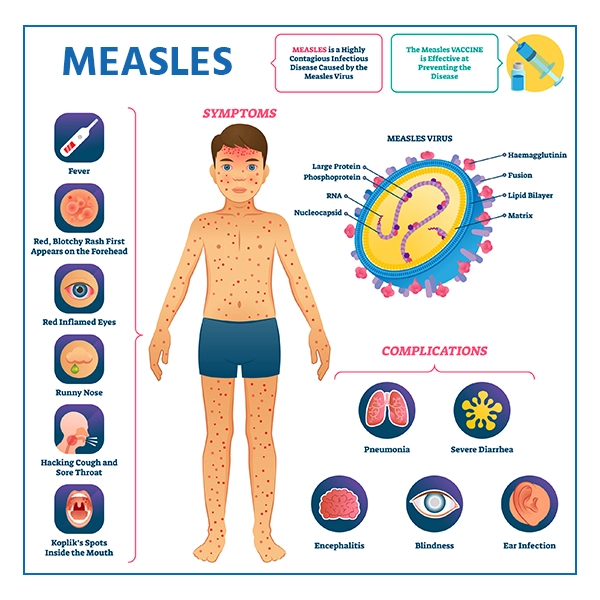
Initially, individuals infected with the measles virus may experience symptoms similar to those of a common cold or flu. These early symptoms include fever, cough, runny nose, and red, watery eyes. These initial symptoms usually appear about 10 to 12 days after exposure to the virus.
Koplik’s Spots
One of the hallmark symptoms of measles is the development of small white spots inside the mouth known as Koplik’s spots. These spots usually appear a few days before the onset of the rash. They are often surrounded by a reddish background and are unique to measles.
Rash
The rash is another prominent symptom of measles. It typically starts on the face and then spreads to the rest of the body. The rash consists of small, flat red spots that gradually merge together. It usually lasts for about a week and can be accompanied by itchiness.
Fever
A high fever is a common symptom of measles, often reaching temperatures of 101°F (38.3°C) or higher. The fever usually develops a few days before the onset of the rash and may persist for several days.
Other Symptoms
In addition to the aforementioned symptoms, measles can also cause other symptoms such as sore throat, muscle pain, fatigue, and loss of appetite. These symptoms can vary in intensity and may last for several days.

Complications of Measles
Measles can lead to various complications, especially in individuals with weakened immune systems or those who are malnourished.
Pneumonia
Pneumonia is one of the most common and serious complications associated with measles. The virus can weaken the immune system, making individuals more susceptible to bacterial infections. Pneumonia can cause severe respiratory distress and can be life-threatening.
Ear Infections
Measles can lead to ear infections, specifically otitis media. This occurs when the middle ear becomes infected and inflamed. Ear infections can cause pain, temporary hearing loss, and may require medical intervention.
Bronchitis
Bronchitis, an inflammation of the bronchial tubes, can develop as a complication of measles. It can cause a persistent cough, phlegm production, and difficulty breathing.
Encephalitis
Although rare, measles can cause inflammation of the brain, known as encephalitis. This complication can lead to seizures, confusion, and in severe cases, permanent brain damage or death.
Pregnancy Complications
Pregnant women who contract measles are at an increased risk of complications. These complications can include premature birth, low birth weight, or miscarriage.
Diagnosing Measles
Diagnosing measles typically involves evaluating clinical presentation, conducting laboratory tests, and considering differential diagnoses.
Clinical Presentation
Healthcare professionals will consider the patient’s symptoms, such as the characteristic rash, Koplik’s spots, and high fever, when making a clinical diagnosis of measles. They will also take into account the patient’s medical history and vaccination status.
Laboratory Tests
Laboratory tests can help confirm a measles diagnosis. Blood tests can detect specific antibodies produced by the immune system in response to the virus. Additionally, throat swabs or urine samples may be taken to detect the presence of the virus itself.
Differential Diagnosis
Measles can sometimes be mistaken for other viral infections such as rubella or roseola. Therefore, healthcare professionals may consider conducting tests or ruling out other potential causes of the symptoms to arrive at an accurate diagnosis.

Prevention of Measles
Preventing measles primarily involves vaccination, promoting herd immunity, practicing isolation measures, and maintaining good hygiene practices.
Vaccination
The measles-mumps-rubella (MMR) vaccine is highly effective in preventing measles. It is typically administered in childhood as part of routine immunization schedules. A second dose is given later to ensure long-term protection. Vaccination not only protects individuals but also contributes to herd immunity, reducing the overall risk of measles transmission within a community.
Herd Immunity
Herd immunity occurs when a significant portion of a population is immune to a particular disease. This indirectly protects individuals who are unable to receive vaccines or are more vulnerable to infections, such as infants and individuals with compromised immune systems. Achieving and maintaining high vaccination rates is crucial to establishing herd immunity against measles.
Isolation
Infected individuals should be isolated to prevent the spread of measles. They should avoid close contact with others, especially individuals who are unvaccinated or have not previously contracted measles. Quarantine measures may be necessary to limit the transmission of the virus.
Hygiene Measures
Practicing good hygiene can help prevent the transmission of measles. This includes regular handwashing with soap and water, covering the mouth and nose when coughing or sneezing, and avoiding touching the face with unwashed hands.
Treatment for Measles
While there is no specific antiviral treatment for measles, supportive care can help manage symptoms and prevent complications.
Supportive Care
Supportive care involves measures to alleviate symptoms and promote comfort. This can include rest, staying hydrated, and providing a well-balanced diet. Adequate rest and hydration help the body fight off the virus and recover more effectively.
Antipyretics
Fever-reducing medications, such as acetaminophen or ibuprofen, can help alleviate fever and discomfort associated with measles. However, aspirin should be avoided in children due to the risk of developing a rare but serious condition called Reye’s syndrome.
Antiviral Medications
In certain cases, such as severe measles infections or in individuals with impaired immune systems, antiviral medications may be prescribed. These medications can help reduce the severity and duration of the illness and prevent complications.
Vitamin A Supplementation
Vitamin A supplementation has been shown to reduce the severity of measles and decrease the risk of associated complications, particularly in individuals who are at a higher risk of vitamin A deficiency.

Home Remedies for Measles
While medical treatment and supportive care are essential, there are also some home remedies that can help ease the discomfort associated with measles.
Rest and Fluids
Adequate rest and fluid intake are important to support the body’s recovery. Encouraging bed rest and consuming plenty of fluids, such as water, fruit juices, and soup, can help maintain hydration and alleviate symptoms.
Humidifiers
Using a humidifier or a vaporizer in the room can help alleviate congestion and soothe the respiratory tract. Moist air can provide relief from coughing and promote easier breathing.
Warm Baths
Taking warm baths can help relieve itching caused by the measles rash. Adding oatmeal or baking soda to the bathwater can further soothe the skin.
Natural Remedies
Some natural remedies, such as honey, herbal teas, and essential oils, may help reduce symptoms of measles. However, it is important to consult with a healthcare professional before using any natural remedies, especially for young children or individuals with underlying conditions.
Measles in Developing Countries
Measles continues to pose a significant burden in developing countries, with particular challenges regarding prevention, diagnosis, and treatment.
Impact and Challenges
Measles can have a devastating impact on communities in developing countries due to factors such as limited healthcare infrastructure, poor access to vaccines, and high population density. Malnutrition and inadequate sanitation also contribute to the severity and spread of the disease.
Vaccination Efforts
International organizations and governments are working together to improve vaccination coverage in developing countries. Initiatives such as the Measles & Rubella Initiative aim to provide access to vaccines and strengthen vaccination programs, particularly in areas with limited resources.
Global Initiatives
Various global initiatives are in place to eliminate measles worldwide. The World Health Organization (WHO), in collaboration with partners, has set ambitious targets to achieve measles elimination in multiple regions. These initiatives focus on improving vaccination rates, strengthening surveillance systems, and ensuring equitable access to healthcare resources.
Measles Outbreaks
Despite significant progress in measles control, outbreaks still occur, particularly in areas with low vaccination rates and gaps in immunization coverage.
Recent Outbreaks
There have been several measles outbreaks reported in recent years, affecting various countries around the world. These outbreaks have been fueled by factors such as decreased vaccine uptake, vaccine hesitancy, and international travel.
Causes of Outbreaks
Measles outbreaks can arise due to various factors. Low vaccination rates, inadequate surveillance systems, and pockets of unvaccinated individuals provide fertile ground for the virus to spread rapidly within communities. Imported cases from other countries can also spark outbreaks in populations with low immunity.
Prevention and Control
Preventing and controlling measles outbreaks require a multi-faceted approach. This involves ensuring high vaccination coverage, promoting awareness about the benefits and safety of vaccines, strengthening surveillance and outbreak response systems, and implementing appropriate infection control measures.
Conclusion
Measles remains a significant public health concern worldwide. Understanding the causes, symptoms, and complications of measles is vital to prevent its transmission and reduce the burden of the disease. Vaccination, herd immunity, and adherence to proper hygiene practices are crucial in preventing the spread of measles. Prompt medical attention, supportive care, and appropriate treatment help manage symptoms and reduce the risk of complications. Ongoing global efforts to improve vaccination coverage, particularly in developing countries, are essential for achieving measles elimination and maintaining a measles-free world.