
Psoriasis can be a challenging and distressing skin condition, but hope lies in the form of a natural remedy. If you’re tired of searching for a solution to soothe your dry, itchy, and irritated skin, look no further. In this article, you will discover an effective natural remedy for psoriasis that has helped many find relief and improve their quality of life. Say goodbye to endless itching and discomfort and say hello to healthier, happier skin.
1. Understanding Psoriasis
1.1 What is Psoriasis?
Psoriasis is a chronic autoimmune condition that affects the skin. It occurs when the immune system mistakenly attacks healthy skin cells, causing the skin to develop red, thick, and scaly patches. These patches, known as plaques, can appear on various parts of the body, including the scalp, elbows, knees, and lower back. Psoriasis is not contagious, and while it may come and go, it can significantly impact a person’s quality of life.
1.2 Types of Psoriasis
There are several types of psoriasis, each with its own characteristics. The most common type is plaque psoriasis, which is characterized by raised, red patches covered in whitish-silver scales. Other types include guttate psoriasis, pustular psoriasis, inverse psoriasis, and erythrodermic psoriasis. The symptoms and severity of each type may vary, so it is essential to understand the specific type one is dealing with in order to explore suitable treatment options.
1.3 Causes of Psoriasis
The exact cause of psoriasis is still not fully understood, but it is believed to be a combination of genetic and environmental factors. Genetic predisposition plays a significant role, as individuals with a family history of psoriasis are more likely to develop the condition. Environmental triggers such as stress, infections, certain medications, and even weather changes can also contribute to the onset or exacerbation of psoriasis.
1.4 Symptoms of Psoriasis
The symptoms of psoriasis can vary from person to person and may include redness, itching, flaking, and thickening of the skin. The severity and extent of the symptoms can also vary, with some individuals experiencing only localized patches while others may have widespread involvement. In addition to the physical symptoms, psoriasis can also have a significant impact on a person’s emotional well-being, leading to feelings of embarrassment, self-consciousness, and even depression.
1.5 Impact of Psoriasis on Quality of Life
Living with psoriasis can be challenging, both physically and emotionally. The visible symptoms of the condition can be difficult to manage and may affect daily activities, relationships, and overall quality of life. Psoriasis has been linked to a higher risk of developing other conditions such as psoriatic arthritis, cardiovascular disease, and mental health issues. Therefore, it is crucial to address the impact of psoriasis on a holistic level to improve overall well-being.
2. Conventional Treatment Options
2.1 Topical Medications
Topical medications are often the first-line treatment for mild to moderate psoriasis. These medications are applied directly to the affected areas of the skin and include corticosteroids, vitamin D analogs, retinoids, and salicylic acid. They work by reducing inflammation, slowing down skin cell production, and removing scales. Topical treatments are generally safe and well-tolerated but may have limitations in treating more extensive or severe forms of psoriasis.
2.2 Phototherapy
Phototherapy, also known as light therapy, involves exposing the skin to specific wavelengths of ultraviolet (UV) light. This treatment option can help slow down the growth of skin cells and reduce inflammation. Phototherapy can be administered in various forms, such as narrowband UVB, broadband UVB, and PUVA (psoralen plus UVA). It is a safe and effective option for many individuals with psoriasis, but it does require regular treatments and monitoring.
2.3 Systemic Medications
Systemic medications are prescribed for individuals with moderate to severe psoriasis or those who have not responded well to other treatment options. These medications work from within the body to target the underlying immune system dysregulation. Common systemic medications for psoriasis include methotrexate, cyclosporine, and apremilast. These medications may have potential side effects and require regular monitoring by a healthcare professional.
2.4 Biologic Drugs
Biologic drugs, also known as biologics, are a newer class of medications used to treat moderate to severe psoriasis. They are derived from living cells and work by specifically targeting certain proteins or cells involved in the immune response. Biologics are usually administered by injection or infusion and can provide significant improvement in psoriasis symptoms. However, they can be expensive and may require ongoing monitoring for potential side effects.
2.5 Potential Side Effects and Limitations
While conventional treatments can be effective in managing psoriasis, they do come with potential side effects and limitations. Topical medications may cause skin irritation or thinning, and long-term use of corticosteroids can lead to skin damage. Phototherapy may increase the risk of skin cancer with long-term use. Systemic medications and biologics may have side effects such as increased risk of infections or liver toxicity. It is essential to weigh the benefits and risks of these treatments and work closely with a healthcare professional to monitor any potential complications.

3. Natural Remedies for Psoriasis
3.1 Aloe Vera
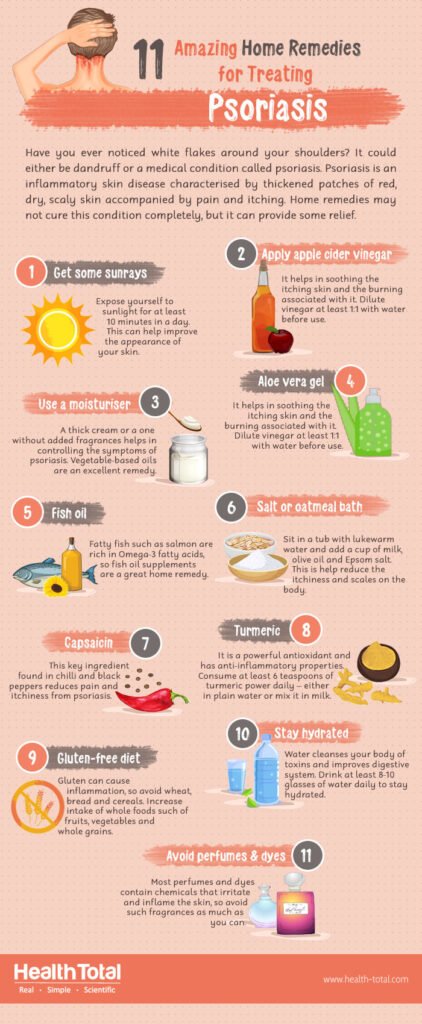
Aloe vera has long been recognized for its soothing and healing properties. When applied topically, aloe vera gel can help reduce inflammation, itching, and scaling associated with psoriasis. It also helps moisturize and nourish the skin, promoting its recovery. While aloe vera may not be a standalone treatment for psoriasis, incorporating it into a skincare routine can provide some relief and support overall skin health.
3.2 Tea Tree Oil
Tea tree oil is known for its antimicrobial and anti-inflammatory properties, making it a popular natural remedy for various skin conditions, including psoriasis. When diluted and applied topically, tea tree oil can help soothe itching, reduce inflammation, and support the healing process. However, it is important to perform a patch test first, as some individuals may experience skin irritation or sensitivity to tea tree oil.
3.3 Dead Sea Salt Baths
Dead Sea salt baths have been used for centuries to treat various skin conditions, including psoriasis. The high mineral content of Dead Sea salt, including magnesium and potassium, can help reduce inflammation, promote skin barrier function, and relieve itching. Adding Dead Sea salt to warm bathwater and soaking for around 15-20 minutes can provide relaxation and potential benefits for psoriasis-affected skin.
3.4 Turmeric
Turmeric is a spice with powerful anti-inflammatory properties, thanks to its main active compound, curcumin. Adding turmeric to your diet or taking curcumin supplements may help reduce inflammation associated with psoriasis. It is important to note that the absorption of curcumin can be enhanced by consuming it with black pepper or healthy fats. However, it is always recommended to consult with a healthcare professional before starting any new supplements.
3.5 Oregon Grape
Oregon grape is an herbal remedy derived from the root of the Oregon grape plant. It contains berberine, a compound known for its anti-inflammatory and antimicrobial properties. Applying a cream or ointment containing Oregon grape extract to psoriasis-affected areas may help reduce inflammation and soothe the skin. As with any herbal remedy, it is important to use it as directed and consult with a healthcare professional if you are currently taking any medications.
3.6 Fish Oil
Fish oil supplements, rich in omega-3 fatty acids, have been studied for their potential benefits in managing psoriasis. Omega-3 fatty acids have anti-inflammatory properties and may help reduce inflammation and itching associated with psoriasis. Incorporating fish oil supplements into your daily routine may provide added support for your skin health. However, speak to a healthcare professional regarding the appropriate dosage and any potential interactions with other medications.
3.7 Vitamin D
Vitamin D plays a crucial role in skin health and immune function. Some studies suggest that psoriasis may be linked to vitamin D deficiency. Therefore, adequate levels of vitamin D may help manage psoriasis symptoms. Sun exposure is one way to naturally increase vitamin D levels, but it is important to protect the skin from harmful UV radiation. Alternatively, vitamin D supplements can be taken under the guidance of a healthcare professional to ensure optimal levels.
3.8 Probiotics
Probiotics, also known as beneficial bacteria, have gained attention for their potential benefits in various aspects of health, including skin conditions like psoriasis. Probiotics help maintain a healthy balance of gut bacteria and may modulate the immune response, reducing inflammation. Consuming probiotic-rich foods or taking probiotic supplements can be considered as part of a holistic approach to managing psoriasis.
3.9 Gluten-Free Diet
Some individuals with psoriasis may have sensitivities to gluten, a protein found in wheat, barley, and rye. Adhering to a gluten-free diet may help alleviate symptoms for those with gluten sensitivity or celiac disease. However, it is important to note that not everyone with psoriasis will benefit from eliminating gluten from their diet. If considering a gluten-free diet, it is recommended to work with a healthcare professional or a registered dietitian to ensure a balanced and nutritious diet.
3.10 Stress Management Techniques
Stress has been known to trigger or exacerbate psoriasis flare-ups. Therefore, incorporating stress management techniques into your daily routine can be beneficial for managing psoriasis. This may include mindfulness meditation, deep breathing exercises, yoga, or engaging in hobbies and activities that promote relaxation. Finding effective stress management strategies can help reduce the frequency and severity of psoriasis flare-ups.
4. Research and Evidence
4.1 Scientific Studies on Natural Remedies for Psoriasis
Several scientific studies have been conducted to explore the potential benefits of natural remedies for psoriasis. These studies have investigated the effectiveness and safety of various natural ingredients and supplements, such as aloe vera, tea tree oil, turmeric, fish oil, and probiotics. While the results are promising, it is important to note that more research is needed to fully understand the mechanisms and optimal use of these natural remedies.
4.2 Effectiveness of Natural Remedies
Natural remedies for psoriasis can provide relief and support overall skin health. However, it is essential to understand that natural remedies may not work for everyone and may not be a substitute for conventional treatments. The effectiveness of natural remedies can vary from person to person, depending on the severity and type of psoriasis, as well as individual factors such as genetics and lifestyle. It is important to approach natural remedies with realistic expectations and work alongside a healthcare professional.
4.3 Potential Mechanisms of Action
The exact mechanisms through which natural remedies for psoriasis work are not yet fully understood. However, some natural ingredients, such as aloe vera and tea tree oil, have exhibited anti-inflammatory properties, which may help reduce inflammation and soothe the skin. Others, like turmeric and fish oil, contain compounds that can modulate the immune response and potentially reduce the symptoms of psoriasis. The mechanisms of action of natural remedies are complex and may involve multiple pathways within the body.

5. Precautions and Considerations
5.1 Consulting with a Healthcare Professional
It is important to consult with a healthcare professional before incorporating natural remedies into your psoriasis management plan. They can provide guidance, evaluate your specific condition, and help determine if natural remedies are suitable for you. Natural remedies may interact with certain medications, have contraindications, or may not be appropriate for certain individuals. Working with a healthcare professional ensures a personalized and safe approach to managing psoriasis.
5.2 Allergies and Sensitivities
Natural remedies, just like any other substance, can cause allergic reactions or skin sensitivities in some individuals. It is important to perform a patch test before using any new product or topical application. If you experience any adverse reactions, such as rashes, redness, or itching, discontinue use and seek medical advice. It is also essential to disclose any known allergies or sensitivities to healthcare professionals and carefully read product labels.
5.3 Dosage and Application Guidelines
When using natural remedies such as supplements or topical treatments, it is crucial to follow the dosage and application guidelines provided by the manufacturer or healthcare professional. Natural remedies can vary in potency, and using incorrect dosages or application methods may reduce their effectiveness or cause harm. Always read instructions carefully and consult with a healthcare professional if you have any concerns or questions.
5.4 Possible Interactions with Medications
Natural remedies can interact with certain medications, either by enhancing their effects or inhibiting their efficacy. It is important to disclose all medications, including natural remedies, to your healthcare professional to avoid potential interactions. They can provide guidance on possible interactions and adjust your treatment plan accordingly. Open communication with your healthcare professional is vital to ensure the safe and effective use of both natural remedies and conventional treatments.
6. Integrating Natural Remedies with Conventional Treatment
6.1 Complementary Approach
Natural remedies can be integrated as a complementary approach alongside conventional treatments for psoriasis. The combination of natural remedies and conventional treatments may provide synergistic benefits and a more comprehensive approach to managing symptoms. However, it is important to discuss your intentions with a dermatologist or healthcare professional to ensure the compatibility and safety of combining different treatment modalities.
6.2 Discussing with a Dermatologist
When considering natural remedies, it is essential to discuss your options with a dermatologist who specializes in psoriasis treatment. They can provide expert advice, evaluate your specific condition, and help guide your decision-making process. A dermatologist can also monitor your progress and make adjustments to your treatment plan as needed. They are a valuable resource in designing an individualized approach that considers both your preferences and your skin health needs.
6.3 Monitoring and Adjusting Treatment
When incorporating natural remedies into your psoriasis management plan, it is important to monitor your progress and communicate any changes or concerns with your healthcare professional. Regular follow-ups can help ensure that your treatment plan is effective and safe. It may be necessary to adjust dosages, try different natural remedies, or explore additional treatment options if needed. Your healthcare professional can guide you in making informed decisions throughout your psoriasis journey.

7. Lifestyle Changes to Support Psoriasis Management
7.1 Healthy Diet
Adopting a healthy, balanced diet can support overall health and potentially alleviate psoriasis symptoms. Focus on consuming a variety of fresh fruits and vegetables, lean proteins, whole grains, and healthy fats. Avoid or limit processed foods, sugars, and excessive alcohol consumption, as they may contribute to inflammation. While diet alone may not cure psoriasis, it can play a role in reducing inflammation and supporting the success of other treatment modalities.
7.2 Regular Exercise
Regular physical activity has numerous benefits for overall health and well-being, including potential benefits for individuals with psoriasis. Exercise can help reduce stress, promote circulation, and improve immune function. Incorporate moderate-intensity exercises, such as brisk walking, swimming, or cycling, into your routine. However, it is important to consult with a healthcare professional before starting any new exercise program, especially if you have joint involvement due to psoriatic arthritis.
7.3 Moisturizing and Skincare
Keeping the skin moisturized is crucial for individuals with psoriasis. Apply a moisturizer regularly to help soothe dryness, reduce itching, and maintain skin integrity. Opt for gentle, fragrance-free products to minimize irritation. Avoid harsh soaps or hot water, as they can further dry out the skin. Additionally, be mindful of any potential triggers or irritants in skin care products and make necessary adjustments to support your skin health.
7.4 Avoiding Triggers
Identifying and avoiding triggers that worsen your psoriasis can help reduce the frequency and severity of flare-ups. These triggers can vary from person to person but may include stress, certain medications, infections, dry weather, and specific foods. Keep a psoriasis diary to track potential triggers and symptoms, and discuss your findings with a healthcare professional. Awareness of triggers can empower you to make lifestyle adjustments and minimize their impact on your skin.
7.5 Quitting Smoking and Limiting Alcohol Consumption
Smoking and excessive alcohol consumption have been shown to worsen psoriasis symptoms and reduce treatment effectiveness. Quitting smoking and reducing alcohol intake can have a positive impact on your overall health and potentially help manage psoriasis. If you need support in quitting smoking or reducing alcohol consumption, reach out to healthcare professionals or support groups specialized in addiction management.
8. Personal Stories and Testimonials
8.1 Real-Life Experiences with Natural Remedies
Personal stories and testimonials from individuals who have tried natural remedies for psoriasis can provide valuable insights and inspiration. These stories can offer a candid perspective on their experiences, including the effectiveness of natural remedies, challenges faced, and overall well-being improvements. It is important to remember that personal experiences may vary, and what works for one person may not work for another. Use these stories as a point of reference and discuss them with a healthcare professional before making any changes to your treatment plan.
8.2 Lessons Learned and Tips for Others
Personal experiences can offer valuable lessons and tips for others facing psoriasis. Individuals who have successfully managed their condition with natural remedies or a combination of conventional and natural approaches can share their insights, strategies, and practical tips. These lessons learned can cover various topics, such as skin care routines, stress management techniques, lifestyle adjustments, and seeking support. However, it is crucial to remember that each person’s journey with psoriasis is unique, and your own experience may differ.

9. Seeking Support and Resources
9.1 Support Groups and Online Communities
Connecting with others who share similar experiences can provide invaluable support and understanding. Joining support groups or online communities dedicated to individuals with psoriasis can offer a platform to share stories, seek advice, and find comfort. These communities can also provide access to educational resources and upcoming events related to psoriasis management and research.
9.2 Professional Associations and Organizations
Professional associations and organizations focusing on psoriasis can be excellent resources for information, guidance, and advocacy. These organizations often provide educational materials, access to healthcare professionals specializing in psoriasis, and updates on the latest research and treatment options. Their websites may also offer directories to help individuals find dermatologists or healthcare professionals experienced in managing psoriasis.
9.3 Educational Websites and Materials
Educational websites and materials dedicated to psoriasis can be valuable sources of information for individuals seeking to learn more about the condition and its management. These resources may provide easy-to-understand explanations of psoriasis, treatment options, and lifestyle management strategies. However, it is important to ensure that the websites or materials are from reputable sources, such as medical associations, research institutions, or healthcare organizations.
10. Final Thoughts
10.1 Empowering Individuals with Psoriasis
Managing psoriasis can be challenging, but it is important to remember that you have the power to take control of your condition. By educating yourself about the available treatment options, seeking support, and making informed decisions, you can empower yourself to effectively manage your psoriasis and improve your overall well-being.
10.2 Recognizing the Potential of Natural Remedies
Natural remedies can play a supportive role in managing psoriasis symptoms and promoting skin health. While they may not provide a cure or replace conventional treatments, they can be an additional tool in your psoriasis management toolkit. However, it is important to approach natural remedies with a realistic mindset and integrate them into your treatment plan under the guidance of a healthcare professional.
10.3 Importance of Personalized Approach
Psoriasis is a complex condition that varies in its presentation and response to treatment. It is crucial to recognize that what works for one person may not work for another. Emphasize the importance of a personalized approach to psoriasis management, ensuring that treatment decisions are based on individual needs and guided by healthcare professionals. With the right support and a comprehensive approach, individuals with psoriasis can optimize their skin health and overall quality of life.
Related Terms About Natural Remedy For Psoriasis.
Cure For Psoriasis Eyes, Cure For Psoriasis On Legs, Cure For Psoriasis On Scalp, Cure For Psoriasis Skin Disease, Cure For Psoriasis Unani, Laser Treatment For Psoriasis Cost, Laser Treatment For Psoriasis Reviews, Medication For Psoriasis Arthritis, Medication For Psoriasis Topical, Medicine For Psoriasis And Eczema