
Imagine a world where the threat of Legionnaires’ Disease outbreaks is a thing of the past. Where people can enjoy clean, safe water without the fear of falling ill. This article explores the importance of preventing Legionnaires’ Disease outbreaks and the steps individuals and communities can take to protect themselves. With a friendly tone and helpful advice, let’s uncover how we can keep our environments free from this potentially deadly bacteria.
Preventing Legionnaires’ Disease Outbreaks
Legionnaires’ Disease is a severe and potentially life-threatening form of pneumonia caused by the Legionella bacteria. It was first identified in 1976 when an outbreak occurred during an American Legion convention in Philadelphia. Since then, there have been numerous outbreaks globally, highlighting the importance of prevention strategies to safeguard public health. In this article, we will discuss various measures and best practices in preventing Legionnaires’ Disease outbreaks.

Understanding Legionnaires’ Disease
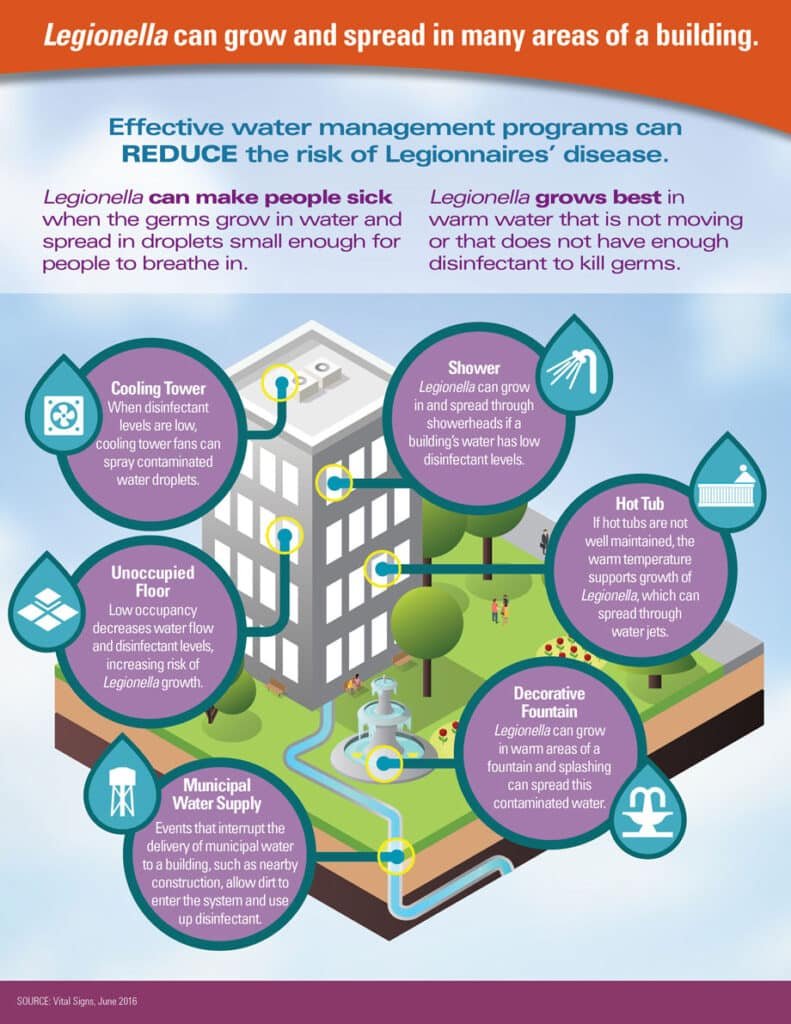
To effectively prevent Legionnaires’ Disease, it is vital to understand its causes and transmission. Legionella bacteria are commonly found in freshwater environments, such as lakes and streams, but they become a concern when they multiply and spread in human-made water systems. These systems include cooling towers, hot tubs, hot water tanks, and plumbing systems.
The primary mode of transmission is through inhalation of small droplets of water contaminated with Legionella bacteria. This can occur when using showers, hot tubs, or even through the ventilation system in large buildings. Legionnaires’ Disease is not transmitted person-to-person, making it critical to focus on preventing the bacteria from proliferating in water systems.
Identifying Risk Factors
Certain factors increase the risk of Legionella growth and transmission. Understanding and addressing these risk factors are key to preventing outbreaks. Some commonly identified risk factors include:
-
Stagnant water: Stagnant water provides a conducive environment for Legionella bacteria to multiply. Areas with low water flow or infrequently used plumbing fixtures pose a higher risk.
-
Warm water temperatures: Legionella bacteria thrive in warm water, particularly between 77°F (25°C) and 108°F (42°C). Maintaining water temperatures outside of this range is crucial to limiting bacterial growth.
-
Contaminated aerosol generation: Water systems that generate aerosols, such as cooling towers and showers, can disperse contaminated water droplets into the air. Proper management of such systems is essential.
-
Lack of maintenance: Poor maintenance of water systems can lead to the accumulation of sediment, scale, and biofilm, providing a favorable environment for Legionella growth.
By recognizing these risk factors, proactive measures can be taken to mitigate the risk of Legionnaires’ Disease outbreaks.

Implementing Water Management Programs
Developing and implementing a comprehensive water management program is a fundamental step in preventing Legionnaires’ Disease outbreaks. This program should be tailored to the specific needs and characteristics of each building or facility and must include the following elements:
-
Establish a multidisciplinary team: Form a team comprising facility managers, engineers, water treatment specialists, and infection prevention experts. This team should be responsible for developing and overseeing the water management program.
-
Conduct a risk assessment: Identify and evaluate potential sources of Legionella bacteria within the water system. This assessment should include a detailed analysis of the building’s water infrastructure and the associated equipment.
-
Develop control measures: Based on the risk assessment, develop control measures such as temperature management, disinfection protocols, and regular system maintenance. These measures should aim to prevent the growth and transmission of Legionella bacteria.
-
Implement monitoring and response protocols: Set up a robust monitoring system to regularly assess the effectiveness of control measures and ensure prompt response to any deviation or potential outbreak.
Maintaining Proper Water Temperature
Maintaining appropriate water temperatures is critical in preventing Legionella growth. Cold water should ideally be below 68°F (20°C), while hot water systems should be consistently above 140°F (60°C) to inhibit bacterial growth. Regular monitoring of water temperatures and adjusting system settings accordingly is essential to prevent Legionella colonization.
Furthermore, it is imperative to ensure that hot water temperatures at points of use, such as showers and faucets, are within safe limits to prevent scalding. Implementing thermostatic mixing valves and temperature-limiting devices can help strike a balance between preventing Legionella and providing safe water temperatures for building occupants.

Regularly Inspecting and Cleaning Water Systems
Regular inspection and cleaning of water systems are crucial preventive measures in combating Legionnaires’ Disease. This includes:
-
Flushing stagnant water: Flushing infrequently used fixtures, such as taps and showerheads, at least once a week helps remove stagnant water and reduce the risk of Legionella colonization.
-
Eliminating scale and sediment buildup: Regularly cleaning and descaling pipes, tanks, and cooling towers removes potential breeding grounds for bacteria. Additionally, periodic flushing of hot water heaters helps minimize sediment accumulation.
-
Cleaning and disinfecting cooling towers: Cooling towers are particularly vulnerable to Legionella growth. Regular cleaning and disinfection, following manufacturer guidelines, are essential to prevent outbreaks.
By implementing thorough and regular inspection, cleaning, and maintenance protocols, the risk of Legionella transmission can be significantly reduced.
Using Appropriate Water Treatment
Water treatment is a crucial aspect of preventing Legionnaires’ Disease outbreaks. Various methods can be employed to control Legionella growth:
-
Chlorination: Chlorine is commonly used as a disinfectant in water treatment systems. Regularly measuring and maintaining appropriate chlorine levels can help prevent bacterial colonization.
-
Copper-silver ionization: This method involves the controlled release of copper and silver ions into the water system, which inhibits bacterial growth. Copper-silver ionization has shown promising results in preventing Legionella outbreaks.
-
Ultraviolet (UV) light treatment: UV light, when properly applied, can effectively kill Legionella bacteria. UV disinfection systems can be installed in critical points of the water distribution system to enhance water safety.
The choice of water treatment method should be based on the specific needs and characteristics of the building’s water system, consulting with water treatment specialists and following industry guidelines.
Ensuring Adequate Ventilation
Proper ventilation is crucial in preventing the accumulation and dispersal of Legionella-contaminated aerosols. Well-designed ventilation systems should ensure both sufficient air exchange and proper filtration. This includes:
-
Maintaining positive airflow: Positive pressure in critical areas, such as patient rooms and bathrooms, can help minimize the potential for aerosol dispersion.
-
Filtration systems: Installing high-efficiency particulate air (HEPA) filters in ventilation systems can effectively remove small particles, reducing the risk of Legionella transmission.
-
Regular maintenance: Regular cleaning and inspection of ventilation systems, including ducts, filters, and air intakes, help ensure their optimal functionality.
By focusing on adequate ventilation, the risk of Legionella-contaminated aerosol transmission can be significantly reduced.
Educating and Training Building Occupants
Educating and training building occupants play a crucial role in preventing Legionnaires’ Disease outbreaks. By raising awareness and providing necessary guidance, individuals can contribute to maintaining a safe and healthy environment. Key strategies in occupant education include:
-
Water usage guidelines: Educate occupants about best practices for using and conserving water, such as avoiding stagnant water in faucets and regularly flushing infrequently used fixtures.
-
Reporting concerns: Encourage occupants to promptly report any water-related concerns, such as unusual odors or discoloration, to the building management.
-
Hygiene practices: Promote good personal hygiene practices, including frequent handwashing and responsible use of shared water facilities.
-
Regular training sessions: Conduct periodic training sessions to educate occupants about Legionnaires’ Disease, its transmission, and the preventive measures in place.
By involving occupants and instilling a sense of responsibility, the overall effectiveness of preventive measures can be significantly enhanced.

Monitoring and Testing Water Systems
Regular monitoring and testing of water systems are essential components of preventing Legionnaires’ Disease outbreaks. Key aspects of monitoring and testing include:
-
Regular water sampling: Periodically collect water samples from various points within the water distribution system to test for the presence of Legionella bacteria. Conducting these tests through certified laboratories ensures accurate results.
-
Monitoring system performance: Continuously monitor the key parameters of the water system, such as temperature, chlorine levels, and pressure, to detect any deviations from optimal conditions.
-
Analyzing test results: Thoroughly analyze the test results to identify trends and potential risks. Prompt action must be taken in response to any positive Legionella findings or concerning deviations in monitored parameters.
By regularly monitoring and testing water systems, proactive measures can be taken to address potential risks and prevent outbreaks before they occur.
Collaborating with Public Health Authorities
Collaboration with public health authorities is vital in preventing Legionnaires’ Disease outbreaks. Local health departments and other relevant agencies can provide valuable guidance, resources, and expertise. Key collaborative activities include:
-
Reporting outbreaks: Promptly report any suspected or confirmed cases of Legionnaires’ Disease to local health authorities. This enables timely investigations and the implementation of preventive measures.
-
Participating in trainings and workshops: Engage with public health agencies to stay updated on the latest guidelines, regulations, and best practices in preventing Legionella transmission.
-
Sharing information and lessons learned: Collaborate with public health authorities to share information and lessons learned from outbreak investigations. This collective knowledge can contribute to improved preventive strategies.
By fostering collaboration with public health authorities, building owners and facility managers can ensure a comprehensive and coordinated approach to preventing Legionnaires’ Disease outbreaks.
In conclusion, preventing Legionnaires’ Disease outbreaks requires a multifaceted and proactive approach. Understanding the disease, identifying risk factors, implementing water management programs, maintaining proper water temperature, regularly inspecting and cleaning water systems, using appropriate water treatment, ensuring adequate ventilation, educating and training building occupants, monitoring and testing water systems, and collaborating with public health authorities are all essential components of an effective prevention strategy. By diligently implementing these measures, we can strive to create a safer and healthier environment for all.