
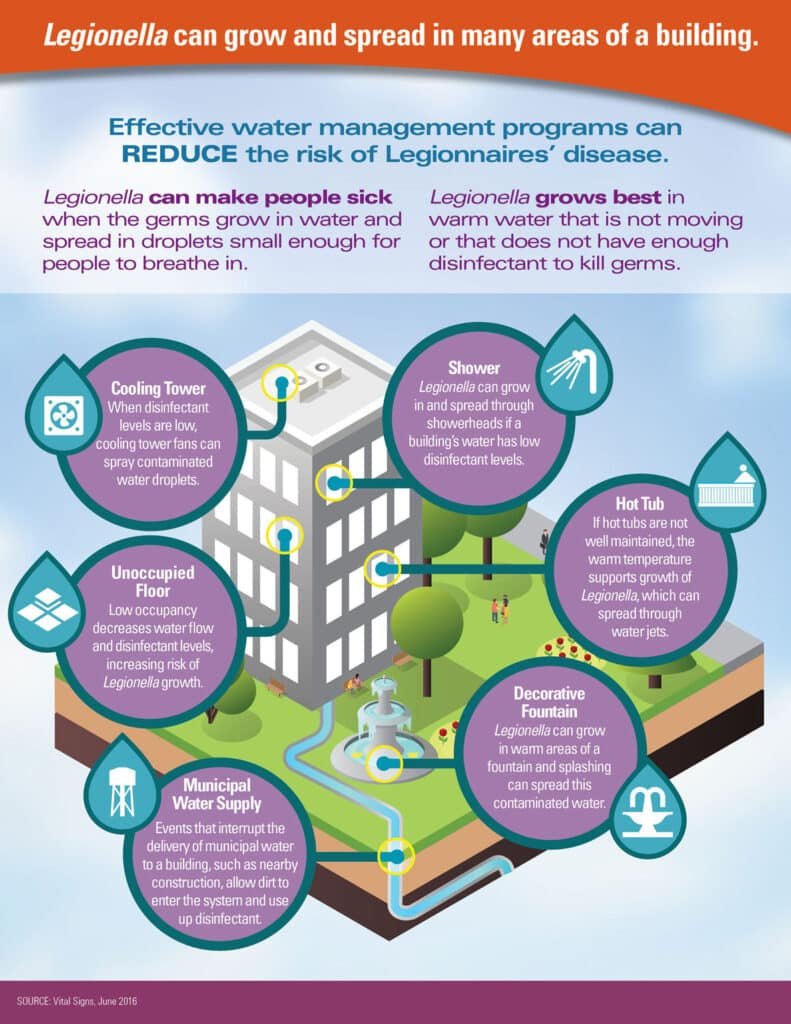
Did you know that there is a significant link between Legionnaires’ disease and water systems? Legionnaires’ disease is a severe and potentially life-threatening form of pneumonia. It is caused by the Legionella bacteria, which thrive in warm water environments, such as hot tubs, cooling towers, and even decorative fountains. When these bacteria contaminate water systems, they can be transmitted through the water droplets in the air, leading to infections in individuals who inhale them. In this article, we will explore the connection between Legionnaires’ disease and water systems and highlight the importance of proper maintenance and prevention measures to minimize the risks.

I. Overview of Legionnaires’ Disease
A. Definition of Legionnaires’ Disease
Legionnaires’ Disease is a severe form of pneumonia caused by the bacterium Legionella pneumophila. It was first identified in 1976 when an outbreak occurred among attendees of an American Legion convention in Philadelphia. The disease can cause symptoms ranging from mild respiratory distress to severe pneumonia and can be fatal if left untreated.
B. History and background of Legionnaires’ Disease
Legionnaires’ Disease gets its name from the outbreak that occurred in 1976, which affected a large number of American Legion members. This outbreak was a wakeup call for public health officials, leading to increased research and understanding of the disease. Prior to this outbreak, the disease was not well-known or understood. Since then, there have been numerous outbreaks around the world, which have prompted further investigation into the causes and prevention of Legionnaires’ Disease.
C. Symptoms and effects of Legionnaires’ Disease
Legionnaires’ Disease typically begins with flu-like symptoms such as fever, headache, muscle aches, and fatigue. As the disease progresses, more severe symptoms may develop, including pneumonia with cough, shortness of breath, chest pain, and gastrointestinal symptoms such as nausea, vomiting, and diarrhea. In severe cases, the disease can cause organ failure and can be life-threatening. It is important to seek medical attention if you experience any of these symptoms, especially if you have been exposed to potential sources of Legionella bacteria.
II. Legionella Bacteria and Disease Transmission
A. Overview of Legionella bacteria
Legionella bacteria are found naturally in freshwater environments, such as lakes and streams. The bacteria thrive and multiply in warm water, typically between 77°F (25°C) and 108°F (42°C). Legionella pneumophila is the species most commonly associated with Legionnaires’ Disease, although other species can also cause the illness. Legionella bacteria can survive and grow in various man-made water systems, such as hot water tanks, cooling towers, and plumbing systems.
B. Modes of transmission for Legionnaires’ Disease
Legionnaires’ Disease is primarily transmitted through inhalation of aerosolized water droplets containing the Legionella bacteria. This can occur when contaminated water is aerosolized and inhaled directly or through the use of contaminated water in showers, spas, and cooling towers. It is important to note that Legionella is not transmitted through person-to-person contact and cannot be contracted by drinking water contaminated with the bacteria.
C. Role of water systems in spreading Legionella bacteria
Water systems play a crucial role in the transmission of Legionella bacteria. Warm water environments, such as hot water tanks and cooling towers, provide ideal conditions for the growth and proliferation of Legionella. If these systems are not properly maintained and disinfected, the bacteria can multiply and be released into the air as aerosolized droplets, leading to potential exposure and infection. Regular monitoring, maintenance, and disinfection of water systems are essential to prevent the spread of Legionella bacteria.

III. Legionnaires’ Disease Outbreaks and Water Systems
A. Notable Legionnaires’ Disease outbreaks linked to water systems
There have been several notable outbreaks of Legionnaires’ Disease linked to water systems throughout the years. One of the most well-known outbreaks occurred in 1976 in Philadelphia, where attendees of an American Legion convention fell ill with severe pneumonia. Since then, there have been documented outbreaks in hotels, hospitals, and other public buildings where contaminated water systems were the source of infection. These outbreaks highlight the importance of maintaining and monitoring water systems to prevent the spread of Legionella bacteria.
B. Case studies of outbreaks in specific water systems
Numerous case studies have been conducted to investigate outbreaks of Legionnaires’ Disease in specific water systems. For example, in 2014, an outbreak occurred in a large hotel in Chicago, where several guests fell ill with severe pneumonia. It was discovered that the hotel’s cooling tower was contaminated with Legionella bacteria, resulting in the outbreak. Similarly, outbreaks have been reported in hospitals where the water distribution system, including showers and faucets, was found to be the source of infection. These case studies emphasize the need for thorough inspections and regular maintenance of water systems to prevent outbreaks.
C. Challenges in detecting and preventing outbreaks in water systems
Detecting and preventing outbreaks of Legionnaires’ Disease in water systems can be challenging due to various factors. First, Legionella bacteria are not easily detectable through routine water testing methods. Specialized culture techniques and DNA analysis are required to accurately identify and quantify the bacteria. Additionally, the complex nature of water systems, with interconnected pipes and components, can make it difficult to pinpoint the exact source of contamination. Furthermore, once Legionella bacteria have established within a water system, they become difficult to eliminate completely. These challenges highlight the need for proactive monitoring, regular inspections, and effective disinfection protocols in water systems to prevent outbreaks.
IV. Risk Factors and Vulnerable Water Systems
A. Factors contributing to Legionella growth in water systems
Several factors contribute to the growth and proliferation of Legionella bacteria in water systems. These include warm water temperatures, stagnant water, presence of biofilms, and nutrient availability. Warm water allows the bacteria to multiply rapidly, while stagnant water provides an ideal environment for their growth. Biofilms, which are slimy layers of microorganisms that form on surfaces, can provide a protective environment for Legionella bacteria, making it harder to eliminate them. Nutrients, such as organic matter and mineral deposits, can also support the growth of Legionella. Proper maintenance and regular disinfection can help mitigate these factors and reduce the risk of Legionella growth.
B. Types of water systems at higher risk for Legionnaires’ Disease
Certain types of water systems are considered to be at higher risk for Legionnaires’ Disease. Cooling towers, which are used in air conditioning systems, are known to be a common source of Legionella contamination. Hot water tanks, water heaters, and plumbing systems can also harbor the bacteria if not properly maintained. Other systems that may pose a risk include decorative fountains, spas, and misting systems. It is crucial to implement appropriate preventive measures and monitoring in these systems to minimize the risk of Legionnaires’ Disease.
C. Environmental conditions that facilitate Legionella proliferation
Various environmental conditions can facilitate the proliferation of Legionella bacteria in water systems. As mentioned earlier, warm water temperatures between 77°F (25°C) and 108°F (42°C) create an ideal growth environment for Legionella. Stagnant water, particularly in dead legs of plumbing systems or areas with low flow, allows the bacteria to multiply unchecked. Biofilms, which can form on surfaces in water systems, provide a protective habitat for Legionella. Additionally, the presence of organic matter and sediment can serve as sources of nutrients for the bacteria. It is important to consider these environmental conditions when implementing preventive measures and monitoring protocols in water systems.

V. Prevention and Control Measures
A. Guidelines for Legionella control in water systems
Several guidelines have been developed to assist in the control of Legionella in water systems. The Centers for Disease Control and Prevention (CDC) and the American Society of Heating, Refrigerating, and Air-Conditioning Engineers (ASHRAE) have published comprehensive guidelines that provide recommendations for the prevention and control of Legionnaires’ Disease in various settings. These guidelines include measures such as maintaining appropriate water temperatures, regular disinfection, and proper design and maintenance of water systems. Adhering to these guidelines can significantly reduce the risk of Legionella contamination and subsequent outbreaks.
B. Best practices for disinfection and maintenance of water systems
Effective disinfection and maintenance practices are crucial for preventing and controlling Legionella in water systems. Regular cleaning and flushing of water distribution systems can help remove sediment and biofilms, thereby minimizing the colonization of Legionella bacteria. Disinfection protocols, such as heat treatment, chlorine dioxide, or copper-silver ionization, can be used to kill or inhibit the growth of Legionella. It is important to implement these practices following recommended guidelines and to regularly monitor the effectiveness of disinfection methods.
C. Implementation of water management programs to reduce risks
Water management programs are essential for reducing the risks associated with Legionella in water systems. These programs involve the systematic assessment, documentation, and control of water systems to prevent the growth and spread of Legionella bacteria. Key components of a water management program include regular inspections and maintenance, monitoring of water quality and temperature, and implementing corrective actions when necessary. Collaborative efforts between facility managers, maintenance staff, and water treatment professionals are crucial to the successful implementation of water management programs.
VI. Regulatory Standards and Guidelines
A. Overview of existing regulations and guidelines for water systems
Several regulatory standards and guidelines exist to address Legionella prevention in water systems. In the United States, the Occupational Safety and Health Administration (OSHA), the Environmental Protection Agency (EPA), and the CDC’s National Center for Environmental Health (NCEH) have established guidelines and regulations for specific industries, such as healthcare facilities and buildings with cooling towers. These guidelines provide a framework for the control and prevention of Legionnaires’ Disease. In other countries, such as the United Kingdom and Australia, specific regulations and guidelines have also been developed to protect public health.
B. Comparison of international standards for Legionella prevention
While there is some variation in regulatory standards and guidelines for Legionella prevention across different countries, there are common principles and best practices that apply universally. These include maintaining appropriate water temperatures, regular disinfection, and monitoring of water systems. The international community, through organizations such as the World Health Organization (WHO) and the International Organization for Standardization (ISO), works to harmonize and improve guidelines to ensure consistency and effectiveness in Legionella prevention efforts globally.
C. Role of government agencies in enforcing compliance
Government agencies play a crucial role in enforcing compliance with regulatory standards and guidelines for Legionella prevention. They are responsible for conducting inspections, monitoring water quality, and investigating outbreaks of Legionnaires’ Disease. These agencies ensure that businesses and organizations adhere to the prescribed preventive measures and take appropriate actions to control the risk of Legionella contamination. By enforcing compliance, government agencies help protect public health and prevent the occurrence of outbreaks.
VII. Public Health Response and Communication
A. Role of public health authorities in responding to Legionnaires’ Disease outbreaks
Public health authorities play a pivotal role in responding to Legionnaires’ Disease outbreaks. Their primary responsibilities include investigating the source of the outbreak, coordinating with healthcare facilities and other stakeholders, and implementing control measures to prevent further spread of the disease. Public health authorities also play a critical role in ensuring effective communication with the public to provide accurate information, address concerns, and promote preventive measures. Their expertise and swift response are essential for mitigating the impact of Legionnaires’ Disease outbreaks on public health.
B. Importance of effective communication during outbreaks and investigations
Effective communication during Legionnaires’ Disease outbreaks and investigations is vital for several reasons. It helps disseminate timely and accurate information to the public, healthcare professionals, and other relevant stakeholders. Clear communication ensures that the public is aware of potential risks, symptoms to watch for, and preventive measures to take. Communication also fosters trust and cooperation between public health authorities, healthcare providers, and the public, which is essential for successfully managing outbreaks and implementing preventive measures.
C. Public education and awareness campaigns on Legionella risks
Promoting public education and awareness campaigns on Legionella risks is crucial for preventing Legionnaires’ Disease. These campaigns aim to educate the public about the disease, its potential sources, and preventive measures. Information on the importance of regular maintenance and disinfection of water systems, as well as the risks associated with certain activities like using hot tubs or cooling towers, can help individuals make informed decisions and take necessary precautions. Public education and awareness campaigns empower individuals to recognize potential risks and actively participate in preventing Legionella contamination.
VIII. Future Challenges and Research Directions
A. Emerging trends and challenges in Legionella control
Legionella control faces several emerging trends and challenges. One challenge is the aging infrastructure of many water systems, which increases the risk of Legionella contamination. Climate change and increasing temperatures also contribute to the proliferation of Legionella in water systems. Additionally, the rise of antibiotic-resistant strains of Legionella poses a concern in the treatment of Legionnaires’ Disease. These challenges necessitate ongoing research and development of innovative control strategies and technologies to effectively manage Legionella in water systems.
B. Areas for further research and development
Further research and development are needed in several areas related to Legionella prevention and control. Improved diagnostic methods for rapid and accurate detection of Legionella in water samples would greatly facilitate early intervention and prevention of outbreaks. Research into the effectiveness of different disinfection methods, including new technologies, can help identify the most reliable and sustainable approaches. Furthermore, studying the interaction of Legionella with biofilms and their impact on transmission and control strategies is an important area of research. Ongoing research efforts are essential to enhance our understanding of Legionella and develop more effective preventive measures.
C. Collaboration between stakeholders to mitigate risks
Collaboration between various stakeholders is crucial to mitigate the risks associated with Legionnaires’ Disease. This includes collaboration among public health authorities, water utilities, facility managers, healthcare providers, and researchers. Working together allows for the sharing of knowledge, best practices, and resources, which is essential for preventing outbreaks and improving control measures. Collaboration also enables the development of comprehensive strategies that consider the entire water system, from its design and maintenance to its use by individuals. By fostering multidisciplinary collaboration, we can effectively mitigate the risks associated with Legionella in water systems.

IX. Conclusion
A. Summary of the link between Legionnaires’ Disease and water systems
Legionnaires’ Disease is closely linked to water systems and is primarily transmitted through inhalation of aerosolized water droplets contaminated with Legionella bacteria. Water systems, such as cooling towers, hot water tanks, and plumbing systems, can provide a breeding ground for Legionella if not properly maintained and disinfected. Outbreaks of Legionnaires’ Disease have occurred in various settings, including hotels, hospitals, and public buildings, emphasizing the importance of proactive measures to prevent Legionella contamination in water systems.
B. Importance of proactive preventive measures
Proactive preventive measures are crucial for reducing the risk of Legionella contamination and subsequent outbreaks. Regular maintenance, monitoring, and disinfection of water systems are essential to control the growth and proliferation of Legionella bacteria. Implementing water management programs that involve regular inspections, water quality monitoring, and corrective actions can further mitigate the risk. By taking proactive preventive measures, both individuals and organizations can significantly contribute to minimizing the occurrence and impact of Legionnaires’ Disease.
C. Call to action for improved regulations and public health efforts
To effectively prevent and control Legionnaires’ Disease, there is a need for improved regulations and increased public health efforts. Governments and regulatory agencies should establish clear and comprehensive guidelines for Legionella prevention, taking into account best practices and lessons learned from past outbreaks. These guidelines should be regularly updated to incorporate new research findings and technologies. Public health authorities should strengthen their surveillance and response capabilities, as well as enhance communication and education efforts to raise awareness and promote preventive measures. By taking these actions, we can work towards minimizing the risks associated with Legionna