
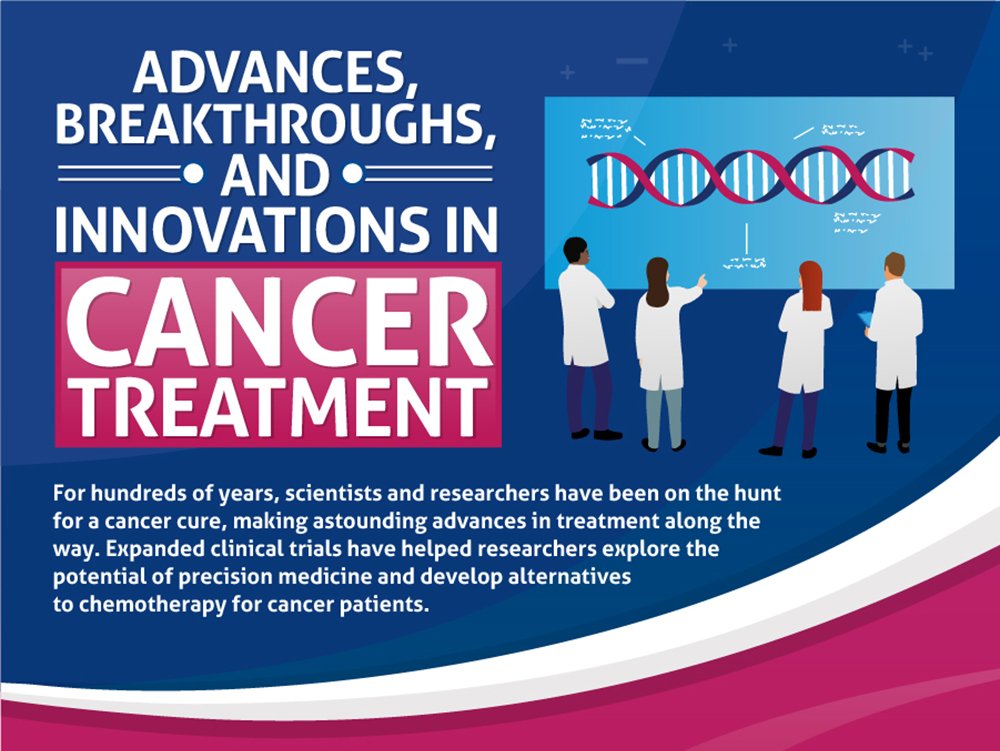
In the ever-evolving field of cancer research, exciting breakthroughs and groundbreaking innovations continue to emerge, offering hope and renewed optimism in the fight against this formidable disease. This article aims to shed light on the promising advances in cancer research, exploring the latest discoveries and cutting-edge treatments that are revolutionizing the way we understand and combat cancer. From groundbreaking immunotherapies to novel precision medicine approaches, prepare to embark on a journey through the remarkable world of cancer research. Get ready to discover the latest breakthroughs and innovations that are bringing us closer than ever to a future where cancer is no longer a life-threatening diagnosis. Cancer, a word that strikes fear and uncertainty into the hearts of many. It is a disease that has affected countless lives and continues to be a major health threat worldwide. However, in recent years, there have been remarkable breakthroughs and innovations in cancer research that offer hope and new possibilities for those facing this devastating disease. In this article, we will explore some of these promising advances, including immunotherapy, targeted therapies, liquid biopsies, precision medicine, nanotechnology, artificial intelligence, gene editing, epigenetics, tumor angiogenesis, and cancer stem cells.

Immunotherapy
Let’s start with a game-changing approach to treating cancer: immunotherapy. This innovative treatment leverages the power of the immune system to fight cancer. One of the most significant breakthroughs in immunotherapy is the development of checkpoint inhibitors. These inhibitors work by blocking the proteins on cancer cells that prevent the immune system from recognizing and attacking them. By doing so, checkpoint inhibitors unleash the full potential of the immune system, allowing it to target and destroy cancer cells more effectively.
Another exciting immunotherapy treatment is CAR-T cell therapy. It involves taking a patient’s own white blood cells, modifying them to express a chimeric antigen receptor (CAR) that recognizes cancer cells, and reintroducing them into the patient’s body. The modified CAR-T cells then seek out and attack the cancer cells specifically, sparing healthy cells from harm. CAR-T cell therapy has shown remarkable results in patients with certain types of blood cancers, providing new hope for those who previously had limited treatment options.
Cancer vaccines are another area of immunotherapy that shows promise. These vaccines are designed to stimulate the immune system to recognize and attack cancer cells. Unlike traditional vaccines that prevent infections, cancer vaccines are therapeutic, aiming to treat existing cancer rather than prevent it. They can be tailored to target specific cancer types or antigens, offering the potential to train the immune system to recognize and eliminate cancer cells more effectively.
Targeted Therapies
In addition to immunotherapy, targeted therapies have emerged as an exciting field in cancer research. Unlike traditional chemotherapy, which indiscriminately kills rapidly dividing cells, targeted therapies focus on specific molecules or pathways that are crucial for cancer growth and survival.
Small molecule inhibitors are one form of targeted therapy. These small compounds can interfere with specific proteins or enzymes involved in cancer development, halting or slowing down the growth of cancer cells. By precisely targeting these key molecules, small molecule inhibitors can potentially achieve better treatment outcomes with fewer side effects.
Monoclonal antibodies are another type of targeted therapy that has shown great promise. These antibodies are designed to recognize and bind to specific proteins on cancer cells, triggering an immune response against the cancer. Monoclonal antibodies can be used to block the signals that promote cancer growth, inhibit the formation of new blood vessels that support tumor growth, or deliver toxic substances directly to cancer cells. They have been successfully used in the treatment of various types of cancers, providing a more targeted and effective approach than traditional chemotherapy.
Liquid Biopsies
The field of liquid biopsies has revolutionized the way we detect and monitor cancer. Liquid biopsies refer to the analysis of tumor-derived components that are present in bodily fluids, such as blood or urine. This non-invasive approach offers several advantages over traditional tissue biopsies, including the ability to detect mutations or biomarkers in real-time and the potential for monitoring treatment response and disease progression more frequently.
One component of liquid biopsies is cell-free DNA (cfDNA). When cancer cells die, they release fragments of DNA into the bloodstream. By analyzing these fragments, researchers can identify specific genetic mutations associated with cancer and determine the presence or recurrence of the disease. cfDNA analysis has proven to be a valuable tool for early detection, monitoring treatment response, and identifying resistance mechanisms in various cancer types.
Another component of liquid biopsies is circulating tumor cells (CTCs). CTCs are cancer cells that have detached from the primary tumor and entered the bloodstream. By isolating and analyzing these cells, researchers can gain valuable insights into the characteristics of the cancer and its response to treatment. CTC analysis has the potential to guide treatment decisions, monitor disease progression, and detect minimal residual disease (small number of remaining cancer cells after treatment) in patients.
Precision Medicine
Precision medicine is an approach to cancer treatment that takes into account the individual differences in a patient’s genes, lifestyle, and environment. It aims to tailor treatment plans to each patient’s unique characteristics, increasing the chances of a successful outcome.
Genomic profiling is a cornerstone of precision medicine. It involves sequencing a patient’s DNA to identify genetic mutations or alterations that could drive cancer growth or impact treatment response. By analyzing the genetic makeup of a tumor, researchers can uncover specific molecular targets that can be exploited for treatment. This personalized approach allows for the selection of therapies that are most likely to be effective and avoids the use of treatments that are unlikely to work.
Personalized treatment plans go hand in hand with genomic profiling. Once the genetic profile of a tumor is known, treatment options can be customized to target the specific molecular alterations identified. This may include the use of targeted therapies, immunotherapy, or a combination of both. By tailoring treatment plans to individual patients, precision medicine offers the potential for more effective treatments with fewer side effects.

Nanotechnology
Nanotechnology has opened up exciting possibilities in cancer research and treatment. By manipulating matter at the nanoscale (one billionth of a meter), researchers can create nanoparticles with unique properties that can improve drug delivery and enable early cancer detection.
Nano-particles for drug delivery have shown great promise in enhancing the effectiveness of cancer treatments. These tiny particles can carry therapeutic agents such as chemotherapy drugs directly to the tumor site, increasing their concentration while minimizing their exposure to healthy tissues. By improving drug delivery, nanoparticles can enhance the efficacy of treatment while reducing side effects.
Nano-sensors for early detection are another application of nanotechnology in cancer research. These sensors can detect specific biomarkers or molecular changes associated with cancer, enabling early diagnosis and intervention. By detecting cancer at its earliest stages, nano-sensors offer the potential for more effective treatment and improved patient outcomes.
Artificial Intelligence
Artificial intelligence (AI) has emerged as a powerful tool for analyzing complex data, and its applications in cancer research and treatment are expanding rapidly.
Machine learning algorithms can be trained to analyze medical images, such as CT scans or mammograms, and detect patterns or anomalies that may be indicative of cancer. By analyzing large datasets and learning from previous cases, AI algorithms can assist radiologists in making more accurate diagnoses and identifying tumors that may have been missed by human eyes alone. This has the potential to improve early detection rates and lead to better treatment outcomes.
AI-guided treatment decisions are another valuable application of artificial intelligence in cancer care. By integrating patient-specific data, such as genomic profiling results, treatment history, and clinical data, AI algorithms can help oncologists make more informed decisions about treatment options. This can lead to more personalized and effective treatments, as AI algorithms can learn from vast amounts of data to suggest the most appropriate therapies based on individual patient characteristics.

Gene Editing
Gene editing technologies, like CRISPR-Cas9, have revolutionized the field of genetics and hold great promise in cancer research and treatment.
CRISPR-Cas9 technology allows scientists to precisely edit genes within living organisms, including human cells. This revolutionary technology can be used to correct genetic mutations that drive cancer development or to disable specific genes involved in cancer growth. By manipulating genes, researchers can potentially eliminate cancer-causing mutations and restore normal cellular functions.
Gene therapy is another application of gene editing in cancer research. It involves introducing genetic material into a patient’s cells to replace or repair faulty genes. In the context of cancer treatment, gene therapy can be used to enhance the body’s ability to recognize and destroy cancer cells or to make cancer cells more vulnerable to treatment. While still in its early stages, gene therapy holds immense potential for developing innovative and targeted treatments for various types of cancer.
Epigenetics
While our DNA provides the blueprint for life, epigenetics refers to the chemical modifications that can influence how genes are expressed or silenced. Epigenetic changes play a significant role in cancer development and progression, making them an area of intense study and potential therapeutic intervention.
DNA methylation is one epigenetic modification that has been extensively studied in the context of cancer. It involves the addition of a methyl group to the DNA molecule, which can turn off the expression of certain genes. Abnormal DNA methylation patterns have been observed in various types of cancer and can contribute to the uncontrolled growth and spread of tumor cells. By targeting these epigenetic changes, researchers hope to develop novel therapies that can effectively reverse these modifications and restore normal gene expression.
Histone modifications are another essential epigenetic mechanism implicated in cancer. Histones are proteins that help package and organize DNA within the cell nucleus. Chemical modifications of histones can influence the accessibility of genes, affecting their expression. Aberrant histone modifications have been associated with cancer development and progression. Understanding and targeting these modifications could potentially lead to innovative treatment strategies that restore proper gene regulation and inhibit cancer growth.

Tumor Angiogenesis
Tumor angiogenesis refers to the formation of new blood vessels to supply oxygen and nutrients to growing tumors. This process is crucial for tumor survival and plays a significant role in cancer progression. Targeting angiogenesis has emerged as a promising strategy in cancer treatment.
Anti-angiogenic therapies aim to inhibit the formation of new blood vessels in tumors, depriving them of the necessary nutrients for growth. Through various mechanisms, anti-angiogenic drugs can interfere with the signals that promote the growth of new blood vessels, effectively starving the tumor and slowing its growth. These therapies can be used in combination with other treatments, such as chemotherapy or radiation therapy, to enhance their effectiveness.
Inhibitors of angiogenesis signals are another class of drugs that target the specific molecules involved in the angiogenic process. By blocking these signals, these inhibitors can disrupt the formation of new blood vessels and inhibit tumor growth. These targeted drugs offer the potential for more precise and effective treatment options for cancer patients.
Cancer Stem Cells
Cancer stem cells, also known as tumor-initiating cells, are a small population of cells within tumors that possess the ability to self-renew and give rise to different types of cancer cells. These cells are highly resistant to conventional treatments and have been implicated in cancer recurrence and metastasis. Targeting cancer stem cells offers a new approach to cancer treatment.
Targeting stem cell pathways is one strategy to inhibit the growth and survival of cancer stem cells. By interfering with the signaling pathways that drive stemness in cancer cells, researchers hope to render these cells more vulnerable to conventional therapies and reduce the risk of relapse. This approach aims to eradicate the cells that are responsible for tumor initiation and propagation, potentially leading to better treatment outcomes.
Differentiation therapy is another avenue being explored in the fight against cancer stem cells. This approach aims to force cancer stem cells to differentiate into more mature and less aggressive forms, making them more susceptible to existing treatments. By promoting the differentiation of cancer stem cells, researchers hope to disrupt their self-renewal capabilities and prevent cancer relapse.
In conclusion, the field of cancer research has seen tremendous progress in recent years, with breakthroughs and innovations offering hope for improved treatments and outcomes. From immunotherapy and targeted therapies to liquid biopsies, precision medicine, nanotechnology, artificial intelligence, gene editing, epigenetics, tumor angiogenesis, and cancer stem cells, a plethora of exciting advancements are transforming our approach to fighting cancer. While challenges remain, these promising breakthroughs pave the way for a future where cancer may be more effectively diagnosed, treated, and even prevented, bringing us closer to a world without the burden of this devastating disease.