
Have you ever experienced sudden pain in your knee after a sports activity or twisting motion? It could be a sign of an Anterior Cruciate Ligament (ACL) injury. The ACL is a crucial ligament in the knee that helps stabilize the joint, and when it’s injured, it can result in significant pain and limitations. This article delves into the signs and symptoms of ACL injuries, helping you understand what to look out for and how to seek proper medical attention. From swelling and instability to a popping sound at the time of injury, being aware of these signs can be instrumental in managing and recovering from an ACL injury effectively. So, let’s get started and learn more about this common sports-related injury!
Overview of Anterior Cruciate Ligament (ACL) Injuries
What is an ACL injury?
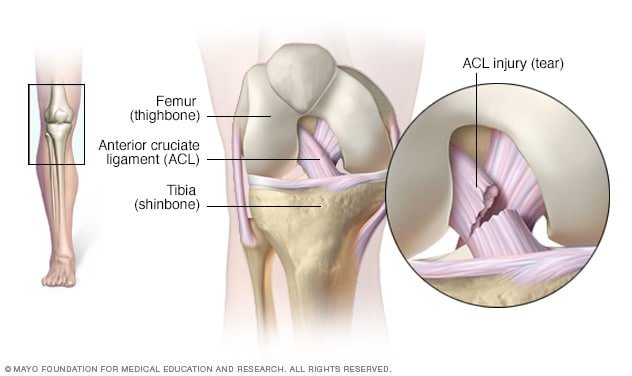
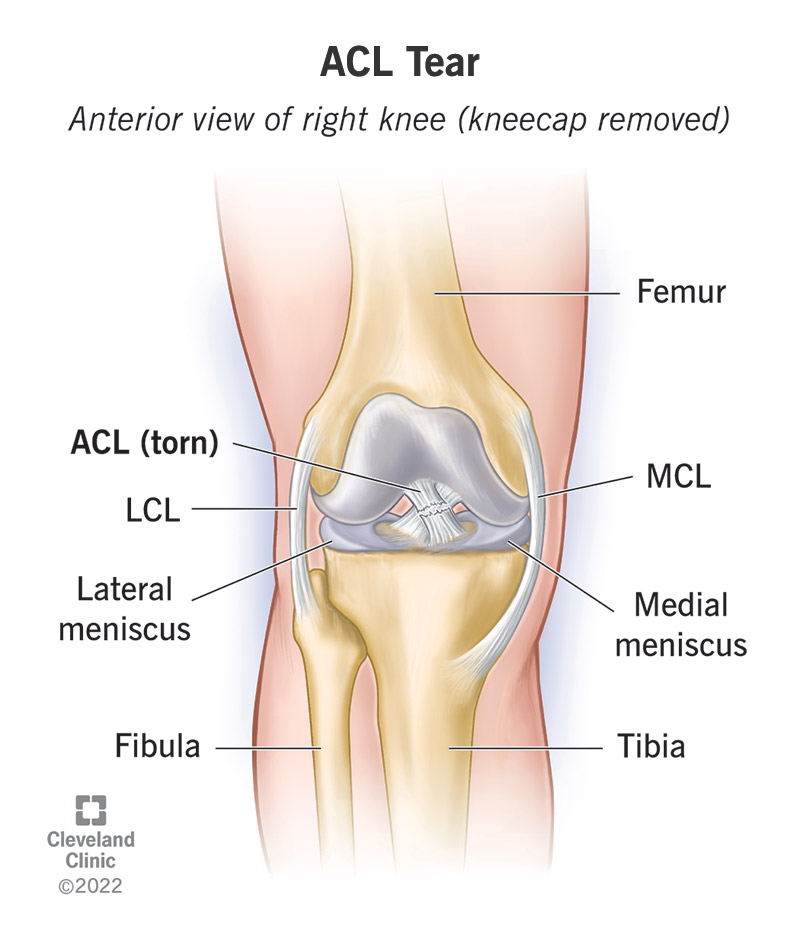
An ACL injury refers to the tearing or stretching of the anterior cruciate ligament, which is one of the major ligaments in the knee. This ligament plays a crucial role in providing stability to the knee joint and helps to prevent excessive forward movement of the tibia (shinbone) in relation to the femur (thighbone). ACL injuries commonly occur during sports activities that involve sudden stops or changes in direction, such as basketball, soccer, skiing, and football.
How common are ACL injuries?
ACL injuries are relatively common, particularly among athletes or individuals who participate in activities that place significant stress on the knee joint. According to the American Academy of Orthopaedic Surgeons (AAOS), around 150,000 ACL injuries occur in the United States each year. Furthermore, studies have shown that females are more prone to ACL injuries compared to males.
Causes of ACL injuries
There are several causes of ACL injuries, with the majority of cases being non-contact injuries. These injuries usually occur during sports activities that involve jumping, cutting, and pivoting motions. Some of the common causes include sudden deceleration, landing awkwardly from a jump, direct impact to the knee, and rapid changes in direction while the foot is firmly planted on the ground. It is important to note that ACL injuries can also happen due to more minor incidents or overuse, particularly in cases where the ligament may already be weakened.
Risk Factors for ACL Injuries
Gender
Females have a higher risk of ACL injuries compared to males, potentially due to differences in anatomy, hormonal factors, and neuromuscular control. Various studies support this finding, highlighting that female athletes are more susceptible to ACL injuries, particularly in sports involving sudden changes in direction or jumping.
Age
ACL injuries can occur at any age; however, they are most commonly seen in individuals who engage in high-impact sports or activities. Young athletes, between the ages of 15 and 25, are particularly prone to ACL injuries due to their participation in competitive sports and growing bone structures.
Sport and activity participation
Certain sports and activities have a higher risk of ACL injuries. Sports that involve cutting, pivoting, and jumping motions, such as basketball, soccer, skiing, and football, place a significant strain on the knee joint and increase the risk of ACL tears.
Previous ACL injury
Individuals who have previously experienced an ACL injury have an increased risk of re-injury. This is because the integrity and stability of the knee joint may be compromised after an initial injury, making it more susceptible to subsequent ACL tears.
Anatomic factors
Certain anatomical factors can contribute to an increased risk of ACL injuries. These include the shape of the femoral notch (groove in the femur bone), the size and orientation of the intercondylar roof (part of the knee joint), the angle of the tibia (shinbone), and the laxity or looseness of the ligaments. Studies have shown that individuals with these anatomical variations may be more prone to ACL injuries due to altered knee mechanics.
Signs and Symptoms of ACL Injuries
Pain
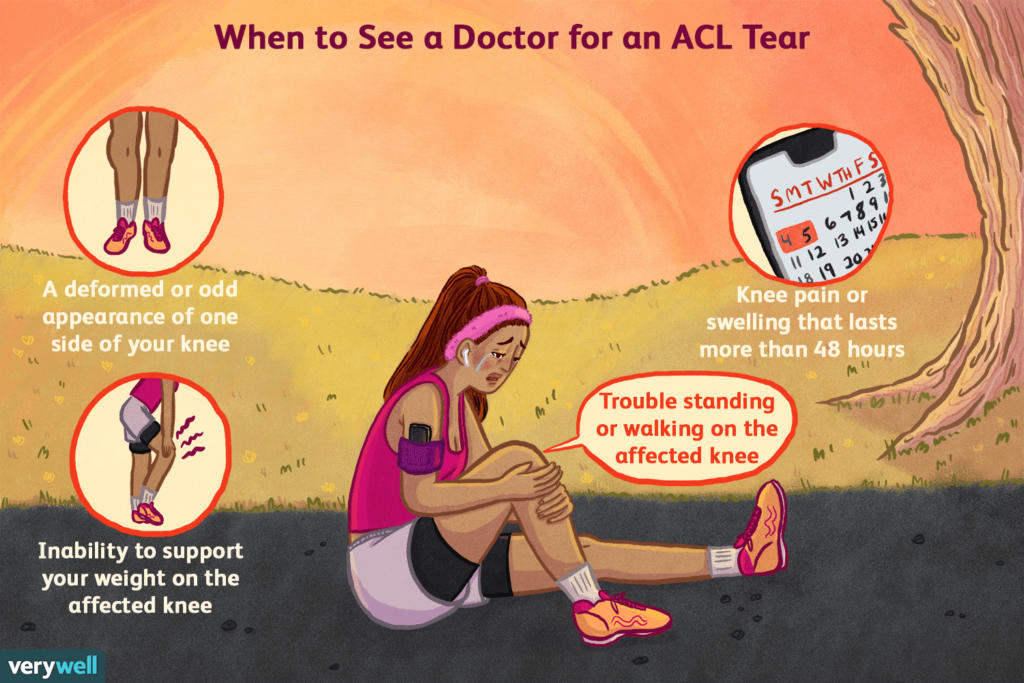
One of the primary symptoms of an ACL injury is pain. This pain is often sharp and intense and is typically felt immediately after the injury occurs. The severity of the pain may vary depending on the extent of the tear and other factors.
Swelling
Swelling is a common symptom of an ACL injury. The knee joint may become noticeably swollen within hours or days after the injury. The swelling is caused by the body’s natural response to inflammation and can result in stiffness and limited movement.
Instability
ACL injuries often lead to knee instability, characterized by a feeling of the knee “giving way” or being unstable. The injured individual may have difficulty maintaining their balance and stability while walking, running, or engaging in other physical activities.
Audible pop or snap
In some cases, an ACL injury may be accompanied by an audible pop or snap sound at the time of the injury. This sound is often described as a sudden loud noise and may be followed by immediate pain and swelling.
Limited range of motion
An ACL injury can restrict the range of motion in the knee joint. The injured individual may have difficulty bending or straightening the knee fully, and there may be a feeling of tightness or stiffness in the knee.
Difficulty walking or bearing weight
ACL injuries can significantly impact an individual’s ability to walk or bear weight on the injured leg. The pain, swelling, and instability can make it challenging to put weight on the affected knee, causing difficulty in daily activities.
Muscle weakness
Due to the restricted use of the injured leg, the surrounding muscles may weaken. This can lead to muscle atrophy and further limit the individual’s ability to move the knee joint effectively.
Loss of function
An ACL injury can result in a loss of function in the knee joint. The affected individual may have difficulty performing activities that require knee stability, such as jumping, pivoting, or even walking on uneven surfaces.
Inability to continue activity
In many cases, individuals with ACL injuries are unable to continue participating in the activity or sport in which the injury occurred. The pain, swelling, and instability make it difficult to continue physical activities without further risking the knee’s stability and causing additional damage.
Delayed onset of symptoms
In some instances, the symptoms of an ACL injury may not be immediately apparent. Some individuals may experience a delayed onset of symptoms, with pain, swelling, and instability developing in the hours or days following the injury.
Diagnosis of ACL Injuries
Medical history and physical examination
To diagnose an ACL injury, a medical professional will begin by taking a detailed medical history and conducting a thorough physical examination. They will ask about the circumstances surrounding the injury, any previous knee injuries, and the individual’s symptoms.
Special tests
Several special tests can help determine if an ACL injury has occurred. These tests may involve manipulating the knee joint and assessing its stability, such as the Lachman test, the pivot shift test, and the anterior drawer test. These tests are designed to evaluate the integrity of the ACL and can assist in making an accurate diagnosis.
Imaging tests (X-rays, MRI)
Imaging tests, such as X-rays or magnetic resonance imaging (MRI), may be ordered to confirm the diagnosis or to assess the extent of the ACL injury. X-rays are primarily used to rule out other potential injuries and evaluate the overall knee joint structure, while an MRI provides detailed images of the soft tissues, including the ACL, to determine the severity of the tear.
Treatment Options for ACL Injuries
Conservative management
In some cases, ACL injuries can be managed conservatively without surgery. This typically involves a combination of rest, ice, compression, elevation (the RICE method), and the use of pain medication to manage symptoms. Physical therapy and rehabilitation exercises are often prescribed to restore strength, stability, and range of motion in the knee joint.
Surgical intervention
For individuals who wish to return to sports or activities that require a stable knee joint, surgical intervention may be recommended. The most common surgical procedure for ACL injuries is an ACL reconstruction, where the torn ligament is replaced with a graft tissue. This surgery helps to restore knee stability and allows individuals to regain their previous level of activity.
Recovery and Rehabilitation for ACL Injuries
Post-operative care
After ACL surgery, proper post-operative care is crucial for a successful recovery. This may include pain management, wound care, and the use of assistive devices such as crutches or braces to protect the knee. Physical therapy is often initiated shortly after surgery to promote healing, regain strength, and improve range of motion.
Physical therapy
Physical therapy plays a vital role in the recovery and rehabilitation process for ACL injuries. A physical therapist will design a personalized treatment plan that includes exercises to improve knee strength, stability, and flexibility. They may also incorporate balance and coordination training to help prevent future injuries.
Exercise and strengthening
As recovery progresses, exercises and strengthening activities will be introduced to enhance the knee joint’s stability and function. These exercises may include squats, lunges, step-ups, and other functional movements that simulate the demands of daily activities or sports participation.

Complications and Long-term Effects of ACL Injuries
Recurrent instability
Even with proper treatment and rehabilitation, there is a risk of recurrent instability in the knee joint following an ACL injury. This instability can make the knee more vulnerable to further injuries and may require additional surgical intervention.
Early-onset osteoarthritis
ACL injuries have been associated with an increased risk of developing early-onset osteoarthritis in the knee joint. Over time, the damage to the ACL can contribute to the breakdown of cartilage, leading to joint pain, stiffness, and decreased function.
Functional limitations
ACL injuries can result in functional limitations, particularly in activities that require agility, balance, and knee stability. Individuals may have difficulty participating in sports or engaging in physical activities that involve jumping, pivoting, or sudden changes in direction.
Psychological impact
The psychological impact of an ACL injury should not be underestimated. The sudden loss of physical ability, the prolonged recovery process, and the fear of re-injury can have a significant impact on an individual’s mental well-being. It is important for individuals to seek the necessary support and resources to cope with these challenges.
In conclusion, ACL injuries are a relatively common occurrence, particularly among athletes and individuals who engage in high-impact sports or activities. While the signs and symptoms of ACL injuries can vary, they often include pain, swelling, instability, and difficulty walking or bearing weight. Prompt diagnosis and appropriate treatment are essential for a successful recovery. Whether through conservative management or surgical intervention, the goal is to restore knee stability, regain function, and reduce the risk of future complications. With proper rehabilitation and ongoing care, individuals can overcome the challenges posed by ACL injuries and return to their active lifestyles.