
If you frequently experience heartburn, a sour taste in your mouth, or discomfort after eating, you may be dealing with Gastroesophageal Reflux Disease (GERD). GERD is one of the most common digestive disorders worldwide, affecting millions of adults and even some children.
The good news is that GERD is often manageable. Many people successfully reduce symptoms and improve their quality of life through a combination of lifestyle changes, medications, and medical care when needed.
If you have recently been diagnosed with GERD, suspect you may have it, or are caring for someone who does, this guide will help you understand:
- What GERD is
- Why does it develop
- Common symptoms
- How doctors diagnose it
- Treatment options
- Lifestyle changes that can help
- Foods to eat and foods to limit
- Potential complications
- When to seek medical attention
Most importantly, this guide is designed to help you feel informed, empowered, and hopeful. Understanding GERD is the first step toward managing it effectively.
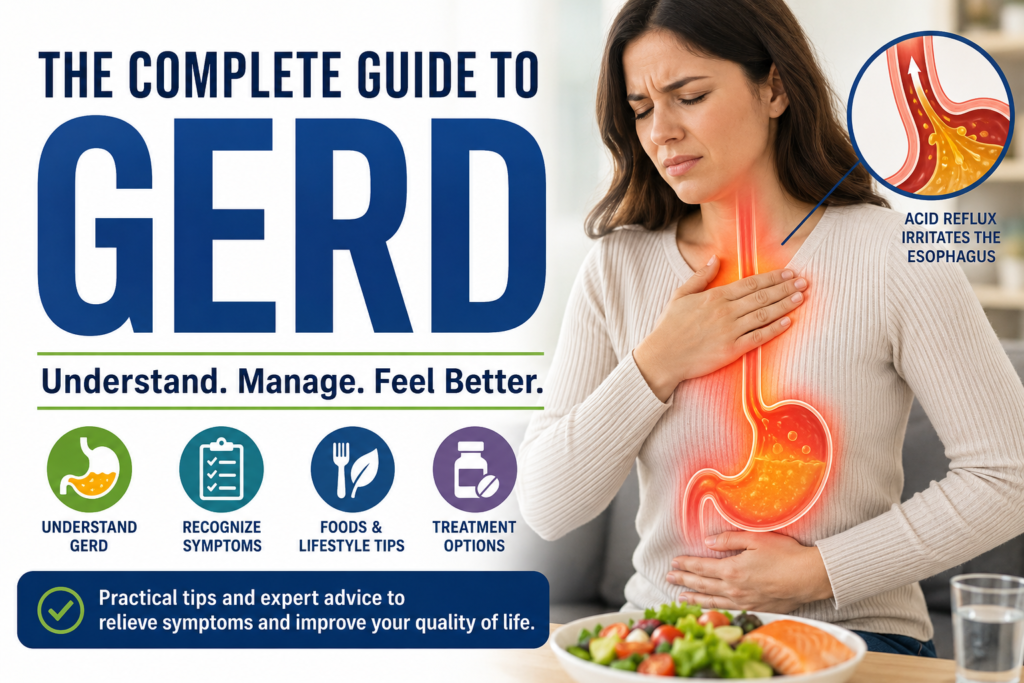
Section 1: What Is GERD?
Definition
GERD stands for Gastroesophageal Reflux Disease.
It is a chronic digestive condition in which stomach contents, including stomach acid, repeatedly flow backward into the esophagus (the tube that carries food from the mouth to the stomach).
This backward flow is called acid reflux.
While occasional acid reflux is common, GERD occurs when reflux happens frequently enough to cause symptoms, irritation, or damage to the esophagus.
Understanding How GERD Happens
Normally, food travels:
Mouth → Esophagus → Stomach
At the bottom of the esophagus is a ring of muscle called the lower esophageal sphincter (LES).
The LES acts like a valve:
- Opens when food enters the stomach
- Closes afterward
- Prevents stomach acid from moving upward
In people with GERD:
- The LES becomes weak
- The LES relaxes at inappropriate times
- Stomach contents leak back into the esophagus
Unlike the stomach, the esophagus lacks a protective lining against acid, so irritation can occur.
How Common Is GERD?
GERD is extremely common.
Studies suggest:
- About 20% of adults in the United States experience GERD symptoms regularly
- Millions of people worldwide are affected
- Symptoms can occur at any age
- The condition becomes more common with increasing age
Many people experience symptoms for years before seeking medical care.
Who Is Most Affected?
GERD can affect:
- Men and women
- Older adults
- Younger adults
- Pregnant women
- Individuals with obesity
- People with certain medical conditions
Some people develop GERD temporarily, while others experience long-term symptoms.
Why Does GERD Develop?
GERD usually develops because of a combination of factors:
Muscle Weakness
The LES may weaken over time, allowing acid to move upward.
Increased Pressure on the Stomach
Pressure from:
- Excess body weight
- Pregnancy
- Tight clothing
can push stomach contents toward the esophagus.
Delayed Stomach Emptying
Food remains in the stomach longer, increasing the risk of reflux.
Certain Foods and Habits
Some foods and behaviors can trigger reflux episodes.
Examples include:
- Large meals
- Smoking
- Alcohol use
- Lying down soon after eating
Section 2: Signs and Symptoms
GERD symptoms vary from person to person.
Some individuals experience occasional discomfort, while others struggle with daily symptoms.
Early Symptoms
Early signs may include:
- Mild heartburn after meals
- Sour taste in the mouth
- Occasional burping
- Mild chest discomfort
- Feeling food coming back up
These symptoms may initially appear only after eating certain foods.
Common Symptoms
Heartburn
The most common symptom.
Heartburn often feels like:
- Burning behind the breastbone
- Burning that rises toward the throat
- Discomfort after eating
- Symptoms that worsen when lying down
Acid Regurgitation
Many people experience:
- Sour fluid in the mouth
- Bitter taste
- Feeling stomach contents rise into the throat
Chest Discomfort
GERD can sometimes cause chest pain that may feel alarming.
A healthcare professional should evaluate any new or severe chest pain to rule out heart-related causes.
Difficulty Swallowing
Some people feel:
- Food sticking in the chest
- Trouble swallowing
- Slow movement of food downward
Less Common Symptoms
GERD does not always cause heartburn.
Some people develop:
Chronic Cough
A persistent cough without another obvious cause.
Hoarseness
Especially in the morning.
Frequent Throat Clearing
Many patients describe constantly clearing their throats.
Sore Throat
Recurring throat irritation may occur.
Bad Breath
Acid reflux can contribute to unpleasant breath odor.
Feeling of a Lump in the Throat
Known as “globus sensation.”
Symptom Checklist
Check any symptoms you have experienced:
□ Heartburn
□ Sour or bitter taste
□ Acid coming into the throat
□ Chest discomfort
□ Burping
□ Bloating
□ Difficulty swallowing
□ Chronic cough
□ Hoarseness
□ Frequent throat clearing
□ Sore throat
□ Nausea
□ Sleep disturbances due to reflux
□ Symptoms worsening after meals
□ Symptoms worsen when lying down
Warning Signs That Require Prompt Medical Attention
Contact your healthcare provider if you experience:
- Difficulty swallowing
- Painful swallowing
- Unexplained weight loss
- Frequent vomiting
- Persistent symptoms despite treatment
- New chest pain
- Black stools
- Vomiting blood
These symptoms may indicate complications or another medical condition.
Section 3: What Causes GERD?
GERD rarely develops from a single cause.
Most cases involve multiple contributing factors.
Main Cause: Lower Esophageal Sphincter Dysfunction
The LES normally prevents reflux.
When it weakens or relaxes too often:
- Acid escapes upward
- Reflux symptoms occur
- Esophageal irritation develops
This is considered the primary mechanism behind GERD.
Hiatal Hernia
A hiatal hernia occurs when part of the stomach moves upward through the diaphragm.
This can:
- Weaken the LES
- Increase reflux episodes
- Worsen symptoms
Not everyone with a hiatal hernia develops GERD, but the two conditions frequently occur together.
Delayed Stomach Emptying
When the stomach empties slowly:
- Food remains longer
- Pressure builds
- Reflux becomes more likely
Certain medical conditions may contribute to delayed emptying.
Lifestyle Factors
Overeating
Large meals stretch the stomach and increase pressure.
Eating Late at Night
Lying down soon after eating increases the risk of reflux.
Smoking
Smoking can weaken the LES and increase acid production.
Alcohol Consumption
Alcohol may relax the LES and trigger symptoms.
Physical Inactivity
Sedentary lifestyles are associated with higher GERD risk.
Genetics
GERD sometimes runs in families.
Genetics may influence:
- LES function
- Body weight patterns
- Susceptibility to reflux
Having a family history does not guarantee you will develop GERD, but it may increase your risk.
Environmental Influences
Several environmental factors may contribute:
- Highly processed diets
- Increased obesity rates
- Chronic stress
- Sleep deprivation
- Modern eating patterns
These factors may worsen symptoms or make GERD more difficult to control.
Section 4: Risk Factors
Certain factors increase the likelihood of developing GERD.
Age-Related Risk Factors
- Older age
- Age-related muscle weakening
- Increased use of certain medications
Family History
- Relatives with GERD
- Family history of digestive disorders
- Genetic predisposition
Lifestyle Risk Factors
- Obesity
- Smoking
- Alcohol use
- Large meals
- Eating late at night
- Physical inactivity
- Frequent consumption of trigger foods
Medical Conditions Associated With GERD
- Hiatal hernia
- Pregnancy
- Diabetes
- Delayed stomach emptying
- Connective tissue disorders
- Obstructive sleep apnea
Other Known Risk Factors
- Tight waistbands
- Certain medications
- Chronic stress
- Frequent bending after meals
- Poor sleep habits
Section 5: How Doctors Diagnose It
Many cases of GERD can be diagnosed based on symptoms and medical history.
However, additional testing may be needed when symptoms are severe, unusual, or persistent.
Medical History
Your healthcare provider will ask about:
- Symptoms
- Symptom frequency
- Food triggers
- Medications
- Medical history
- Family history
You may be asked to keep a symptom diary.
Physical Examination
A physical exam may include:
- Weight assessment
- Abdominal examination
- Review of overall health
The exam is often normal in GERD, but it helps rule out other conditions.
Trial of Treatment
Sometimes doctors recommend GERD medication for several weeks.
If symptoms improve significantly, GERD becomes more likely as the cause.
Upper Endoscopy
An upper endoscopy allows direct visualization of the esophagus and stomach.
A thin, flexible tube with a camera is inserted through the mouth.
Doctors can identify:
- Inflammation
- Ulcers
- Narrowing of the esophagus
- Barrett’s esophagus
Esophageal pH Monitoring
This test measures acid exposure in the esophagus.
It helps determine:
- How often does reflux occur
- Whether symptoms correlate with acid exposure
Esophageal Manometry
Measures muscle function within the esophagus.
It may be performed before certain procedures or surgeries.
Imaging Studies
Occasionally, doctors may order:
- Barium swallow studies
- X-rays
- Other imaging tests
These are generally used to evaluate specific concerns.
Section 6: Treatment Options
The goal of GERD treatment is to:
- Reduce symptoms
- Heal irritation in the esophagus
- Prevent complications
- Improve quality of life
Treatment plans vary depending on symptom severity, underlying causes, and overall health.
Lifestyle Changes as First-Line Treatment
For many people, lifestyle modifications are one of the most effective treatments.
Examples include:
- Losing excess weight if needed
- Avoiding trigger foods
- Eating smaller meals
- Avoiding late-night eating
- Elevating the head of the bed
- Stopping smoking
Some people experience major improvement from these changes alone.
Over-the-Counter Medications
Antacids
Examples:
- Calcium carbonate products
- Magnesium-containing antacids
How they work:
- Neutralize stomach acid
- Provide quick symptom relief
Benefits:
- Fast acting
- Helpful for occasional symptoms
Limitations:
- Temporary relief
- Do not heal esophageal damage
- Not ideal for frequent symptoms
H2 Blockers
Examples include medications that reduce acid production.
Benefits:
- Longer-lasting relief than antacids
- Useful for mild to moderate symptoms
Limitations:
- May become less effective with long-term use
- Not always strong enough for severe GERD
Prescription Medications
Proton Pump Inhibitors (PPIs)
These are among the most commonly prescribed GERD medications.
Examples include medications such as:
- Omeprazole
- Pantoprazole
- Esomeprazole
- Lansoprazole
How they work:
- Significantly reduce stomach acid production
- Allow irritated tissue to heal
Benefits:
- Highly effective for many patients
- Help heal esophagitis
- Improve quality of life
Limitations:
- It may take several days to work fully
- A healthcare provider should monitor long-term use
Prescription H2 Blockers
Some people may receive stronger prescription-strength acid-reducing medications.
These may be used:
- Short-term
- At bedtime
- Alongside other treatments
Surgical and Procedural Treatments
Most people do not need surgery.
However, procedures may be considered when:
- Medications are ineffective
- Symptoms remain severe
- Complications develop
- Long-term medication use is undesirable
Fundoplication Surgery
A surgeon wraps part of the stomach around the lower esophagus.
This:
- Strengthens the LES
- Reduces reflux
Benefits:
- Long-term symptom improvement
- May reduce medication dependence
Limitations:
- Requires surgery
- Potential risks and recovery time
Endoscopic Procedures
Newer procedures may help strengthen the barrier between the stomach and esophagus without traditional surgery.
Your healthcare provider can discuss whether these options are appropriate.
What to Expect During Treatment
Improvement is often gradual.
Many patients notice:
Within Days
- Reduced heartburn
- Less regurgitation
Within Weeks
- Better sleep
- Less throat irritation
- Improved comfort after meals
Long-Term
- Fewer flare-ups
- Reduced risk of complications
- Better overall quality of life
Section 7: Lifestyle Changes That Help
Lifestyle changes are a cornerstone of GERD management.
Small adjustments often produce meaningful improvements.
Nutrition Strategies
Eat Smaller Meals
Large meals increase stomach pressure.
Instead:
- Eat smaller portions
- Consider 4–6 smaller meals if helpful
Eat Slowly
Eating too quickly can:
- Increase bloating
- Increase reflux
Try to:
- Chew thoroughly
- Take smaller bites
- Slow down meal times
Avoid Lying Down After Eating
Wait at least:
- 2–3 hours before lying down
- 3–4 hours before bedtime when possible
This allows food to move through the stomach.
Weight Management
Excess abdominal weight increases pressure on the stomach.
Even modest weight loss can:
- Reduce reflux
- Improve symptoms
- Decrease medication needs
Many people notice improvements after losing just 5–10% of body weight.
Exercise
Regular activity supports digestion and overall health.
Helpful activities include:
- Walking
- Swimming
- Cycling
- Light strength training
Avoid vigorous exercise immediately after meals.
Sleep Improvements
GERD symptoms often worsen at night.
Helpful strategies include:
Elevate the Head of the Bed
Raise the head of the bed about 6–8 inches.
This uses gravity to reduce reflux.
Using extra pillows alone is often less effective.
Sleep Position
Many people experience fewer symptoms when sleeping on their left side.
Avoid Late-Night Meals
Try not to eat close to bedtime.
Stress Management
Stress does not directly cause GERD but can worsen symptoms.
Helpful techniques include:
- Deep breathing
- Meditation
- Prayer
- Gentle yoga
- Walking outdoors
- Journaling
Reducing stress may decrease symptom intensity.
Daily Habits That Can Help
✓ Eat smaller meals
✓ Maintain a healthy weight
✓ Avoid lying down after meals
✓ Elevate the head of your bed
✓ Stop smoking
✓ Limit alcohol
✓ Stay physically active
✓ Manage stress
✓ Identify personal trigger foods
✓ Take medications as prescribed
Section 8: Foods That Help and Foods to Limit
Food triggers vary from person to person.
Keeping a food diary can help identify your specific triggers.
Foods That May Help
| Food | Why It May Help |
| Oatmeal | Filling and low in acid |
| Whole grains | Support digestion and satiety |
| Bananas | Naturally low acid |
| Melons | Less acidic than many fruits |
| Leafy greens | Low-fat and low-acid |
| Broccoli | Nutritious and generally well tolerated |
| Green beans | Gentle on digestion |
| Lean chicken | Lower fat content |
| Turkey | May reduce reflux triggers |
| Fish | Lean protein option |
| Tofu | Plant-based low-fat protein |
| Ginger | May help soothe digestive discomfort |
| Non-citrus fruits | Usually less irritating |
| Water | Helps hydration without acid exposure |
Foods That May Worsen Symptoms
| Food | Why It May Trigger Reflux |
| Fried foods | Slow stomach emptying |
| High-fat meals | Relax the LES |
| Fatty cuts of meat | Increase reflux risk |
| Chocolate | May relax the LES |
| Peppermint | Can promote reflux in some people |
| Tomatoes | Naturally acidic |
| Tomato sauce | Common trigger |
| Citrus fruits | Acidic and irritating |
| Orange juice | May worsen symptoms |
| Carbonated drinks | Increase stomach pressure |
| Alcohol | Can weaken the LES |
| Coffee | Trigger for some individuals |
| Energy drinks | May increase symptoms |
| Spicy foods | Can worsen irritation |
| Onions | Common reflux trigger |
Important Reminder
No single GERD diet works for everyone.
The best approach is to:
- Track symptoms
- Identify patterns
- Customize your eating plan
Section 9: Complications If Left Untreated
Many people manage GERD successfully.
However, untreated GERD can sometimes lead to complications.
Short-Term Complications
Sleep Disturbance
Nighttime reflux may cause:
- Frequent awakenings
- Poor sleep quality
- Daytime fatigue
Chronic Throat Irritation
Repeated acid exposure can cause:
- Sore throat
- Hoarseness
- Chronic cough
Reduced Quality of Life
Persistent symptoms may interfere with:
- Eating
- Social activities
- Exercise
- Work productivity
Long-Term Complications
Esophagitis
Chronic acid exposure can inflame the esophagus.
Symptoms may include:
- Pain
- Swallowing difficulty
- Persistent discomfort
Esophageal Strictures
Repeated injury may cause scar tissue formation.
This can narrow the esophagus, making swallowing difficult.
Barrett’s Esophagus
Some individuals develop changes in the lining of the esophagus.
Barrett’s esophagus does not mean cancer is present.
However, it may increase the risk of developing esophageal cancer in the future.
Regular monitoring may be recommended.
Dental Problems
Acid exposure can damage:
- Tooth enamel
- Dental restorations
Dentists sometimes identify reflux-related changes before a diagnosis is made.
Respiratory Problems
Reflux may contribute to:
- Chronic cough
- Asthma symptoms
- Recurrent throat irritation
Maintaining Perspective
Most people with GERD do not develop serious complications.
The purpose of treatment is prevention.
Early recognition and consistent management significantly reduce long-term risks.
Section 10: Living Well With GERD
A GERD diagnosis does not mean you must give up enjoying life.
Many people successfully manage symptoms and continue normal daily activities.
Build Consistent Habits
Consistency is often more important than perfection.
Helpful habits include:
- Eating balanced meals
- Avoiding personal triggers
- Taking medications correctly
- Staying active
- Prioritizing sleep
Small daily choices add up over time.
Monitor Your Symptoms
Consider tracking:
- Heartburn episodes
- Trigger foods
- Sleep quality
- Medication use
- Stress levels
Patterns often become easier to recognize.
Protect Your Mental Well-Being
Living with chronic symptoms can be frustrating.
Some people experience:
- Anxiety about eating
- Social concerns
- Sleep-related stress
- Worry about complications
Helpful approaches include:
- Learning about the condition
- Following a treatment plan
- Discussing concerns with healthcare providers
- Seeking support when needed
Involve Family Members
Family support can be valuable.
Loved ones can help by:
- Understanding dietary changes
- Encouraging healthy habits
- Supporting treatment goals
- Helping track symptoms
Long-Term Success Strategies
Focus on sustainable changes:
- Healthy weight management
- Regular exercise
- Stress reduction
- Good sleep habits
- Medication adherence when prescribed
GERD management is often a long-term process, but it can become much easier with time and experience.
Section 11: Questions to Ask Your Healthcare Provider
Bringing questions to your appointment can help you better understand your condition and participate actively in your care.
Consider asking:
- What is the most likely cause of my GERD?
- How severe are my symptoms?
- Do I need additional testing?
- Should I have an endoscopy?
- What foods should I avoid?
- What foods are generally safe for me?
- How much weight loss might help my symptoms?
- What medication do you recommend?
- How long should I take this medication?
- What side effects should I watch for?
- Is it safe to use GERD medication long-term?
- Could another condition be causing my symptoms?
- Do I have a hiatal hernia?
- Am I at risk for Barrett’s esophagus?
- What symptoms should prompt me to call your office?
- When should I seek emergency care?
- Could my cough, sore throat, or hoarseness be related to GERD?
- Would surgery or a procedure ever be appropriate for me?
- How often should I have follow-up visits?
- What lifestyle changes would likely provide the greatest benefit in my case?
Section 12: When to Seek Emergency Care
Seek Immediate Medical Attention If You Experience:
Chest Pain
Call emergency services or seek immediate care if you experience:
- Severe chest pain
- Pressure or squeezing in the chest
- Pain spreading to the arm, neck, jaw, shoulder, or back
- Chest pain with shortness of breath
- Chest pain with sweating, nausea, or dizziness
Heartburn and heart attacks can sometimes feel similar. It is always safer to seek evaluation.
Difficulty Breathing
Seek urgent care if you develop:
- Sudden shortness of breath
- Wheezing that worsens rapidly
- Trouble catching your breath
Vomiting Blood
This may appear as:
- Bright red blood
- Dark red blood
- Material resembling coffee grounds
This requires immediate medical evaluation.
Black or Tarry Stools
These may indicate bleeding within the digestive tract.
Severe Difficulty Swallowing
Seek prompt care if:
- Food becomes stuck
- Swallowing becomes increasingly difficult
- You cannot swallow liquids
Unexplained Rapid Weight Loss
Significant, unintended weight loss should always be evaluated.
Severe Dehydration
Signs include:
- Extreme thirst
- Dizziness
- Very little urine output
- Weakness
- Confusion
Do Not Ignore Red Flag Symptoms
While GERD is common, symptoms that are new, severe, worsening, or unusual deserve prompt medical attention.
Section 13: Frequently Asked Questions (FAQs)
1. What does GERD stand for?
GERD stands for Gastroesophageal Reflux Disease, a condition where stomach contents repeatedly flow back into the esophagus.
2. Is GERD the same as heartburn?
No.
Heartburn is a symptom. GERD is a medical condition that causes frequent reflux symptoms.
3. Can GERD go away on its own?
Mild reflux may improve, but chronic GERD often requires lifestyle changes and sometimes medication.
4. Is GERD dangerous?
Most cases are manageable, but untreated GERD can lead to complications over time.
5. Can stress cause GERD?
Stress does not directly cause GERD, but it can worsen symptoms and make them feel more intense.
6. Can children get GERD?
Yes. Infants, children, and teenagers can develop GERD.
7. Can GERD cause chest pain?
Yes. GERD can cause chest discomfort, but any new or severe chest pain should be medically evaluated.
8. Is GERD permanent?
Some people experience lifelong GERD, while others achieve excellent symptom control with treatment.
9. Does GERD increase cancer risk?
Long-standing GERD may increase the risk of Barrett’s esophagus, which can increase the risk of esophageal cancer. However, most people with GERD never develop cancer.
10. Can losing weight help GERD?
Yes. Weight loss often significantly reduces symptoms in people who are overweight or obese.
11. Is coffee always a trigger?
Not necessarily. Coffee affects people differently. Some tolerate it well, while others notice worsening symptoms.
12. Can I still exercise with GERD?
Yes. Regular physical activity is encouraged, though vigorous exercise immediately after meals may worsen symptoms.
13. Are GERD medications safe?
Most are considered safe when used appropriately. Discuss risks and benefits with your healthcare provider.
14. Can GERD affect sleep?
Yes. Nighttime reflux commonly disrupts sleep.
15. Does sleeping position matter?
For many people, sleeping on the left side and elevating the head of the bed may reduce symptoms.
16. Can GERD cause a chronic cough?
Yes. Some individuals experience chronic cough, throat clearing, or hoarseness instead of heartburn.
17. Can spicy foods cause GERD?
Spicy foods do not cause GERD but may trigger symptoms in susceptible individuals.
18. Can pregnancy cause GERD?
Yes. Hormonal changes and pressure from the growing uterus frequently contribute to reflux during pregnancy.
19. Can smoking worsen GERD?
Yes. Smoking weakens the lower esophageal sphincter and can increase reflux episodes.
20. When should I see a doctor?
You should seek medical evaluation if symptoms occur regularly, interfere with daily life, or are accompanied by warning signs.
Section 14: Helpful Resources
The following resources can help you learn more and manage GERD effectively.
Educational Organizations
American College of Gastroenterology
Provides evidence-based information about digestive health.
National Institute of Diabetes and Digestive and Kidney Diseases
Offers reliable patient education materials.
American Gastroenterological Association
Provides educational resources and updates on digestive disorders.
Mayo Clinic
Offers patient-friendly educational content.
Helpful Tracking Tools
GERD Symptom Tracker
Track:
- Heartburn episodes
- Reflux severity
- Trigger foods
- Sleep quality
- Medication use
Food Diary
Record:
- Foods eaten
- Time of meals
- Symptoms afterward
- Potential triggers
Weight Tracker
Monitor:
- Weight trends
- Lifestyle changes
- Symptom improvements
Sleep Log
Track:
- Bedtime
- Wake time
- Nighttime reflux episodes
- Sleep quality
Section 15: Related Health Topics
Readers interested in GERD may also benefit from learning about:
- Hiatal Hernia
- Peptic Ulcer Disease
- Irritable Bowel Syndrome
- Obesity
- Type 2 Diabetes
- Obstructive Sleep Apnea
- Healthy Weight Loss
- Digestive Health
- Heart-Healthy Nutrition
- Stress Management
- Sleep Hygiene
- Smoking Cessation
- Healthy Aging
- Chronic Disease Prevention
Section 16: What we learn from this article
The Most Important Facts About GERD
- GERD occurs when stomach contents repeatedly flow back into the esophagus.
- Heartburn is the most common symptom.
- GERD is common and highly manageable.
- Symptoms vary from person to person.
- Not everyone with GERD experiences heartburn.
The Most Effective Actions
- Maintain a healthy weight.
- Avoid personal trigger foods.
- Eat smaller meals.
- Avoid lying down after eating.
- Elevate the head of your bed.
- Stop smoking if applicable.
- Limit alcohol consumption.
- Follow your treatment plan.
- Attend recommended follow-up visits.
What Readers Should Remember
- GERD is a medical condition, not a personal failure.
- Symptoms can often improve significantly with consistent management.
- Early treatment helps prevent complications.
- Small lifestyle changes can produce meaningful results.
- Your healthcare team can help create a plan tailored to your needs.
GERD Symptom Checklist
Use this checklist weekly.
| Symptom | Yes | No |
| Heartburn | □ | □ |
| Sour taste in the mouth | □ | □ |
| Acid regurgitation | □ | □ |
| Chronic cough | □ | □ |
| Hoarseness | □ | □ |
| Difficulty swallowing | □ | □ |
| Chest discomfort | □ | □ |
| Nighttime symptoms | □ | □ |
| Sleep disruption | □ | □ |
| Food triggers identified | □ | □ |
Medication Tracker
| Medication | Dose | Time Taken | Missed Dose? | Side Effects |
Food Diary
| Date | Food or Drink | Time | Symptoms | Notes |
Sleep Tracker
| Date | Bedtime | Wake Time | Night Reflux Episodes | Sleep Quality (1–10) |
Appointment Preparation Worksheet
Current Symptoms
What symptoms are you experiencing?
Questions for My Healthcare Provider
Current Medications
Recent Changes in Symptoms
Food Triggers I Have Noticed
Final Encouragement
A Message from Ask The Nurse Expert
Living with GERD can sometimes feel frustrating, especially when symptoms interfere with meals, sleep, work, or daily comfort. However, it is important to remember that many people successfully manage GERD and live full, active, healthy lives.
Progress matters more than perfection. You do not need to change everything overnight. Small improvements—such as avoiding late-night meals, identifying trigger foods, maintaining a healthy weight, or taking medications as directed—can add up to significant benefits over time.
Knowledge is one of the most powerful tools in managing any health condition. The more you understand GERD, the more confident you can feel in making informed decisions about your health.
Most importantly, you do not have to manage GERD alone. Your healthcare provider, pharmacist, registered dietitian, and other members of your healthcare team can help create a treatment plan tailored to your individual needs.
Take things one step at a time, stay consistent with healthy habits, and remember that every positive choice is an investment in your long-term digestive health and overall well-being.
Related Topics About The Complete Guide to GERD:
GERD Symptoms,
GERD Causes,
GERD Treatment Options,
GERD Diet and Nutrition,
GERD Prevention and Lifestyle Changes,
Acid Reflux vs GERD,
GERD Diagnosis and Testing,
GERD Medications,
GERD Complications,
Living With GERD,
Nighttime GERD Symptoms,
GERD and Chronic Cough,
GERD and Throat Problems,
GERD During Pregnancy,
GERD and Weight Loss,
Foods That Trigger GERD,
Natural Remedies for GERD,
GERD Surgery and Procedures,
GERD in Older Adults,
Barrett’s Esophagus and GERD