
Being told that you have hypertension, also known as high blood pressure, can feel overwhelming. You may have questions about what it means, how serious it is, and what you should do next.
The good news is that hypertension is one of the most common health conditions in the world, and it is also one of the most manageable. Millions of people successfully control their blood pressure and live long, active, healthy lives.
Whether you have recently been diagnosed, suspect you may have high blood pressure, or are caring for someone who does, this guide will help you understand:
- What hypertension is
- Why does it develop
- Common symptoms and warning signs
- How doctors diagnose it
- Treatment options
- Lifestyle changes that can help
- How to reduce complications
- Ways to live well with the condition
Knowledge is one of the most powerful tools for protecting your health. The more you understand hypertension, the more confident you can feel about managing it.
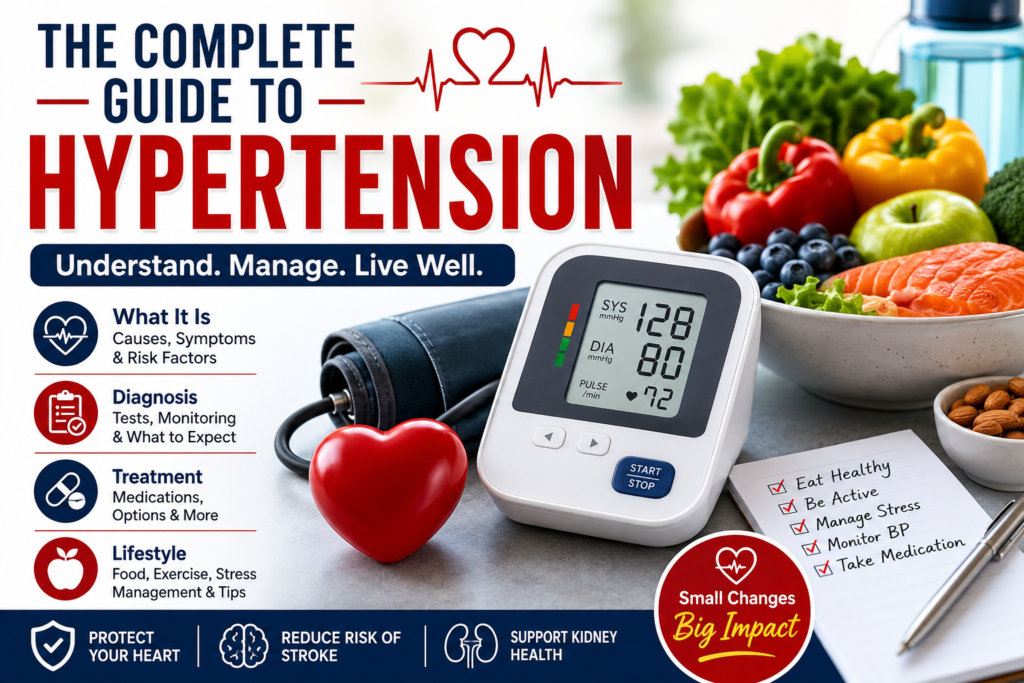
Section 1: What Is Hypertension?
Understanding Blood Pressure
Blood pressure is the force of blood pushing against the walls of your arteries as your heart pumps blood throughout your body.
Your blood pressure reading contains two numbers:
Systolic Pressure
The top number measures pressure when the heart beats.
Example:
120/80
The “120” is the systolic pressure.
Diastolic Pressure
The bottom number measures pressure when the heart rests between beats.
In the example above, “80” is the diastolic pressure.
What Is Hypertension?
Hypertension occurs when blood pressure remains consistently higher than normal over time.
According to current medical guidelines:
| Category | Blood Pressure |
| Normal | Less than 120/80 |
| Elevated | 120–129 and less than 80 |
| Stage 1 Hypertension | 130–139 or 80–89 |
| Stage 2 Hypertension | 140/90 or higher |
| Hypertensive Crisis | Higher than 180/120 |
A single high reading does not automatically mean you have hypertension. Diagnosis usually requires multiple readings taken over time.
Why Hypertension Matters
When blood pressure remains elevated for months or years, it places extra strain on:
- The heart
- Blood vessels
- Brain
- Kidneys
- Eyes
Over time, this increased strain can lead to serious health problems.
How Common Is Hypertension?
Hypertension affects more than one billion people worldwide.
Many adults have high blood pressure and do not know it because symptoms often do not appear until damage has already begun.
Because of this, hypertension is often called:
“The Silent Killer”
Not because it causes immediate danger in most people, but because it can quietly damage the body for years.
Who Is Most Affected?
Hypertension can occur at any age but becomes more common as people get older.
People more likely to develop hypertension include:
- Adults over age 40
- Individuals with obesity
- People with diabetes
- Smokers
- Those with a family history of hypertension
- Physically inactive people
- Individuals with chronic kidney disease
Why Does Hypertension Develop?
Blood pressure rises when arteries become less flexible or when the heart must work harder to circulate blood.
Many factors contribute, including:
- Aging
- Genetics
- Excess sodium intake
- Obesity
- Stress
- Smoking
- Chronic medical conditions
Most cases develop gradually over many years.
Section 2: Signs and Symptoms
Does Hypertension Cause Symptoms?
One of the most surprising things about hypertension is that many people have no symptoms at all.
A person may feel completely healthy while blood pressure remains dangerously high.
This is why regular blood pressure checks are so important.
Possible Early Symptoms
Although many people notice nothing, some may experience:
- Mild headaches
- Fatigue
- Dizziness
- Feeling flushed
- Occasional blurred vision
These symptoms are not specific to hypertension and can occur for many reasons.
Common Symptoms of Uncontrolled Hypertension
When blood pressure becomes significantly elevated, symptoms may include:
- Frequent headaches
- Shortness of breath
- Chest discomfort
- Heart palpitations
- Nosebleeds
- Vision changes
- Increased fatigue
Less Common Symptoms
Some individuals may experience:
- Ringing in the ears
- Anxiety-like symptoms
- Difficulty concentrating
- Lightheadedness
- Sleep disturbances
Symptom Checklist
Check Any That Apply
□ Frequent headaches
□ Dizziness
□ Blurred vision
□ Shortness of breath
□ Chest discomfort
□ Heart racing or pounding
□ Nosebleeds
□ Fatigue
□ Difficulty concentrating
□ Swelling in the legs or ankles
Remember: Many people with hypertension have none of these symptoms.
Warning Signs Requiring Prompt Medical Attention
Seek immediate medical evaluation if you experience:
- Severe chest pain
- Sudden weakness on one side
- Difficulty speaking
- Severe shortness of breath
- Sudden vision loss
- Confusion
- Fainting
- Blood pressure above 180/120 with symptoms
These may indicate a medical emergency.
Section 3: What Causes Hypertension?
Primary Hypertension
Most people have what doctors call primary hypertension.
This means there is no single identifiable cause.
Instead, blood pressure rises gradually due to a combination of factors.
Secondary Hypertension
Some cases result from another medical condition.
Examples include:
- Kidney disease
- Hormonal disorders
- Sleep apnea
- Thyroid disorders
- Certain medications
Treating the underlying condition may improve blood pressure.
Genetics
Family history plays a significant role.
If one or both parents have hypertension, your risk increases.
However, genetics does not guarantee that you will develop the condition.
Healthy lifestyle choices still matter.
Lifestyle Factors
Excess Sodium Intake
Too much salt causes the body to retain fluid.
More fluid means increased pressure inside blood vessels.
Common high-sodium foods include:
- Processed meats
- Fast food
- Canned soups
- Packaged snacks
- Frozen meals
Excess Weight
Carrying extra body weight forces the heart to work harder.
Even modest weight loss can improve blood pressure.
Physical Inactivity
Regular movement helps:
- Strengthen the heart
- Improve circulation
- Support healthy blood vessels
A sedentary lifestyle increases risk.
Smoking
Smoking damages blood vessels and increases blood pressure.
Even occasional smoking can negatively affect cardiovascular health.
Excess Alcohol
Heavy alcohol consumption may contribute to hypertension.
Stress
Stress alone may not directly cause long-term hypertension, but chronic stress can contribute through:
- Poor sleep
- Unhealthy eating
- Increased alcohol use
- Smoking
- Hormonal changes
Environmental Influences
Additional factors may include:
- Air pollution
- Chronic noise exposure
- Poor sleep environments
- Socioeconomic stressors
These influences can contribute to overall cardiovascular strain.
Section 4: Risk Factors
Several factors increase the likelihood of developing hypertension.
Age-Related Risk Factors
- Age over 40
- Increasing age
- Postmenopausal status
- Age-related artery stiffness
Family History Risk Factors
- Parent with hypertension
- Sibling with hypertension
- Family history of cardiovascular disease
Lifestyle Risk Factors
- High-sodium diet
- Obesity
- Physical inactivity
- Smoking
- Excess alcohol intake
- Chronic stress
- Poor sleep habits
Medical Condition Risk Factors
- Diabetes
- Chronic kidney disease
- Sleep apnea
- High cholesterol
- Metabolic syndrome
- Thyroid disorders
Other Risk Factors
- Male sex (younger adulthood)
- African ancestry
- Pregnancy-related hypertension history
- Certain medications
- Recreational drug use
Section 5: How Doctors Diagnose Hypertension
Step 1: Medical History
Your healthcare provider will ask questions about:
- Symptoms
- Family history
- Diet
- Exercise habits
- Smoking
- Alcohol use
- Current medications
This helps identify possible causes and risk factors.
Step 2: Blood Pressure Measurement
Blood pressure is measured using a cuff placed around the upper arm.
You may be asked to:
- Sit quietly for several minutes
- Keep both feet flat on the floor
- Avoid talking during measurement
Multiple readings are often taken.
Step 3: Repeat Measurements
Diagnosis usually requires:
- Multiple office readings
- Home monitoring
- Ambulatory blood pressure monitoring in some cases
This helps avoid diagnosing hypertension based on a single abnormal reading.
Step 4: Physical Examination
The provider may evaluate:
- Heart sounds
- Pulse
- Weight
- Height
- Body mass index (BMI)
- Signs of organ damage
Step 5: Laboratory Testing
Common blood tests include:
Complete Blood Count (CBC)
Checks overall blood health.
Comprehensive Metabolic Panel (CMP)
Evaluates:
- Kidney function
- Liver function
- Electrolytes
Blood Glucose Testing
Screens for diabetes.
Cholesterol Testing
Measures cardiovascular risk.
Thyroid Function Tests
May help identify underlying causes.
Step 6: Urine Testing
Urine tests help assess:
- Kidney health
- Protein leakage
- Underlying medical conditions
Step 7: Heart Evaluation
Some patients may undergo:
Electrocardiogram (ECG/EKG)
Measures the electrical activity of the heart.
Echocardiogram
Ultrasound imaging of heart structure and function.
Step 8: Ambulatory Blood Pressure Monitoring
Some patients wear a portable monitor for 24 hours.
This device records blood pressure throughout the day and night.
Benefits include:
- More accurate diagnosis
- Detection of white-coat hypertension
- Better treatment planning
Section 6: Treatment Options
Treatment depends on:
- Blood pressure level
- Age
- Overall health
- Risk factors
- Existing medical conditions
Most treatment plans include lifestyle changes and, in many cases, medication.
Lifestyle Treatment
For some people with mild hypertension, lifestyle improvements may significantly reduce blood pressure.
Common recommendations include:
- Lower sodium intake
- Regular exercise
- Weight loss, if needed
- Smoking cessation
- Stress management
- Better sleep habits
Prescription Medications
Several medication classes are commonly used.
Diuretics (“Water Pills”)
Help the body remove excess sodium and fluid.
Benefits:
- Often effective
- Common first-line treatment
Possible side effects:
- Frequent urination
- Electrolyte changes
ACE Inhibitors
Help relax blood vessels.
Benefits:
- Protect the kidneys in some patients
- Improve cardiovascular outcomes
Possible side effects:
- Dry cough
- Elevated potassium levels
ARBs (Angiotensin Receptor Blockers)
Work similarly to ACE inhibitors.
Often prescribed when ACE inhibitors cause a cough.
Calcium Channel Blockers
Help relax blood vessels and improve blood flow.
Beta Blockers
Reduce heart rate and decrease workload on the heart.
Often used when additional heart conditions are present.
Section 6: Treatment Options
Combination Therapy
Many people require more than one medication to achieve healthy blood pressure levels.
This is normal and does not mean you have failed treatment.
Different medications work in different ways. Combining medications may:
- Improve blood pressure control
- Reduce the risk of complications
- Allow lower doses of individual medications
- Minimize certain side effects
Your healthcare provider will determine the safest combination based on your health history.
How Long Will Treatment Last?
Hypertension is usually a long-term condition.
Many people require lifelong management, although medications and doses may change over time.
Some individuals who make significant lifestyle improvements may be able to reduce medication requirements under medical supervision.
Never stop blood pressure medication without discussing it with your healthcare provider.
Monitoring During Treatment
Regular monitoring helps determine whether treatment is working.
This may include:
- Office visits
- Home blood pressure checks
- Blood tests
- Kidney function monitoring
- Medication reviews
Monitoring helps your healthcare team adjust treatment as needed.
What to Expect After Starting Medication
Many patients notice no obvious change because hypertension often causes no symptoms.
This can make it tempting to stop treatment.
However, blood pressure medications often prevent future damage that you cannot see or feel.
Benefits include:
- Reduced stroke risk
- Reduced heart attack risk
- Protection of kidney function
- Protection of vision
- Longer life expectancy
Are Procedures Ever Needed?
Most hypertension can be managed without procedures.
However, specialized treatment may be considered when:
- Blood pressure remains uncontrolled despite multiple medications
- An underlying condition is causing hypertension
- Certain rare hormonal disorders are present
In these situations, additional testing and specialist care may be recommended.
Common Challenges During Treatment
Forgetting Medications
This is one of the most common reasons blood pressure becomes uncontrolled.
Helpful strategies include:
- Pill organizers
- Smartphone reminders
- Linking medication to a daily routine
- Automatic pharmacy refills
Side Effects
Many side effects improve over time.
If a medication causes problems:
- Do not stop it on your own
- Contact your healthcare provider
- Ask whether adjustments can be made
Often, another medication can be substituted.
“I Feel Fine”
Because hypertension is frequently symptom-free, some people stop treatment when they feel well.
Remember:
You are treating the blood pressure itself—not just symptoms.
Section 7: Lifestyle Changes That Help
Lifestyle changes are among the most powerful tools for controlling hypertension.
Even small improvements can lead to meaningful health benefits.
Nutrition
One of the most effective dietary approaches is the DASH eating plan.
DASH stands for:
Dietary Approaches to Stop Hypertension
This eating pattern emphasizes:
- Vegetables
- Fruits
- Whole grains
- Beans
- Nuts
- Lean proteins
- Low-fat dairy products
Its limits:
- Excess salt
- Sugary drinks
- Processed foods
- Excess saturated fat
Reduce Sodium Intake
Most adults consume far more sodium than recommended.
Ways to reduce sodium include:
- Read food labels
- Cook more meals at home
- Limit processed foods
- Choose low-sodium products
- Use herbs and spices for flavor
Small reductions can have a meaningful impact on blood pressure.
Maintain a Healthy Weight
Even modest weight loss can improve blood pressure.
Benefits may include:
- Reduced strain on the heart
- Improved circulation
- Better sleep
- Improved blood sugar control
Focus on sustainable changes rather than extreme diets.
Exercise Regularly
Physical activity strengthens the heart.
A stronger heart pumps blood more efficiently.
Examples include:
- Walking
- Swimming
- Cycling
- Dancing
- Gardening
- Water aerobics
Many adults benefit from at least 150 minutes of moderate activity per week.
Always consult your healthcare provider before beginning a new exercise program if you have health concerns.
Prioritize Sleep
Poor sleep can contribute to elevated blood pressure.
Aim for:
- Consistent sleep schedules
- A dark sleeping environment
- Limited screen time before bed
- Adequate sleep duration
Adults generally need seven to nine hours of sleep each night.
Manage Stress
Stress affects many aspects of health.
Helpful techniques include:
- Deep breathing
- Meditation
- Prayer
- Yoga
- Journaling
- Spending time outdoors
- Talking with supportive friends or family
Stress management supports overall cardiovascular health.
Quit Smoking
Smoking damages blood vessels and increases cardiovascular risk.
The benefits of quitting begin almost immediately.
Your healthcare provider can recommend:
- Nicotine replacement therapy
- Prescription medications
- Counseling programs
- Support groups
Limit Alcohol
Excess alcohol may increase blood pressure.
Moderation is important.
If you drink alcohol, discuss safe limits with your healthcare provider.
Daily Habit Checklist
Healthy Blood Pressure Daily Checklist
□ Take medications as prescribed
□ Check blood pressure if instructed
□ Eat vegetables and fruits
□ Limit processed foods
□ Stay hydrated
□ Exercise or move your body
□ Avoid smoking
□ Practice stress management
□ Get adequate sleep
□ Attend follow-up appointments
Section 8: Foods That Help and Foods to Limit
Foods That May Help
| Food | Why It May Help |
| Leafy greens | Rich in potassium, which helps balance sodium |
| Bananas | Provide potassium that supports healthy blood pressure |
| Berries | Contain antioxidants that support blood vessel health |
| Oats | High in fiber and beneficial for heart health |
| Beans and lentils | Provide fiber, protein, and minerals |
| Fatty fish | Contain omega-3 fatty acids that support heart health |
| Unsalted nuts | Offer healthy fats and nutrients |
| Low-fat dairy | May support blood pressure regulation |
| Avocados | Provide potassium and healthy fats |
| Sweet potatoes | Nutrient-rich source of potassium |
Foods That May Worsen Blood Pressure
| Food | Why It May Be Problematic |
| Processed meats | Often extremely high in sodium |
| Fast food | Frequently contains excess sodium and unhealthy fats |
| Packaged snack foods | Commonly high in sodium |
| Canned soups | Often contain large amounts of salt |
| Sugary beverages | May contribute to weight gain and metabolic problems |
| Excess alcohol | Can raise blood pressure |
| Highly processed frozen meals | Usually contain high sodium levels |
| Restaurant meals | Portions and sodium content may be difficult to control |
| Salt-heavy seasonings | Can significantly increase sodium intake |
| Excess sweets | May contribute to obesity and cardiovascular risk |
Practical Grocery Tips
When shopping:
Choose more:
- Fresh produce
- Whole grains
- Lean proteins
- Unsalted nuts
- Fresh or frozen vegetables
Choose less:
- Processed foods
- Instant meals
- Salty snacks
- Sugary beverages
Section 9: Complications If Left Untreated
Untreated hypertension can affect nearly every organ system.
Most complications develop slowly over time.
The purpose of treatment is not simply to lower numbers but to protect your long-term health.
Short-Term Complications
Extremely high blood pressure may cause:
- Severe headaches
- Vision changes
- Shortness of breath
- Chest pain
- Hypertensive crisis
These situations require prompt medical evaluation.
Long-Term Complications
Heart Disease
High blood pressure forces the heart to work harder.
Over time, this may contribute to:
- Coronary artery disease
- Heart enlargement
- Heart failure
Stroke
Hypertension is one of the leading causes of stroke.
Damaged blood vessels may:
- Become blocked
- Rupture
- Reduce blood flow to the brain
Kidney Damage
The kidneys contain tiny blood vessels that filter waste from the blood.
High blood pressure can damage these vessels and reduce kidney function.
Vision Problems
Hypertension can damage the delicate blood vessels in the eyes.
Potential complications include:
- Blurred vision
- Retinal damage
- Vision loss
Cognitive Changes
Long-term hypertension may affect brain health.
Research suggests associations with:
- Memory problems
- Cognitive decline
- Increased dementia risk
Peripheral Artery Disease
Blood vessel damage can reduce circulation to the arms and legs.
Possible symptoms include:
- Leg pain during walking
- Slow wound healing
- Reduced mobility
Quality-of-Life Impacts
Uncontrolled hypertension may affect:
- Energy levels
- Physical function
- Independence
- Emotional well-being
- Financial health through increased medical expenses
The goal of treatment is to help preserve quality of life for years to come.
Section 10: Living Well With Hypertension
A diagnosis of hypertension does not mean your life must become restricted.
Many people successfully manage high blood pressure and continue enjoying work, travel, hobbies, and family activities.
Focus on Consistency
Small actions performed regularly often produce the best results.
Examples include:
- Taking medication daily
- Walking regularly
- Choosing healthier meals
- Getting enough sleep
Consistency usually matters more than perfection.
Monitor Your Blood Pressure
Home monitoring can help you:
- Understand trends
- See how lifestyle changes affect readings
- Provide valuable information to your healthcare provider
Use a validated upper-arm monitor whenever possible.
Keep Follow-Up Appointments
Regular visits allow your healthcare team to:
- Assess treatment effectiveness
- Monitor side effects
- Update medications if necessary
- Screen for complications
Even when you feel well, follow-up care remains important.
Build a Support System
Support can come from:
- Family members
- Friends
- Healthcare providers
- Community groups
- Online support communities
Positive support often improves long-term success.
Protect Your Mental Health
A chronic health condition can sometimes feel stressful.
Helpful strategies include:
- Learning about the condition
- Setting realistic goals
- Celebrating small victories
- Practicing stress reduction
- Seeking counseling if needed
Mental and physical health are closely connected.
Section 11: Questions to Ask Your Healthcare Provider
Bringing questions to appointments can help you better understand your condition and participate in your care.
Consider asking:
- What is my current blood pressure goal?
- How serious is my hypertension?
- What may be causing my high blood pressure?
- Do I need additional testing?
- Should I monitor my blood pressure at home?
- How often should I check my blood pressure?
- What lifestyle changes would benefit me most?
- How much sodium should I consume each day?
- Is weight loss recommended for me?
- What type of exercise is safest for me?
- Do I need medication?
- What side effects should I watch for?
- What should I do if I miss a dose?
- Could any of my current medications raise blood pressure?
- How often should I have follow-up visits?
- Are my kidneys, heart, or eyes affected?
- What symptoms should prompt a phone call to your office?
- When should I seek emergency care?
- Are there educational resources you recommend?
- What is the best way to reduce my long-term risk of heart disease and stroke?
Section 12: When to Seek Emergency Care
SEEK IMMEDIATE MEDICAL ATTENTION IF YOU EXPERIENCE:
Hypertension is usually not an emergency. However, certain symptoms can signal a potentially life-threatening situation.
Call emergency services or seek immediate medical care if you have:
Severe Chest Pain
Especially if accompanied by:
- Sweating
- Nausea
- Shortness of breath
- Pain spreading to the jaw, neck, shoulder, or arm
Stroke Symptoms
Remember the acronym FAST:
F — Face Drooping
A — Arm Weakness
S — Speech Difficulty
T — Time to Call Emergency Services
Additional symptoms may include:
- Sudden confusion
- Sudden vision loss
- Sudden severe headache
- Sudden loss of balance
Severe Shortness of Breath
Particularly if it develops suddenly or worsens quickly.
Loss of Consciousness
Any unexplained fainting or unresponsiveness requires urgent evaluation.
Severe Neurological Symptoms
Including:
- Seizures
- Sudden weakness
- Sudden numbness
- Severe confusion
Blood Pressure Above 180/120
Especially when accompanied by:
- Chest pain
- Shortness of breath
- Severe headache
- Vision changes
- Neurological symptoms
This may indicate a hypertensive crisis.
Section 13: Frequently Asked Questions
1. Can hypertension be cured?
Most cases cannot be permanently cured, but many can be successfully controlled.
2. Can I have hypertension without symptoms?
Yes. Most people with hypertension have no symptoms.
3. Is hypertension common?
Yes. It is one of the most common chronic health conditions worldwide.
4. Does stress cause hypertension?
Stress can contribute, but hypertension usually develops from multiple factors.
5. Can losing weight lower blood pressure?
Often, yes. Even modest weight loss may improve blood pressure.
6. How much salt is too much?
Most adults consume more sodium than recommended. Your healthcare provider can advise you on an appropriate limit.
7. Can exercise lower blood pressure?
Regular physical activity often helps improve blood pressure control.
8. Do I need medication forever?
Some people do, while others may reduce medication needs through lifestyle improvements under medical supervision.
9. Can dehydration affect blood pressure?
Yes. Dehydration may influence blood pressure readings and overall cardiovascular function.
10. Is coffee bad for hypertension?
Caffeine may temporarily raise blood pressure in some people. Discuss your intake with your healthcare provider.
11. Can young adults develop hypertension?
Yes. Although risk increases with age, younger adults can also develop hypertension.
12. Can hypertension damage the kidneys?
Yes. Uncontrolled hypertension is a major cause of kidney disease.
13. Can hypertension affect vision?
Yes. Long-term hypertension may damage blood vessels in the eyes.
14. Is home blood pressure monitoring useful?
For many people, yes. It provides valuable information about blood pressure trends.
15. What is white-coat hypertension?
This occurs when blood pressure rises in a medical setting but remains normal elsewhere.
16. Can sleep problems affect blood pressure?
Yes. Poor sleep and sleep apnea are associated with hypertension.
17. Is hypertension hereditary?
Family history increases risk, but lifestyle choices remain important.
18. What foods help lower blood pressure?
Fruits, vegetables, whole grains, beans, nuts, and lean proteins support cardiovascular health.
19. Can smoking affect blood pressure?
Yes. Smoking damages blood vessels and increases cardiovascular risk.
20. What is the most important thing I can do?
Work closely with your healthcare team and consistently follow your treatment plan.
Section 14: Helpful Resources
The following organizations provide reliable, evidence-based information.
Educational Organizations
American Heart Association (AHA)
Provides education about:
- Blood pressure
- Heart disease prevention
- Lifestyle changes
Centers for Disease Control and Prevention (CDC)
Offers patient-friendly information about hypertension and cardiovascular health.
National Heart, Lung, and Blood Institute (NHLBI)
Provides educational materials and research-based guidance.
World Health Organization (WHO)
Offers global information on hypertension and cardiovascular disease prevention.
Helpful Tracking Tools
Blood Pressure Log
Track:
- Date
- Time
- Blood pressure reading
- Heart rate
- Notes
Medication Tracker
Monitor:
- Medication name
- Dose
- Time taken
- Side effects
Weight Tracker
Record:
- Weekly weight
- Waist measurements
- Progress notes
Sleep Tracker
Monitor:
- Bedtime
- Wake time
- Total hours slept
- Sleep quality
Food Diary
Track:
- Meals
- Sodium intake
- Water intake
- Triggers for unhealthy eating
Support Communities
Support may be available through:
- Community health programs
- Hospital wellness programs
- Cardiac health groups
- Online patient communities from reputable organizations
Always verify information with healthcare professionals.
Section 15: Related Health Topics
Readers interested in hypertension may also benefit from learning about:
Heart Disease Prevention
Understanding ways to reduce cardiovascular risk.
High Cholesterol
Another major contributor to heart disease and stroke is
Stroke Prevention
Important for individuals with hypertension.
Chronic Kidney Disease
Closely connected to blood pressure health.
Diabetes
Often occurs alongside hypertension.
Obesity and Weight Management
Weight management can significantly affect blood pressure.
Sleep Apnea
A common but often overlooked contributor to hypertension.
Healthy Aging
Strategies to maintain cardiovascular health throughout life.
Stress Management
Mental health and cardiovascular health are closely linked.
Understanding Medications
Learning how medications work can improve treatment success.
Section 16: What we learn from this article
Remember These Important Points
- Hypertension means blood pressure is consistently higher than normal.
- Many people have no symptoms.
- Regular screening is essential.
- Hypertension is a leading risk factor for heart disease and stroke.
- Treatment often combines lifestyle changes and medication.
- Reducing sodium intake can help.
- Regular physical activity benefits blood pressure control.
- Healthy weight management improves cardiovascular health.
- Smoking cessation is one of the most powerful health improvements.
- Good sleep supports healthy blood pressure.
- Home monitoring can be valuable.
- Consistent treatment helps prevent complications.
- Regular follow-up care is important.
- Small daily habits often produce significant long-term benefits.
- Most people with hypertension can live full, active lives.
Optional Patient Tools
Blood Pressure Log
| Date | Time | Blood Pressure | Heart Rate | Notes |
Medication Tracker
| Medication | Dose | Time Taken | Side Effects | Notes |
Weekly Weight Tracker
| Week | Weight | Waist Measurement | Notes |
| Week 1 | |||
| Week 2 | |||
| Week 3 | |||
| Week 4 |
Sleep Tracker
| Date | Bedtime | Wake Time | Hours Slept | Sleep Quality |
Appointment Preparation Worksheet
My Current Questions
My Current Medications
My Blood Pressure Readings
Symptoms I Want to Discuss
Lifestyle Changes I Am Working On
□ Lower sodium intake
□ Weight management
□ Exercise
□ Better sleep
□ Stress management
□ Smoking cessation
□ Limiting alcohol
□ Other: ________________
Final Encouragement from Ask The Nurse Expert
If you have been diagnosed with hypertension, remember that you are far from alone. Millions of people successfully manage high blood pressure every day.
The most important thing to understand is that hypertension is often manageable, especially when it is identified early and treated consistently. You do not need to change everything overnight. Small improvements—such as taking medications as prescribed, choosing healthier foods, becoming more active, getting adequate sleep, and attending regular medical appointments—can add up to significant benefits over time.
Progress matters more than perfection.
Every healthy choice you make is an investment in your future heart, brain, kidneys, and overall well-being.
Knowledge gives you the power to make informed decisions, but your healthcare team can provide guidance tailored to your situation. Continue asking questions, stay engaged in your care, and remember that managing hypertension is a journey—not a single event.
At Ask The Nurse Expert, we believe that informed patients make healthier choices, and every positive step forward is worth celebrating.
Related Topics About The Complete Guide to Hypertension:
High Blood Pressure,
Hypertension Guide,
High Blood Pressure Guide,
Hypertension Management,
Hypertension Treatment,
Hypertension Symptoms,
Hypertension Causes,
Hypertension Prevention,
Hypertension Diagnosis,
Hypertension Complications,