
Have you ever wondered what exactly gallbladder cancer is and how it affects the body? In this article, we will explore the ins and outs of this lesser-known form of cancer, shedding light on its causes, symptoms, and available treatment options. So sit back, relax, and get ready to gain a deeper understanding of gallbladder cancer and its impact on those affected by it.

Overview of Gallbladder Cancer
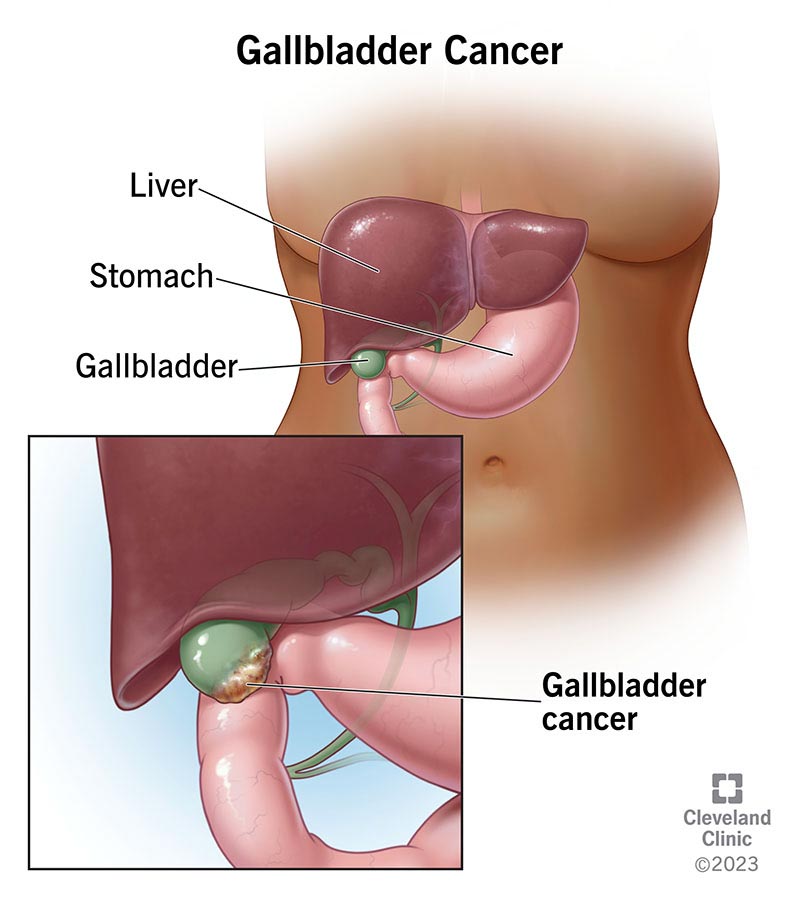
Gallbladder cancer is a rare form of cancer that develops in the gallbladder, a small organ located beneath the liver. The gallbladder plays a crucial role in digestion by storing bile, a substance produced by the liver that helps in breaking down fats. Gallbladder cancer can be challenging to detect as it often presents with vague symptoms and is often diagnosed at later stages. In this article, we will provide a comprehensive overview of gallbladder cancer, including its definition, causes, risk factors, prevalence, and incidence.
Definition of gallbladder cancer
Gallbladder cancer is characterized by the abnormal growth of cells in the gallbladder, leading to the formation of tumors. These tumors can be either benign (noncancerous) or malignant (cancerous). Malignant tumors have the potential to invade nearby tissues and organs, and they can also spread to distant sites in the body (metastasize). Gallbladder cancer is classified into different types, including adenocarcinoma, squamous cell carcinoma, and small cell carcinoma, among others.
Causes and risk factors
The exact cause of gallbladder cancer is still unknown, but several factors can contribute to its development. Some of the common risk factors associated with gallbladder cancer include gender (women are at a higher risk), age (it is more common in older individuals), ethnicity (certain ethnic groups have a higher incidence), obesity, a history of gallstones, chronic inflammation of the gallbladder, and certain genetic conditions. Additionally, exposure to certain chemicals, infections, and dietary factors may also increase the risk of developing gallbladder cancer.
Incidence and prevalence
Gallbladder cancer is relatively rare, accounting for approximately 1% of all cancers worldwide. However, its incidence varies significantly across different parts of the world. It is more prevalent in certain regions, including Central and South America, Eastern Europe, and parts of Asia, such as India and Pakistan. The incidence of gallbladder cancer is influenced by various factors, including genetic predisposition, lifestyle choices, and environmental factors. It is crucial to raise awareness about this disease and promote early detection to improve the prognosis and outcomes for individuals affected by gallbladder cancer.
Signs and Symptoms
The symptoms of gallbladder cancer may vary depending on the stage of the disease. In the early stages, gallbladder cancer often presents with vague symptoms that can easily be mistaken for other common conditions. Some of the early-stage symptoms may include abdominal pain, bloating, nausea, and changes in bowel habits. As the disease progresses to advanced stages, additional symptoms may appear, such as jaundice (yellowing of the skin and eyes), unexplained weight loss, loss of appetite, and fatigue. It is important to pay attention to these symptoms and seek medical attention if they persist or worsen.
Advanced stage symptoms
In advanced stages of gallbladder cancer, the symptoms become more pronounced and severe. The tumor may invade nearby tissues and organs, leading to complications. Some of the advanced-stage symptoms may include severe abdominal pain, swelling or lumps in the abdomen, persistent jaundice, difficulty swallowing, and the development of ascites (accumulation of fluid in the abdomen). If you experience any of these symptoms, it is crucial to consult a healthcare professional promptly, as early diagnosis and treatment can significantly impact the prognosis and outcomes.
Complications of gallbladder cancer
Gallbladder cancer can lead to various complications as it progresses. As the tumor grows, it can obstruct the bile ducts, leading to jaundice, a condition characterized by the yellowing of the skin and eyes. The blockage of the bile ducts can also result in the accumulation of bile in the liver, causing liver damage and liver function abnormalities. Additionally, gallbladder cancer can spread to nearby lymph nodes and other organs, such as the liver, pancreas, and intestines. These complications can significantly impact a person’s quality of life and require prompt medical attention.
Diagnosis
Early detection of gallbladder cancer is crucial for improving the prognosis and outcomes. The diagnosis of gallbladder cancer typically involves a combination of physical examination, imaging tests, and biopsy/laboratory tests.
Physical examination
During a physical examination, a healthcare professional may examine your abdomen for any abnormalities, such as masses or swelling. They may also check for signs of jaundice and assess your overall health. The physical examination provides valuable initial information and helps guide further investigations.
Imaging tests
Imaging tests play a crucial role in diagnosing gallbladder cancer. Some of the commonly used imaging techniques include ultrasound, computed tomography (CT) scan, magnetic resonance imaging (MRI), and positron emission tomography (PET) scan. These tests help visualize the gallbladder and surrounding structures, providing detailed information about the presence and extent of tumors.
Biopsy and laboratory tests
A biopsy is often necessary to confirm the diagnosis of gallbladder cancer. During a biopsy, a small sample of tissue is collected from the gallbladder for examination under a microscope. This helps determine the presence of cancerous cells and provides information about the type and stage of cancer. Additionally, laboratory tests, such as blood tests, may be performed to assess liver function and detect any abnormalities.
Stages of Gallbladder Cancer
The staging of gallbladder cancer is crucial for determining the appropriate treatment approach and predicting the prognosis. The TNM staging system, commonly used for gallbladder cancer, takes into account the tumor size and extent of invasion (T), the involvement of nearby lymph nodes (N), and the presence of distant metastasis (M).
Stage I: Tumor limited to the inner layers of the gallbladder
In stage I gallbladder cancer, the tumor is limited to the inner layers of the gallbladder wall and has not invaded deeper tissues or spread to lymph nodes or distant organs. This stage is often considered localized and has a better prognosis compared to more advanced stages.
Stage II: Tumor invades the muscle layer of the gallbladder
In stage II gallbladder cancer, the tumor has invaded the muscle layer of the gallbladder wall but has not spread to lymph nodes or distant organs. The prognosis at this stage depends on the extent of invasion and other factors, such as tumor size and grade.
Stage III: Tumor invades nearby tissues or organs
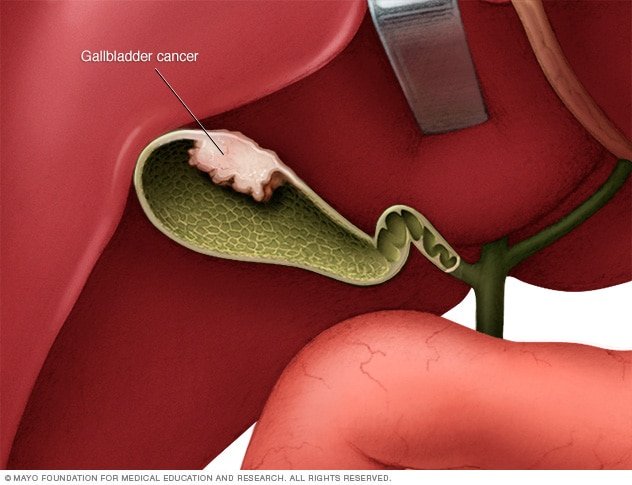
Stage III gallbladder cancer is characterized by the invasion of nearby tissues or organs, such as the liver, bile ducts, or intestines. The involvement of lymph nodes may also be present. The prognosis at this stage is generally poorer compared to earlier stages, but treatment options are still available.
Stage IV: Tumor spreads to distant organs
Stage IV gallbladder cancer indicates that the tumor has spread to distant organs, such as the liver, lungs, or bones. This stage is often associated with a poor prognosis and presents greater challenges in terms of treatment options. However, palliative care can help manage symptoms and improve quality of life.
Treatment Options
The treatment of gallbladder cancer depends on various factors, including the stage of cancer, the overall health of the individual, and the presence of any other underlying conditions. The main treatment modalities for gallbladder cancer include surgery, chemotherapy, radiation therapy, targeted therapy, and palliative care.
Surgery
Surgery is the primary treatment option for early-stage gallbladder cancer. The goal of surgery is to remove the gallbladder, surrounding tissue, and any affected lymph nodes. In some cases, a portion of the liver and bile ducts may also be removed. Surgical procedures for gallbladder cancer may include cholecystectomy (removal of the gallbladder), hepatectomy (removal of a portion of the liver), and lymphadenectomy (removal of lymph nodes).
Chemotherapy
Chemotherapy involves the use of medications to kill cancer cells or slow down their growth. It is often used in combination with surgery or radiation therapy to reduce the risk of recurrence or to shrink tumors before surgery. The chemotherapy drugs may be given orally or intravenously, depending on the specific protocol.
Radiation therapy
Radiation therapy uses high-energy rays or particles to kill cancer cells or prevent their growth. It is typically administered externally, targeting the specific area where the tumor is located. Radiation therapy is often used in conjunction with surgery or chemotherapy to improve outcomes.

Targeted therapy
Targeted therapy is a relatively newer form of treatment that focuses on specific molecules or genes involved in the growth and spread of cancer cells. It works by blocking or interfering with these specific targets, preventing the growth and spread of cancer cells. Targeted therapy is often used when other treatment options may not be effective or suitable.
Palliative care
Palliative care aims to improve the quality of life by managing symptoms and providing support for individuals with advanced-stage gallbladder cancer. It focuses on pain management, psychological support, and enhancing the overall well-being of the patient and their loved ones. Palliative care can be provided alongside other treatment modalities or as the primary approach in cases where curative treatment is not feasible.
Prognosis and Survival Rate
The prognosis for gallbladder cancer depends on various factors, including the stage of cancer at diagnosis, the extent of tumor invasion, the response to treatment, and the overall health of the individual. It is important to note that gallbladder cancer is often diagnosed at later stages, which can adversely impact the prognosis. However, early detection and prompt treatment can significantly improve survival rates and long-term outcomes.
Factors affecting prognosis
Several factors can influence the prognosis of gallbladder cancer. These include the stage of cancer, the size and location of the tumor, the spread of cancer to nearby lymph nodes or distant organs, the grade of the tumor (how abnormal the cells appear under a microscope), the response to treatment, and the overall health and age of the individual.
5-year survival rate
The 5-year survival rate is often used as a measure to assess the prognosis of cancer. It represents the percentage of individuals who survive for at least 5 years after the diagnosis. The 5-year survival rate for gallbladder cancer varies depending on the stage. For localized stages (I and II), the 5-year survival rate ranges from 20% to 80% on average. However, for more advanced stages (III and IV), the 5-year survival rate drops to approximately 10% or lower.

Recurrence and metastasis
Gallbladder cancer has the potential to recur even after successful treatment. The risk of recurrence is higher in cases where the tumor has invaded nearby tissues or organs, or has spread to lymph nodes or distant sites. Metastasis, the spread of cancer to other parts of the body, can occur through the bloodstream or lymphatic system. Regular follow-up appointments and imaging tests are crucial to detect any recurrence or metastasis at an early stage.
Prevention and Risk Reduction
While it may not be possible to prevent gallbladder cancer entirely, certain measures can help reduce the risk and promote overall health. It is important to adopt a healthy lifestyle and make conscious choices that minimize the risk factors associated with gallbladder cancer.
Lifestyle changes
Maintaining a healthy body weight, eating a balanced diet rich in fruits and vegetables, and regular physical activity can help reduce the risk of gallbladder cancer. Limiting the consumption of processed foods, saturated fats, and sugary drinks can also have a positive impact on overall health.
Regular screening
Regular health check-ups and screenings can help detect gallbladder cancer at an early stage. Individuals at a higher risk, such as those with a history of gallstones or chronic inflammation of the gallbladder, may benefit from more frequent screenings. Imaging tests, such as ultrasounds or CT scans, may be recommended to monitor the health of the gallbladder.
Vaccination against hepatitis B
Chronic hepatitis B infection has been linked to an increased risk of developing gallbladder cancer. Vaccination against hepatitis B is an effective preventive measure that can significantly reduce the risk of infection. It is important to discuss vaccination options with a healthcare professional, especially if you are at a higher risk of hepatitis B infection.
Support and Resources
Dealing with a diagnosis of gallbladder cancer can be challenging, both emotionally and financially. Fortunately, there are various support systems and resources available to help individuals and their families navigate through this journey.
Cancer support groups
Cancer support groups provide a platform to connect with others who are going through or have gone through similar experiences. These groups offer emotional support, information sharing, and practical tips for managing the challenges associated with gallbladder cancer. Local hospitals, cancer centers, and online platforms can help connect individuals with suitable support groups.
Financial assistance programs
Cancer treatments can be financially burdening. Many organizations and foundations offer financial assistance programs to help individuals with the cost of treatment, medications, and related expenses. Social workers or patient navigators at healthcare facilities can provide information and guidance on available resources.
Online resources
The internet provides a wealth of information on gallbladder cancer, treatment options, support services, and recent advancements. Reliable online resources, such as reputable medical websites and cancer organizations, can help individuals access relevant information, educate themselves, and connect with others facing similar challenges. It is crucial to ensure the credibility of the sources and consult healthcare professionals for personalized guidance.
Research and Advancements
Medical research plays a vital role in understanding gallbladder cancer and developing improved treatment options. Ongoing research studies and clinical trials aim to explore new approaches, therapies, and potential breakthroughs in the field.
Current research studies
Multiple research studies are currently investigating various aspects of gallbladder cancer, including its molecular biology, genetic predisposition, early detection methods, and targeted therapies. These studies contribute to the growing knowledge about the disease and may pave the way for more effective treatments in the future.
Emerging treatment options
Advancements in medical technology and treatment approaches are continuously being explored in the field of gallbladder cancer. Emerging treatment options include immunotherapy, which harnesses the body’s immune system to fight cancer cells, and precision medicine, which uses the patient’s genetic profile to tailor treatment plans. These innovative approaches hold promise for improved outcomes and increased survival rates.
Potential future breakthroughs
Medical and scientific research is a dynamic field, and there is always the potential for new breakthroughs. Researchers are actively studying gallbladder cancer to identify novel therapeutic targets, explore innovative treatment modalities, and refine early detection methods. The future may bring exciting advancements and improved prognosis for individuals affected by gallbladder cancer.
Conclusion
In conclusion, gallbladder cancer is a rare but serious form of cancer that requires early detection and prompt treatment for improved outcomes. Understanding the risk factors, signs, and symptoms of gallbladder cancer is essential to ensure timely medical intervention. By adopting a healthy lifestyle, participating in regular screenings, and staying informed about advancements in research and treatment options, individuals can take proactive steps towards prevention, early detection, and effective management of gallbladder cancer. There is hope for improved outcomes, and with continued research and support, the fight against gallbladder cancer will continue to advance.