
You’ve just experienced a knee injury and the doctor has mentioned the possibility of an anterior cruciate ligament (ACL) tear. Understanding the available surgical options for ACL injuries is crucial in making an informed decision about your treatment. This article will serve as your guide to the different surgical options available for ACL injuries, exploring the benefits and considerations of each option so that you can confidently navigate through the recovery process and get back on your feet.
Surgical Options for Anterior Cruciate Ligament (ACL) Injuries
Introduction to ACL Injuries
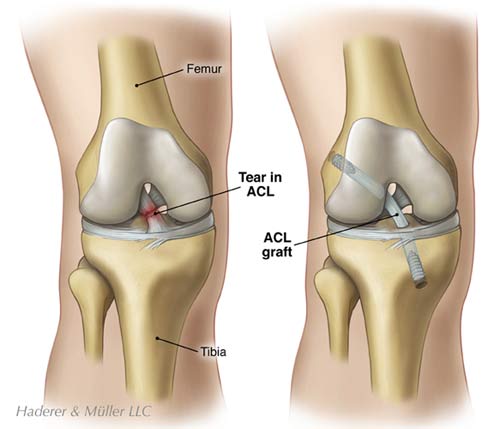
Anterior Cruciate Ligament (ACL) injuries are common knee injuries that can occur due to sports activities, accidents, or trauma. The ACL is a major stabilizing ligament in the knee that helps prevent excessive movement of the tibia (shinbone) in relation to the femur (thighbone). When the ACL is damaged, it can result in pain, swelling, instability, and difficulty in performing daily activities.
Non-surgical Treatment
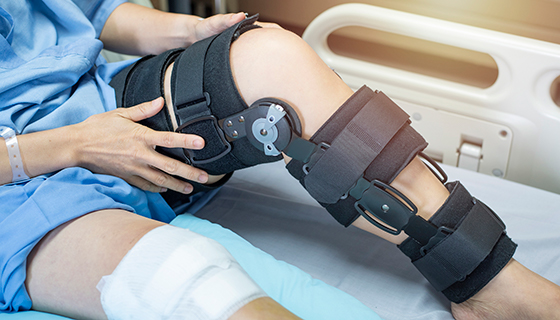
In some cases, non-surgical treatment may be sufficient to manage ACL injuries. This approach involves the use of the RICE method (Rest, Ice, Compression, Elevation), physical therapy exercises to strengthen the surrounding muscles, bracing and immobilization to provide stability, activity modification to avoid further injury, and follow-up exams to monitor progress.

Indications for Surgery
While non-surgical treatment can be effective for many individuals with ACL injuries, there are certain situations where surgical intervention is recommended. These include high-level athletes who require the stability and strength of a reconstructed ACL to return to their sport, individuals with recurrent instability or giving way episodes despite non-surgical management, those with a bucket-handle meniscal tear (a specific type of meniscal tear), and patients who have combined ligament injuries. Additionally, a person’s age and lifestyle considerations may influence the decision to undergo surgery.
Pre-operative Evaluation
Before proceeding with ACL surgery, a thorough pre-operative evaluation is necessary. This includes a clinical assessment to evaluate the knee’s stability, range of motion, and overall condition. Imaging studies, such as an MRI, can provide detailed information about the extent of the ACL injury and any associated damage. Baseline functional testing helps assess the patient’s pre-injury function and serves as a reference point for post-operative progress. Patient counseling and education are also important components of the evaluation process to ensure informed decision-making and understanding of the surgical procedure.
Choice of Surgical Technique
There are several surgical techniques available for ACL reconstruction depending on the patient’s specific situation, the surgeon’s expertise, and the desired outcomes. The choice of technique may involve considerations such as an open versus arthroscopic approach, single bundle reconstruction (using one graft) versus double bundle reconstruction (using two grafts), anatomical placement of the graft to replicate the original ACL, and the use of appropriate fixation devices and techniques to secure the graft in place.
Arthroscopic ACL Reconstruction
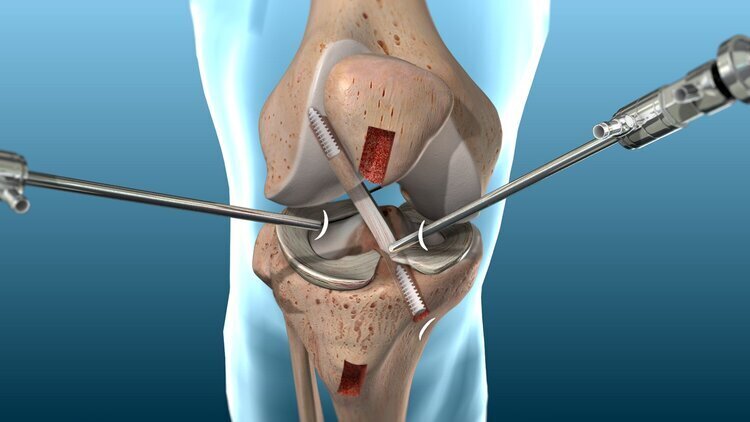
Arthroscopic ACL reconstruction is a minimally invasive surgical procedure that utilizes small incisions and a camera (arthroscope) to guide the surgeon’s movements. This technique allows for precise visualization and manipulation of the knee structures, resulting in improved accuracy and faster recovery compared to open surgeries. Arthroscopic ACL reconstruction involves several steps, including graft harvesting, tibial and femoral tunnel preparation, and graft passage and fixation, which are performed using specialized instruments.
Autografts
Autografts are commonly used for ACL reconstruction and involve using the patient’s own tissue as the graft material. There are different types of autografts available, including the bone-patellar tendon-bone (BPTB) autograft, hamstring tendon autograft, quadriceps tendon autograft, and patellar tendon autograft. Each type of autograft has its advantages and considerations, and the choice is often based on factors such as patient preference, surgeon experience, and the specific requirements of the individual case.
Allografts
Allografts are grafts obtained from cadaveric donors and are used less frequently compared to autografts. Allografts have advantages such as avoiding additional surgery to harvest the patient’s tissue, and they can be a suitable option for older patients or those with pre-existing conditions that make autograft harvest difficult. However, allografts carry the risk of disease transmission and may have a higher failure rate compared to autografts. Different types of allografts, such as Achilles tendon, hamstring tendon, or tibialis anterior tendon allografts, can be used for ACL reconstruction.
Combination Grafts
In certain cases, a combination of autograft and allograft may be used, referred to as a combination graft. This approach aims to combine the advantages of both graft types, utilizing the patient’s own tissue for one portion of the graft and allograft for the other portion. Combination grafts can be particularly beneficial in cases where a high demand is placed on the reconstructed ACL, such as in high-level athletes.
Rehabilitation and Post-operative Care
Following ACL surgery, a comprehensive rehabilitation program is essential for optimal recovery and functional outcomes. Physical therapy plays a crucial role in restoring knee strength, range of motion, and stability. The rehabilitation process typically involves progressive exercises, such as strengthening exercises, balance training, and functional activities, guided by a physical therapist. The duration and intensity of the rehabilitation program may vary depending on the patient’s progress and surgeon’s recommendations.
Complications and Risks
As with any surgical procedure, ACL surgery carries certain risks and potential complications. These may include infection, graft failure, re-rupture of the reconstructed ACL, stiffness and arthrofibrosis (excessive scar tissue formation), and nerve and vascular injuries. It is important for patients to be aware of these potential complications, although they occur relatively infrequently. Close adherence to the post-operative care instructions, regular follow-up appointments, and communication with the surgical team can help mitigate these risks and ensure successful outcomes.
In conclusion, surgical options for ACL injuries provide individuals with a means to regain stability and function in the knee. The decision to proceed with surgery should be based on a thorough evaluation of the specific injury, the patient’s activity level and lifestyle, and the potential benefits and risks associated with surgical intervention. With advancements in surgical techniques and rehabilitation protocols, ACL surgery has become a well-established treatment option, with high success rates in restoring knee function and helping patients return to their desired level of physical activity.