
Have you ever experienced pain and discomfort in your toe? If so, you might be suffering from an ingrown toenail. This common condition occurs when the edge of your toenail grows into the surrounding skin, causing redness, swelling, and tenderness. While it may seem like a minor issue, an ingrown toenail can lead to infection and further complications if left untreated. In this article, we will explore the causes and symptoms of an ingrown toenail, providing you with valuable information to prevent and treat this bothersome ailment. So, let’s get started and take a closer look at this pesky problem that affects so many people.
Causes and Symptoms of an Ingrown Toenail
Having an ingrown toenail can be quite uncomfortable and painful, disrupting your daily activities. Understanding the causes and symptoms of this condition is essential to prevent it from occurring and seek appropriate treatment when necessary.

Causes of an Ingrown Toenail
An ingrown toenail occurs when the edge of the toenail grows into the surrounding skin instead of growing straight. Several factors can contribute to the development of an ingrown toenail. One common cause is improper toenail trimming. Cutting the toenails too short or rounding the corners instead of cutting them straight across can increase the risk of the nail growing into the skin.
Other causes include wearing ill-fitting shoes. Tight shoes or those with a narrow toe box can compress the toes, forcing the nails to grow into the skin. Additionally, trauma to the toe, such as stubbing it or dropping something heavy on it, can also lead to an ingrown toenail.
Symptoms of an Ingrown Toenail
The most common symptom of an ingrown toenail is pain. Initially, you might experience mild discomfort, but as the condition progresses, the pain can become more intense. The affected toe may also become swollen, red, and tender to touch. In some cases, the area around the ingrown nail can develop an infection, causing additional symptoms such as pus, a foul odor, and drainage.
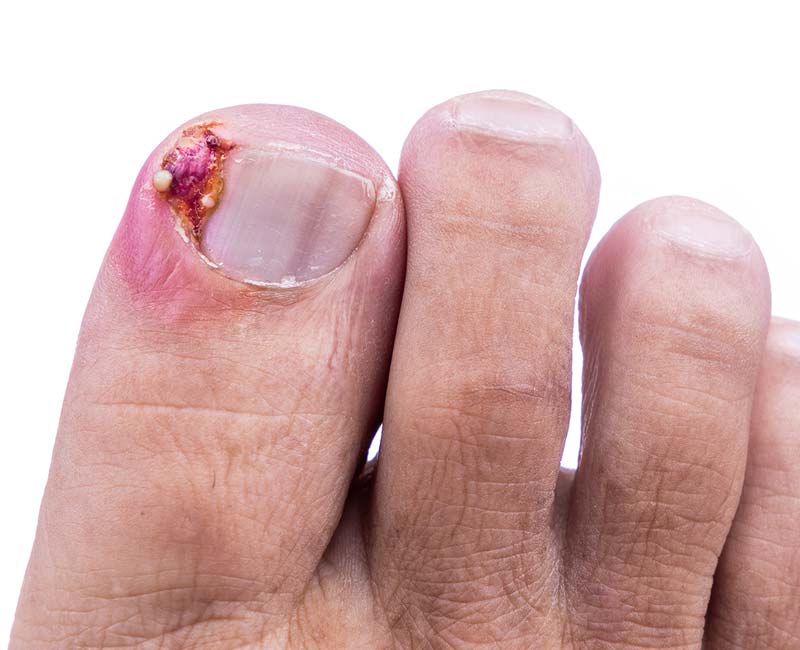
Risk Factors for Developing an Ingrown Toenail
Certain factors increase the likelihood of developing an ingrown toenail. Having curved or thickened nails can make them more prone to growing into the skin. Genetic predisposition, where your family members also have a history of ingrown toenails, can also contribute to your risk. Furthermore, people with conditions such as diabetes, obesity, or poor circulation may have a higher risk of developing ingrown toenails.
Complications Associated with an Ingrown Toenail
If left untreated, an ingrown toenail can lead to complications. The surrounding skin can become infected, causing cellulitis or a more severe infection known as an abscess. The infection can spread through the foot and potentially enter the bloodstream, resulting in a systemic infection. These complications can lead to severe pain, difficulty walking, and even require surgical intervention to remove the ingrown toenail and treat the infection.

Diagnosis of an Ingrown Toenail
A healthcare professional can usually diagnose an ingrown toenail by examining the affected toe and discussing your symptoms. They may also inquire about your medical history and any previous incidents of ingrown toenails. In some cases, an X-ray may be ordered to rule out any underlying bone abnormalities.
Treatment Options for an Ingrown Toenail
Treatment options for an ingrown toenail depend on the severity of the condition. Minor cases can often be managed at home, while more severe or recurrent cases may require medical intervention.
For mild cases, soaking the foot in warm water several times a day and applying an over-the-counter antibiotic ointment can help alleviate discomfort and reduce the chance of infection. Placing small pieces of cotton or dental floss under the ingrown nail can help lift it away from the skin, promoting proper growth.
In more severe cases, a healthcare professional may need to perform a minor procedure to remove the ingrown portion of the nail. This is typically done under local anesthesia to ensure comfort during the procedure. In recurrent or severe cases, surgical intervention may be necessary to remove a portion of the nail or the entire nail to prevent further ingrowth.

Home Remedies for Alleviating Ingrown Toenail Pain
If you’re experiencing discomfort from an ingrown toenail, there are a few home remedies you can try to alleviate the pain. Soaking the affected foot in warm water mixed with Epsom salt can help reduce inflammation and provide some relief. Applying a small amount of clove oil or over-the-counter numbing gel around the affected area can also help numb the pain temporarily. However, it’s essential to remember that these remedies provide temporary relief and should not substitute seeking professional medical advice if the pain persists or worsens.
Preventing Ingrown Toenails
Taking preventive measures can help reduce the risk of developing ingrown toenails. Proper toenail trimming is crucial. Trim your nails straight across and avoid cutting them too short. It’s also important to wear well-fitting shoes that provide enough room for your toes to move comfortably. If you participate in sports or activities that put repetitive pressure on your feet, consider wearing protective footwear to prevent trauma to your toes.
Maintaining good foot hygiene is another preventive measure. Regularly clean your feet, ensuring to dry them thoroughly, particularly between the toes. Moisture can contribute to the development of fungal infections, which can further complicate the management of an ingrown toenail.

When to Seek Medical Attention for an Ingrown Toenail
While mild cases of an ingrown toenail can often be managed at home, it’s important to know when to seek medical attention. If the pain and discomfort persist, especially if they worsen or are accompanied by signs of infection such as redness, swelling, and drainage, it’s advisable to consult a healthcare professional. Additionally, if you have diabetes or any medical condition that affects your feet’s circulation, seeking prompt medical attention is crucial to prevent potential complications.
Long-Term Outlook for Individuals with Ingrown Toenails
With proper treatment and preventive measures, the long-term outlook for individuals with ingrown toenails is generally favorable. Taking care of your feet, practicing good hygiene, and wearing appropriate footwear can significantly reduce the chances of recurrence. It’s important to address any foot discomfort promptly, as early intervention can prevent complications and ensure a pain-free and healthy foot.