
Are you curious about the ins and outs of relapsing fever? Look no further, as this article will take you on a journey of understanding its causes, symptoms, and treatment. Relapsing fever, a lesser-known infectious disease, can be caused by bacteria transmitted through ticks or lice. With episodes of high fever alternating with periods of apparent recovery, the symptoms may mimic other illnesses, making it challenging to diagnose. However, armed with knowledge, you can learn to recognize the signs and seek appropriate treatment to conquer this fever once and for all. So, let’s delve into the fascinating world of relapsing fever and equip ourselves with the information needed to combat it.
Understanding Relapsing Fever: Causes, Symptoms, and Treatment

Overview of Relapsing Fever
Relapsing fever is a bacterial infection that is characterized by recurring episodes of fever, hence its name. The infection is caused by bacteria belonging to the genus Borrelia and is typically transmitted through the bite of infected ticks or lice. There are two main types of relapsing fever: tick-borne relapsing fever (TBRF) and louse-borne relapsing fever (LBRF). While both types share similar symptoms, they are caused by different species of Borrelia bacteria.
Causes of Relapsing Fever
Relapsing fever is caused by the transmission of Borrelia bacteria to humans through the bites of infected ticks or lice. These arthropods serve as reservoirs for the bacteria, allowing it to replicate and spread within their bodies. When an infected tick or louse feeds on a human, the bacteria can enter the bloodstream, leading to the development of relapsing fever.
Main Types of Relapsing Fever
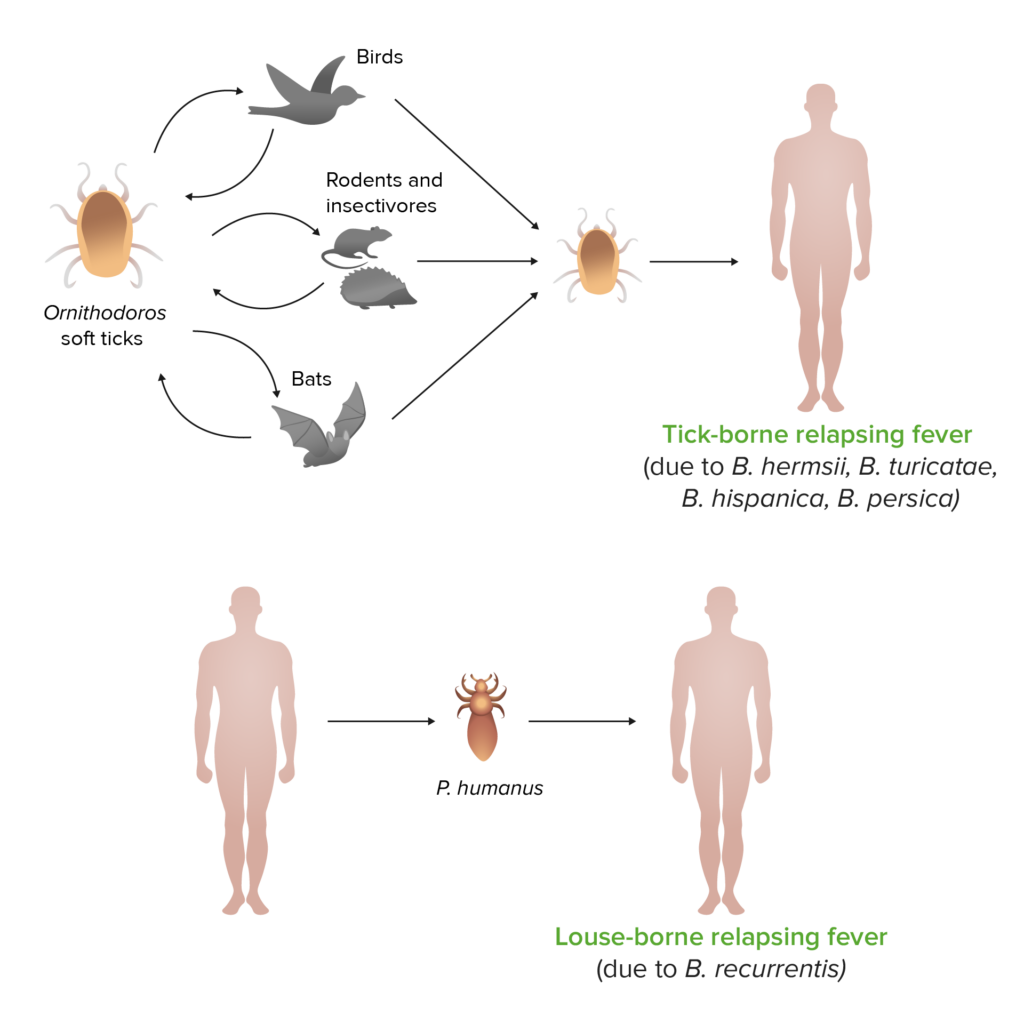
As mentioned earlier, there are two main types of relapsing fever: tick-borne relapsing fever (TBRF) and louse-borne relapsing fever (LBRF). TBRF is caused by the species Borrelia hermsii, Borrelia parkeri, and Borrelia turicatae, which are primarily transmitted by soft ticks. On the other hand, LBRF is caused by Borrelia recurrentis, which is transmitted by body lice. While TBRF is more prevalent in North America, LBRF is more commonly found in Africa, Asia, and South America.
Endemic Areas
Relapsing fever is found in various parts of the world, with different areas being endemic to specific types of the disease. TBRF is mainly found in the western United States, particularly in high-altitude regions where rodents, ticks, and humans share habitats. LBRF, on the other hand, is endemic in regions of Africa, Asia, and South America, where poor sanitation and overcrowding contribute to the spread of body lice.
Transmission of Relapsing Fever
Relapsing fever is primarily transmitted through the bites of infected ticks or lice. When an infected tick feeds on a human, the Borrelia bacteria are transmitted through the tick’s saliva. In the case of louse-borne relapsing fever, the bacteria are present in the feces of infected body lice. When an infected louse bites a human and excretes feces, the bacteria can enter the bloodstream through broken skin or mucous membranes.
Incubation Period
The incubation period of relapsing fever can vary depending on the species of Borrelia bacteria involved. Generally, the incubation period ranges from 2 to 18 days after being bitten by an infected tick or louse. During this time, the bacteria multiply and spread within the body, leading to the onset of symptoms.

Risk Factors
Certain factors can increase the risk of contracting relapsing fever. Individuals living or traveling in endemic areas are more likely to come into contact with infected ticks or lice and are therefore at a higher risk. Additionally, poor sanitation and overcrowding, as seen in refugee camps or areas with inadequate housing, can contribute to the spread of body lice and increase the risk of louse-borne relapsing fever.
Symptoms of Relapsing Fever
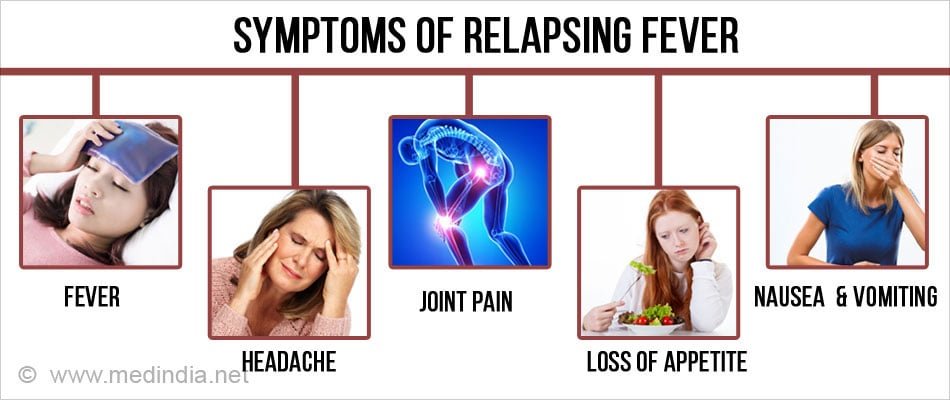
Relapsing fever is characterized by recurring episodes of fever, often accompanied by other symptoms. The initial episode of fever is typically followed by a period of normal body temperature, which is then followed by another episode of fever. This cycle of fever and remission can recur several times. Other common symptoms include headache, muscle aches, joint pain, chills, sweats, fatigue, and nausea. In severe cases, relapsing fever can lead to complications such as liver or kidney failure.

Diagnosis of Relapsing Fever
To diagnose relapsing fever, healthcare professionals typically rely on a combination of clinical evaluation and laboratory testing. The characteristic symptoms, along with a history of exposure to ticks or lice, can provide important clues for diagnosis. Blood tests, such as a blood smear or PCR (polymerase chain reaction) test, can be used to detect the presence of Borrelia bacteria in the bloodstream and confirm the diagnosis.
Complications of Relapsing Fever
While most cases of relapsing fever resolve with appropriate treatment, complications can occur in severe or untreated cases. These complications can include organ damage such as liver or kidney failure, heart problems, neurological manifestations, and miscarriage in pregnant women. Prompt diagnosis and treatment are crucial in preventing the development of complications.
Treatment of Relapsing Fever
The treatment of relapsing fever typically involves the use of antibiotics, which can effectively target and eliminate the Borrelia bacteria. The choice of antibiotics may depend on the type of relapsing fever and the severity of the infection. Commonly used antibiotics include doxycycline, tetracycline, or erythromycin. In more severe cases, hospitalization may be necessary for close monitoring and intravenous administration of antibiotics.
Prevention of Relapsing Fever
Preventing relapsing fever primarily involves avoiding exposure to tick or lice bites. When traveling to endemic areas, it is important to take precautions such as wearing protective clothing (long sleeves, pants, and insect repellent), avoiding high-risk areas, and performing regular tick checks. In areas where body lice infestations are common, maintaining good personal hygiene, frequent washing of clothes and bedding, and avoiding overcrowded living conditions can help prevent louse-borne relapsing fever.
Conclusion
Relapsing fever is a bacterial infection characterized by recurring episodes of fever and is caused by Borrelia bacteria transmitted through infected ticks or lice. Understanding the causes, symptoms, and treatment of relapsing fever is essential in order to diagnose and manage the infection effectively. By taking appropriate preventive measures and seeking prompt medical attention when necessary, the impact of relapsing fever can be minimized. Stay informed, stay protected, and prioritize your health.