
If you’ve been dealing with frequent heartburn, a burning sensation in your chest, or that uncomfortable feeling of acid creeping up your throat, you’re not alone. These are common GERD symptoms, causes, and treatment concerns that many people struggle with daily—often without fully understanding what’s happening inside their body.
As a Registered Nurse, I’ve cared for countless patients who thought their symptoms were “just indigestion,” only to discover a deeper issue: Gastroesophageal Reflux Disease (GERD). The good news? GERD is manageable—and in many cases, significantly reversible—with the right approach.
In this complete RN guide, you’ll learn:
- What GERD really is
- Why it happens
- How to treat GERD effectively
- Natural relief strategies you can start today
Let’s break this down in a clear, practical way so you can take control of your symptoms—and your health.
What Is GERD?
GERD (Gastroesophageal Reflux Disease) is a chronic digestive condition where stomach acid frequently flows backward into the esophagus—the tube connecting your mouth to your stomach.
This backward flow is called acid reflux.
At the bottom of your esophagus is a small muscle called the lower esophageal sphincter (LES). Its job is to open when you swallow and close to keep stomach contents down.
With GERD:
- The LES becomes weak or relaxes at the wrong time
- Acid escapes upward
- The esophagus becomes irritated over time
Think of it like a faulty valve—when it doesn’t close properly, acid leaks where it shouldn’t.
Symptoms of GERD
GERD symptoms can range from mild to severe. Some are obvious, while others are more subtle and often overlooked.
Common Symptoms
- Burning sensation in the chest (heartburn)
- Acidic or sour taste in the mouth
- Regurgitation of food or liquid
- Difficulty swallowing (dysphagia)
- A feeling of a lump in the throat
Less Obvious Symptoms
- Chronic cough
- Hoarseness or voice changes
- Sore throat, especially in the morning
- Frequent throat clearing
- Bad breath (halitosis)
Severe or Advanced Symptoms
- Chest pain (can mimic heart problems)
- Persistent nausea
- Vomiting
- Unintentional weight loss
- Trouble eating due to discomfort
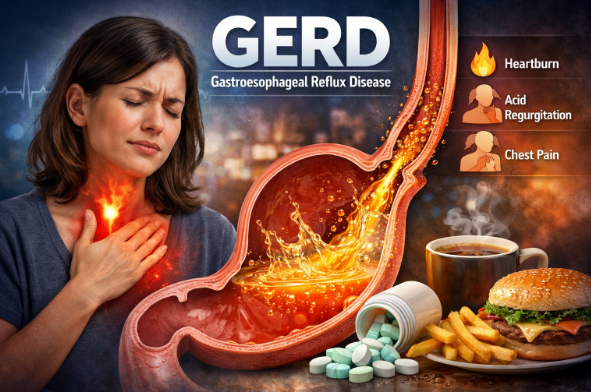
RN Insight:
Many patients don’t realize that a chronic cough or throat irritation can be related to GERD. This is often called “silent reflux.”
Causes of GERD
Understanding the causes of GERD helps you take targeted action rather than guess.
Primary Causes
- Weak or damaged lower esophageal sphincter (LES)
- Increased pressure in the abdomen
- Delayed stomach emptying
Lifestyle-Related Causes
- Overeating or large meals
- Eating late at night
- Lying down after meals
- High-fat or fried foods
- Caffeine and alcohol
- Smoking
Medical Causes
- Hiatal hernia (part of the stomach pushes upward)
- Obesity
- Pregnancy
- Certain medications (NSAIDs, calcium channel blockers)
Dietary Triggers
- Spicy foods
- Chocolate
- Citrus fruits
- Tomato-based foods
- Carbonated drinks
Risk Factors
You may be at higher risk of developing GERD if you:
- Are you overweight or obese
- Smoke regularly
- Eat large meals frequently
- Have a sedentary lifestyle
- Are pregnant
- Have a history of digestive issues
- Take medications that relax the LES
RN Perspective:
GERD is not just about food—it’s about pressure, timing, and body mechanics.
Complications (If Untreated)
Ignoring GERD can lead to serious complications over time.
- Esophagitis (inflammation of the esophagus)
- Esophageal ulcers
- Strictures (narrowing of the esophagus)
- Barrett’s esophagus (pre-cancerous changes)
- Increased risk of esophageal cancer
This is why early management is critical—not just for comfort, but for long-term health.
How GERD Is Diagnosed
If your symptoms are persistent, your doctor may recommend:
Common Diagnostic Tests
- Upper endoscopy (EGD) – looks inside your esophagus
- pH monitoring – measures acid levels
- Esophageal manometry – checks muscle function
- Barium swallow X-ray
RN Tip:
Most mild cases are diagnosed based on symptoms and treatment response.
Treatment Options
Treating GERD effectively involves a combination of medical treatment and lifestyle changes.
Medications
- Antacids
- Provide quick relief
- Neutralize stomach acid
- H2 Blockers
- Reduce acid production
- Longer-lasting than antacids
- Proton Pump Inhibitors (PPIs)
- Strongest acid reducers
- Allow healing of the esophagus
- Prokinetics
- Help the stomach empty faster
Behavioral Strategies
- Eat smaller meals
- Avoid lying down after eating
- Elevate the head of your bed
- Maintain a healthy weight
Surgical Options (for severe cases)
- Fundoplication (tightens LES)
- LINX device (magnetic ring support)
Natural Remedies & Lifestyle Strategies
If you’re looking for natural GERD relief methods, these strategies can make a big difference.
Diet-Based Relief
- Eat whole, unprocessed foods
- Increase fiber intake
- Avoid trigger foods
Daily Habits
- Chew food slowly
- Stay upright for 2–3 hours after meals
- Drink water between meals (not during heavy eating)
Sleep & Positioning
- Elevate your head 6–8 inches
- Sleep on your left side
Stress Management
- Practice deep breathing
- Reduce anxiety triggers
- Improve sleep quality
RN Insight:
Stress doesn’t directly cause GERD—but it significantly worsens symptoms.
Best Diet Plan for GERD
A proper GERD diet plan is one of the most effective ways to control symptoms.
Foods to Eat (GERD-Friendly)
- Oatmeal
- Brown rice
- Lean proteins (chicken, fish)
- Vegetables (broccoli, spinach, zucchini)
- Bananas and melons
- Ginger
Foods to Avoid
- Fried foods
- Spicy dishes
- Coffee and caffeine
- Alcohol
- Chocolate
- Citrus fruits
- Tomatoes
Practical Tips
- Eat smaller portions
- Avoid eating 3 hours before bedtime
- Keep a food journal
Supplements That May Help
Some supplements may support GERD management, but use them cautiously.
Common Options
- Melatonin – may support LES function
- Deglycyrrhizinated licorice (DGL) – soothes the esophagus
- Probiotics – improve gut balance
- Slippery elm coats and protects the lining
RN Caution:
Always consult your healthcare provider before starting supplements, especially if you’re on medications.
RN Practical Daily Management Plan GERD
Here’s a simple, realistic daily routine you can follow.
Morning
- Drink a glass of warm water
- Eat a light, GERD-friendly breakfast (oatmeal or banana)
- Avoid coffee on an empty stomach
- Stay upright after eating
Midday
- Eat smaller, balanced meals
- Avoid trigger foods
- Take a short walk after lunch
- Stay hydrated
Afternoon
- Avoid excessive snacking
- Manage stress (deep breathing or short breaks)
Evening
- Eat dinner early (at least 3 hours before bed)
- Keep meals light and low-fat
- Avoid lying down after eating
Night
- Elevate your head while sleeping
- Sleep on your left side
- Avoid late-night snacks
RN Insight:
Consistency is more important than perfection. Small daily habits lead to major improvements in symptoms.
When to See a Doctor
Seek medical attention if you experience:
- Symptoms more than twice a week
- Difficulty swallowing
- Persistent chest pain
- Vomiting or bleeding
- Unexplained weight loss
Do not ignore these warning signs—they may indicate complications.
Frequently Asked Questions (FAQ)
1. What is the fastest way to relieve GERD symptoms?
Antacids provide quick relief, but long-term control requires diet and lifestyle changes.
2. Can GERD go away on its own?
Mild cases may improve, but chronic GERD usually needs management.
3. What foods trigger GERD the most?
Common triggers include fried foods, caffeine, alcohol, chocolate, and acidic foods.
4. Is GERD dangerous?
If untreated, it can lead to serious complications like Barrett’s esophagus.
5. How do I stop acid reflux at night?
Elevate your head, avoid late meals, and sleep on your left side.
6. Can stress cause GERD?
Stress worsens symptoms but is not usually the primary cause.
7. Are natural remedies effective for GERD?
They can help, especially when combined with lifestyle changes.
Living with GERD can feel frustrating and exhausting—but you are not stuck with it.
By understanding GERD symptoms, causes, and treatments, and applying practical daily strategies, you can significantly reduce discomfort, prevent complications, and regain control of your health.
Start simple:
- Adjust your diet
- Improve your daily habits
- Stay consistent
As a nurse, I’ve seen firsthand how small, steady changes can transform a patient’s quality of life.
You don’t need to suffer in silence. You can manage this—and you can feel better.
RELATED TOPICS ABOUT GERD Symptoms, Causes, Treatment
GERD Treatment Options
The Most Effective GERD Treatment Options That Actually Work (Doctor-Approved Guide)
GERD Relief Methods
Top GERD Relief Methods for Fast, Lasting Heartburn Relief (Backed by Science)
GERD Management Plan
The Ultimate GERD Management Plan to Control Symptoms and Prevent Flare-Ups
GERD Diet Plan
Best GERD Diet Plan: What to Eat (and Avoid) for Immediate Acid Reflux Relief
GERD Supplements
Best GERD Supplements That Soothe Acid Reflux Naturally (RN-Reviewed Picks)
GERD Remedies
Powerful GERD Remedies That Calm Acid Reflux Fast Without Harsh Medications
How to Treat GERD Naturally
How to Treat GERD Naturally: Proven Remedies to Heal Acid Reflux Without Drugs