
If you’ve recently been told you have prediabetes—or you suspect something isn’t quite right with your blood sugar—you’re not alone. Millions of people are living with early changes in blood sugar without realizing it. The good news? This is one of the most preventable and reversible conditions when caught early.
In this RN-led guide, you’ll learn everything you need to know about prediabetes symptoms, causes, treatment, and most importantly—what you can do starting today to stop it from progressing to type 2 diabetes. I’ll walk you through clear, practical steps so you can take control of your health with confidence.
What Is Prediabetes?
Prediabetes is a condition where your blood sugar (glucose) levels are higher than normal, but not high enough to be diagnosed as diabetes.
Think of it as a warning sign from your body.
Your body is starting to struggle with how it processes sugar, often due to insulin resistance—a state where your cells don’t respond properly to insulin.
Without intervention, many people with prediabetes develop type 2 diabetes within 5–10 years.
With the right lifestyle changes, you can often reverse prediabetes completely.
Symptoms of Prediabetes
One of the biggest challenges is that prediabetes symptoms are often subtle—or absent. Many people feel “fine” until the condition progresses.
Common Early Symptoms
- Increased thirst
- Frequent urination
- Fatigue or low energy
- Blurred vision
- Slow healing of cuts or wounds
Less Obvious Signs
- Darkened skin patches (especially neck, armpits) — called acanthosis nigricans
- Increased hunger, even after eating
- Mild weight gain or difficulty losing weight
- Brain fog or trouble concentrating
When Symptoms Become More Noticeable
- Tingling in hands or feet
- Frequent infections (skin, urinary, yeast)
- More pronounced fatigue
Important: Many people with prediabetes have no symptoms at all, which is why screening is so important.
Causes of Prediabetes
Understanding the causes of prediabetes helps you know what to change.
Primary Cause: Insulin Resistance
Your body produces insulin, but your cells don’t respond effectively. This leads to elevated blood sugar levels.
Lifestyle-Related Causes
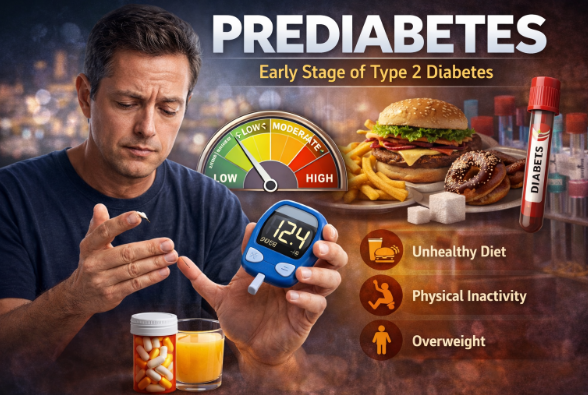
- High intake of processed foods and sugar
- Sedentary lifestyle (little physical activity)
- Chronic stress
- Poor sleep habits
Medical & Biological Factors
- Hormonal imbalances
- Chronic inflammation
- Genetics (family history of diabetes)
- Certain medications (like steroids)
Why It Happens
Prediabetes develops gradually. Over time, your body becomes less efficient at managing glucose, especially when lifestyle habits and genetics combine.
Risk Factors
You may be at higher risk if you:
- Are you overweight or have abdominal fat
- Are over age 45
- Have a family history of diabetes
- Have high blood pressure or cholesterol
- Have a history of gestational diabetes
- Have PCOS (polycystic ovary syndrome)
- Are physically inactive
Even younger children and adults are increasingly affected by modern lifestyle habits.
Complications (If Untreated)
Ignoring prediabetes can lead to serious health issues:
- Progression to type 2 diabetes
- Heart disease
- Stroke
- Nerve damage (neuropathy)
- Kidney disease
- Vision problems
The key takeaway:
Early action prevents long-term damage.
How Prediabetes Is Diagnosed
Diagnosis is simple and usually done through blood tests:
Common Tests
- Fasting Blood Sugar (FBS)
- Prediabetes: 100–125 mg/dL
- A1C Test (average blood sugar over 3 months)
- Prediabetes: 5.7%–6.4%
- Oral Glucose Tolerance Test (OGTT)
- Prediabetes: 140–199 mg/dL after 2 hours
Your healthcare provider may also evaluate your risk factors and symptoms.
Treatment Options
The goal of treatment is to lower blood sugar and improve insulin sensitivity.
Medical Treatments
- Metformin (commonly prescribed in some cases)
- Monitoring blood glucose levels
- Managing related conditions (blood pressure, cholesterol)
Lifestyle Changes (Most Effective)
- Weight loss (even 5–10% makes a big difference)
- Regular physical activity
- Improved nutrition
- Stress management
Behavioral Strategies
- Habit tracking
- Meal planning
- Consistent daily routines
Lifestyle intervention is the best and most powerful treatment for prediabetes.
Natural Remedies & Lifestyle Strategies
If you’re wondering how to treat prediabetes naturally, these strategies are highly effective.
Diet-Based Approaches
- Focus on whole, unprocessed foods
- Reduce refined carbohydrates
- Increase fiber intake
Daily Movement
- Aim for at least 30 minutes of activity daily
- Walking after meals helps regulate blood sugar
Stress Reduction
- Chronic stress raises blood sugar
- Try:
- Deep breathing
- Meditation
- Yoga
Sleep Optimization
- Aim for 7–9 hours per night
- Poor sleep increases insulin resistance
Hydration
- Drink plenty of water
- Avoid sugary beverages
These natural methods are powerful tools for managing and reversing prediabetes.
Best Diet Plan for Prediabetes
Your diet plays a major role in controlling blood sugar.
Foods to Eat (Best Choices)
- Non-starchy vegetables (broccoli, spinach, peppers)
- Lean proteins (chicken, fish, tofu)
- Whole grains (quinoa, brown rice, oats)
- Healthy fats (avocado, nuts, olive oil)
- Low-glycemic fruits (berries, apples)
Foods to Limit or Avoid
- Sugary drinks and snacks
- White bread and refined carbs
- Processed foods
- Fried foods
- Excess alcohol
Practical Tips
- Use the plate method:
- ½ vegetables
- ¼ protein
- ¼ healthy carbs
- Eat smaller, balanced meals
- Avoid skipping meals
A consistent prediabetes diet plan can significantly improve blood sugar control.
Supplements That May Help
Some supplements may support blood sugar control—but they are not a replacement for lifestyle changes.
Common Options
- Magnesium
- Chromium
- Berberine
- Alpha-lipoic acid
- Vitamin D
Important Notes
- Always consult your healthcare provider before starting
- Effects vary by individual
- Quality and dosage matter
Supplements can support your plan, but they are not a cure.
RN Practical Daily Management Plan
Here’s a simple, realistic daily routine you can follow.
Morning Routine
- Drink a glass of water upon waking
- Eat a balanced breakfast (protein + fiber)
- Take a 10–15 minute walk
- Check blood sugar if recommended
Midday Routine
- Eat a balanced lunch (avoid heavy carbs alone)
- Stay active—walk or stretch
- Stay hydrated
Evening Routine
- Eat a lighter dinner
- Avoid late-night snacking
- Take a short walk after dinner
Night Routine
- Reduce screen time before bed
- Practice relaxation techniques
- Aim for a consistent sleep schedule
Weekly Habits
- Plan meals ahead
- Grocery shop intentionally
- Track progress (weight, energy, habits)
Consistency—not perfection—is what leads to success.
When to See a Doctor
Seek medical advice if you experience:
- Persistent fatigue
- Frequent urination or excessive thirst
- Sudden weight changes
- Blurred vision
- Numbness or tingling
Also, if you have risk factors, request routine screening even without symptoms.
Frequently Asked Questions (FAQ)
1. Can prediabetes be reversed?
Yes. With proper lifestyle changes, many people can return their blood sugar levels to normal.
2. How long does it take to reverse prediabetes?
It varies, but improvements can begin within weeks to months with consistent effort.
3. What is the fastest way to lower blood sugar naturally?
- Reduce sugar and refined carbs
- Increase physical activity
- Stay hydrated
- Improve sleep
4. Do I need medication for prediabetes?
Not always. Many people manage it with lifestyle changes alone, but some may benefit from medication.
5. What should I eat for breakfast with prediabetes?
- Eggs with vegetables
- Greek yogurt with berries
- Oatmeal with nuts and seeds
6. Is prediabetes serious?
Yes—it’s a warning sign. Without action, it can progress to diabetes and other complications.
7. Can stress cause prediabetes?
Chronic stress can contribute to increasing blood sugar and worsening insulin resistance.
Prediabetes is not a life sentence—it’s an opportunity.
By recognizing the symptoms, causes, and treatment options for prediabetes, you now have the tools to take control of your health. Small, consistent changes in your daily habits can lead to powerful results.
You don’t need perfection—you need progress.
Start with one step today:
- Improve your next meal
- Take a short walk
- Get better sleep tonight
Your future health is shaped by what you do now—and you are absolutely capable of changing your path.
Medical Disclaimer
This content is for educational purposes only and does not replace professional medical advice, diagnosis, or treatment. Always consult your healthcare provider regarding any medical concerns or before starting new treatments or supplements.