
If you’ve ever felt your heart race for no clear reason, your chest tighten, or your mind spiral into “what if” scenarios, you’re not alone. Anxiety symptoms, causes, and treatment are among the most searched health topics today—and for good reason. Anxiety can feel overwhelming, unpredictable, and even frightening.
As a Registered Nurse, I’ve cared for patients who thought they were having a heart attack—only to discover it was severe anxiety. I’ve also seen how the right knowledge and tools can help you regain control quickly.
In this guide, you’ll learn exactly why anxiety happens, what your symptoms mean, and how to treat anxiety effectively—including fast-acting strategies to calm your nervous system.
What Is Anxiety?
Anxiety is your body’s natural response to stress or perceived danger. It’s part of your built-in survival system—often called the “fight-or-flight” response.
When your brain senses a threat (real or perceived), it releases stress hormones like adrenaline and cortisol. This causes physical and emotional changes to prepare you for action.
Occasional anxiety is normal. But when it becomes persistent, excessive, or interferes with daily life, it may be classified as an anxiety disorder.
Symptoms of Anxiety
Anxiety symptoms can affect your body, thoughts, and behavior. They vary from mild to severe and can sometimes mimic serious medical conditions.
Common Physical Symptoms
- Rapid heartbeat (palpitations)
- Shortness of breath
- Chest tightness or pain
- Sweating or chills
- Dizziness or lightheadedness
- Muscle tension
- Fatigue
- Nausea or upset stomach
Emotional and Cognitive Symptoms
- Excessive worry or fear
- Feeling overwhelmed or out of control
- Irritability
- Difficulty concentrating
- Racing thoughts
- Sense of impending doom
Behavioral Symptoms
- Avoiding certain situations
- Trouble sleeping (insomnia)
- Restlessness or inability to relax
Severe Anxiety or Panic Symptoms
- Panic attacks (sudden, intense fear)
- Feeling detached from reality (derealization)
- Fear of dying or losing control
If you’re wondering, “Why do anxiety symptoms feel so physical?”—it’s because your nervous system is activated, even if there’s no real danger present.
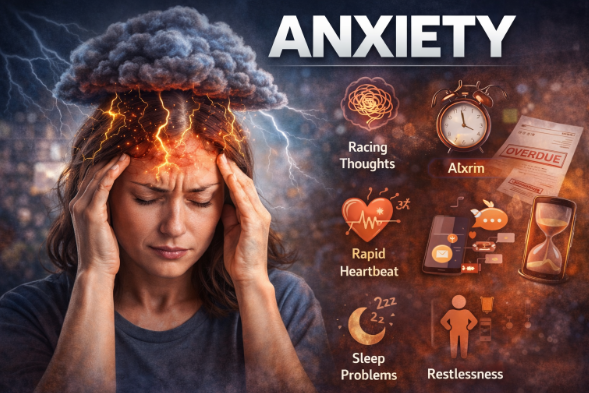
Causes of Anxiety
Understanding the causes of anxiety can help you feel more in control and less confused about what’s happening in your body.
Biological Factors
- Imbalance of neurotransmitters (serotonin, dopamine)
- Overactive amygdala (fear center of the brain)
- Genetics (family history of anxiety disorders)
Psychological Factors
- Chronic stress
- Trauma or past experiences
- Negative thinking patterns
Lifestyle Triggers
- High caffeine intake
- Poor sleep habits
- Lack of physical activity
- Alcohol or substance use
Medical Causes
- Thyroid disorders (hyperthyroidism)
- Heart conditions
- Hormonal changes (menopause, pregnancy)
- Chronic illness
Many people ask, “Why does anxiety happen suddenly?”—often it’s a combination of stress buildup, triggers, and nervous system overload.
Risk Factors
Certain factors increase your likelihood of developing anxiety:
- Family history of anxiety or mental health disorders
- High-stress lifestyle or occupation
- History of trauma or abuse
- Chronic medical conditions
- Substance misuse
- Personality traits (perfectionism, overthinking)
Complications (If Untreated)
Untreated anxiety can significantly impact your quality of life.
- Depression
- Substance abuse
- Sleep disorders
- Digestive problems
- Weakened immune system
- Increased risk of heart disease
Chronic anxiety keeps your body in a prolonged stress state, which can affect nearly every organ system.
How Anxiety Is Diagnosed
A healthcare provider will evaluate your symptoms through:
- Medical history review
- Physical exam (to rule out medical causes)
- Mental health screening tools (like GAD-7)
- Lab tests (if needed, e.g., thyroid function)
Diagnosis focuses on how long symptoms last and how much they interfere with your daily life.
Treatment Options for Anxiety
When it comes to how to treat anxiety, the most effective approach usually combines medical care and lifestyle changes.
1. Medications
- SSRIs (e.g., sertraline, fluoxetine)
- SNRIs
- Benzodiazepines (short-term use only)
- Beta-blockers (for physical symptoms)
2. Therapy (Highly Effective)
- Cognitive Behavioral Therapy (CBT)
- Exposure therapy
- Mindfulness-based therapy
3. Nervous System Regulation Techniques
- Deep breathing exercises
- Grounding techniques (5-4-3-2-1 method)
- Progressive muscle relaxation
4. Immediate Anxiety Relief Methods
If you need fast relief:
- Slow your breathing (inhale 4 sec, exhale 6 sec)
- Splash cold water on your face
- Step outside or change the environment
These techniques help quickly reset your nervous system.
Natural Remedies & Lifestyle Strategies
If you’re searching for natural remedies for anxiety, these evidence-based approaches can make a significant difference.
Daily Habits That Help
- Regular exercise (even 20 minutes/day)
- Consistent sleep schedule
- Limiting screen time
Stress Management Techniques
- Meditation
- Journaling
- Yoga or stretching
Sleep Optimization
- Avoid caffeine after 2 PM
- Create a calming bedtime routine
- Keep your bedroom cool and dark
Nervous System Reset Practices
- Breathwork
- Cold exposure (brief cold showers)
- Spending time in nature
Best Diet Plan for Anxiety
Your diet plays a powerful role in anxiety management. What you eat directly affects your brain chemistry and nervous system.
Foods That Help with Anxiety Relief
- Magnesium-rich foods: spinach, almonds
- Omega-3 fatty acids: salmon, walnuts
- Complex carbs: oats, brown rice
- Probiotic foods: yogurt, kefir
- Herbal teas: chamomile, green tea
Foods to Avoid
- Excess caffeine
- Sugar spikes (processed sweets)
- Alcohol
- Highly processed foods
Practical Tips
- Eat balanced meals every 3–4 hours
- Stay hydrated
- Avoid skipping meals (can worsen anxiety symptoms)
Many people notice reduced symptoms within weeks of improving their diet.
Supplements That May Help
Some supplements may support anxiety relief—but should always be used cautiously.
Common Options
- Magnesium glycinate
- L-theanine
- Ashwagandha
- Omega-3 fish oil
- Vitamin B complex
Important Notes
- Always consult your healthcare provider first
- Supplements can interact with medications
- Results vary from person to person
Supplements are not a cure—but can support a broader anxiety management plan.
RN Practical Daily Management Plan
This is a simple, nurse-approved daily routine to help you manage anxiety consistently.
Morning Routine (Start Calm)
- Wake up at the same time daily
- Drink water before caffeine
- 5 minutes of deep breathing
- Light movement (walk or stretch)
Midday Reset (Prevent Build-Up)
- Eat balanced meals
- Take a 5–10 minute break outdoors
- Practice grounding if stressed
Evening Wind-Down
- Reduce screen exposure 1 hour before bed
- Herbal tea or calming activity
- Journaling to release thoughts
Emergency Calm Technique (Anytime)
- Inhale slowly through the nose (4 sec)
- Exhale longer (6–8 sec)
- Repeat for 2–3 minutes
This routine helps retrain your nervous system over time.
When to See a Doctor
Seek medical attention if you experience:
- Frequent panic attacks
- Chest pain (always rule out heart issues)
- Anxiety interfering with daily life
- Trouble sleeping for weeks
- Thoughts of harming yourself
Getting help early leads to better outcomes.
Frequently Asked Questions (FAQ)
1. What are the most common anxiety symptoms?
Physical symptoms such as a rapid heart rate, shortness of breath, and excessive worry are most common.
2. What causes anxiety to worsen suddenly?
Stress buildup, caffeine, poor sleep, or triggering events can cause sudden spikes.
3. How can I stop anxiety fast?
Use deep breathing, grounding techniques, and remove yourself from stressful environments.
4. Can anxiety go away without treatment?
Mild anxiety may improve, but chronic anxiety often requires active management.
5. What is the best natural treatment for anxiety?
Exercise, proper sleep, and mindfulness practices are among the most effective.
6. Is anxiety dangerous?
While not usually life-threatening, it can impact physical health if untreated.
7. What foods help reduce anxiety?
Magnesium-rich foods, omega-3 fatty acids, and whole foods support brain health.
Understanding anxiety symptoms, causes, and treatment is the first step toward taking your power back. Anxiety is not a weakness—it’s your body trying to protect you, even if it feels overwhelming.
The good news? You have real, effective tools to calm your nervous system, reduce symptoms, and regain control of your life.
Start small. Focus on one or two strategies today—whether it’s improving your diet, practicing breathing exercises, or creating a daily routine.
You are not alone—and with the right support and knowledge, anxiety can be managed successfully.
Medical Disclaimer
This content is for educational purposes only and does not replace professional medical advice, diagnosis, or treatment. Always consult your healthcare provider for personalized medical guidance.