
Living with Macular Degeneration can be a challenging journey filled with uncertainty. Imagine waking up one day to find that your central vision, the very essence of how you perceive the world, is slowly fading away. Macular Degeneration, a condition that affects the macula – the part of the eye responsible for clear vision, is a reality that impacts millions of individuals worldwide. In this article, we will explore the daily struggles, coping mechanisms, and potential treatments for this progressive eye disease, offering insights and support to those living with Macular Degeneration.
Understanding Macular Degeneration
Macular Degeneration is a common eye condition that affects millions of people worldwide. It occurs when the macula, which is the central part of the retina responsible for sharp, central vision, starts to deteriorate. This can result in a loss of vision in the center of your visual field, making it difficult to see fine details, read, drive, or recognize faces.
What is Macular Degeneration?
Macular Degeneration, also known as age-related macular degeneration (AMD), is a progressive eye disease that mainly affects older adults. It is the leading cause of severe vision loss in people over the age of 60. There are two main types of macular degeneration: dry AMD and wet AMD.
Types of Macular Degeneration
-
Dry AMD: Dry AMD is the most common form, accounting for about 90% of all cases. It occurs when the macula thins over time and small yellow deposits called drusen accumulate. Dry AMD progresses slowly and may cause a gradual loss of central vision.
-
Wet AMD: Wet AMD, also known as neovascular AMD, is a more advanced form of the disease. It is characterized by the growth of abnormal blood vessels beneath the macula, which leak fluid and blood, causing rapid and severe vision loss. Although less common than dry AMD, wet AMD is responsible for the majority of cases of severe vision loss.
Causes of Macular Degeneration
The exact causes of macular degeneration are still not fully understood, but several risk factors have been identified:
-
Age: The risk of developing macular degeneration increases with age, especially after the age of 60.
-
Genetics: Family history plays a significant role in the development of macular degeneration. If you have a close relative with the disease, you are at a higher risk.
-
Smoking: Smoking greatly increases the risk of developing macular degeneration. It also tends to progress faster in smokers.
-
Obesity and poor diet: Unhealthy lifestyle habits, such as a high-fat diet and obesity, can contribute to the development and progression of macular degeneration.
-
Cardiovascular disease: Conditions like hypertension and high cholesterol can increase the risk of macular degeneration.
Symptoms of Macular Degeneration
The early stages of macular degeneration may not cause any noticeable symptoms. As the disease progresses, you may experience the following:
- Blurred or distorted central vision
- Decreased ability to see colors
- Difficulty reading or recognizing faces
- Need for brighter light when performing close-up tasks
- Dark or empty areas in the center of your vision
If you notice any changes in your vision, it is essential to seek medical attention promptly for a proper diagnosis.
Diagnosis and Treatment Options
Diagnosing Macular Degeneration
Diagnosing macular degeneration typically involves a comprehensive eye examination performed by an ophthalmologist or optometrist. The doctor will review your medical history, conduct visual acuity tests, check for any abnormalities in the retina, and may also perform additional tests, such as fluorescein angiography or optical coherence tomography (OCT), to assess the health of your macula and detect any signs of macular degeneration.
Traditional Treatment Methods
Currently, there is no cure for macular degeneration, but there are treatment options available that can help slow down the progression of the disease and manage its symptoms. The treatment approach depends on the type and severity of macular degeneration:
-
Dry AMD: For dry AMD, the primary goal of treatment is to manage any risk factors and prevent the disease from advancing to the wet form. This may involve lifestyle changes, such as quitting smoking, maintaining a healthy diet, exercising regularly, and controlling underlying health conditions.
-
Wet AMD: Wet AMD can be treated with various therapies aimed at targeting the abnormal blood vessels and reducing their leakage. The most common treatments include anti-VEGF injections, which block the growth of new blood vessels, and photodynamic therapy, which uses a light-activated drug to destroy abnormal blood vessels.
New and Emerging Treatments
Researchers and scientists are constantly studying new treatment approaches for macular degeneration, and there are several promising developments on the horizon. Some of these include:
-
Gene therapy: Gene therapy involves delivering healthy genes to the retina to replace defective ones that contribute to macular degeneration. This innovative approach shows great potential in slowing down or even reversing the disease progression.
-
Stem cell therapy: Stem cell therapy aims to regenerate damaged retinal cells with healthy stem cells. Though still in its early stages, this approach holds promise for restoring vision in individuals with macular degeneration.
Assistive Devices and Supportive Technology
In addition to medical treatments, there are also various assistive devices and supportive technologies available to help individuals with macular degeneration maintain their independence and quality of life. These include:
-
Magnifiers and optical aids: Handheld magnifiers, magnifying glasses, and other visual aids can help enhance vision for reading or performing close-up tasks.
-
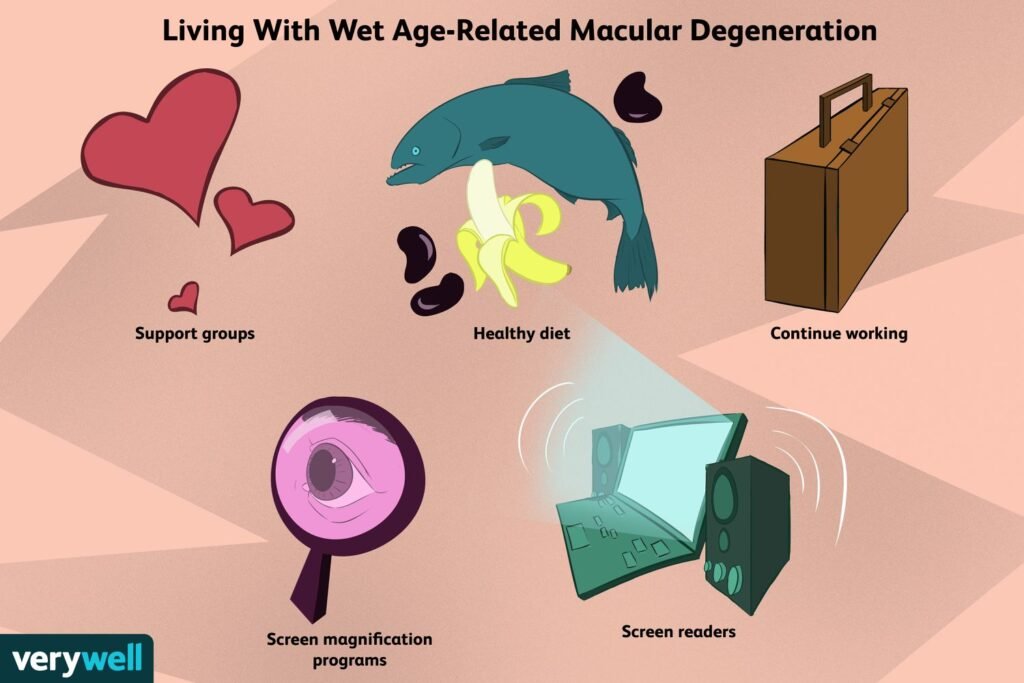
Electronic devices: Computer software, smartphones, and tablets can be adapted for people with visual impairments. Features like zooming, voice commands, and screen readers make it easier to navigate digital content.
-
Low vision rehabilitation: Working with a low vision specialist can help you develop strategies and skills to maximize your remaining vision and adapt to vision loss.
-
Lighting modifications: Adequate lighting in the home and workspace, including task lighting and increased overall brightness, can greatly improve visibility and reduce eye strain.
Managing Daily Life with Macular Degeneration
Adapting to Vision Loss
Receiving a diagnosis of macular degeneration can be challenging, but there are many ways to adapt and cope with vision loss. Here are some strategies to help you adjust:
-
Use contrasting colors: Opt for high-contrast colors in your clothing, home decor, and everyday objects to make them easier to see.
-
Enlarge text and images: Adjust the font size on your computer, smartphone, and other digital devices to make text more readable. You can also enlarge printed text with the help of magnifiers or specialized reading aids.
-
Improve lighting: Ensure that your living space is well-lit, with appropriate lighting fixtures and bulbs. Natural light is also important, so consider opening curtains or blinds during the day.
-
Organize and declutter: Keep frequently used items in easily accessible places to simplify daily tasks. Minimize clutter to reduce the risk of accidents and make it easier to find what you need.
Making Your Home More Accessible
Modifying your home environment can greatly enhance your independence and safety. Here are some tips for making your home more accessible:
-
Install grab bars and handrails: Adding grab bars and handrails throughout your home, especially in the bathroom and stairways, can provide stability and prevent falls.
-
Remove tripping hazards: Ensure that rugs are secure and don’t have curled edges. Remove any unnecessary furniture or objects that may obstruct your path.
-
Use contrasting colors and textures: Consider using contrasting colors and textures on stairs, edges of steps, and transitions between various flooring materials to help differentiate surfaces.
-
Implement good lighting: Install motion-sensor lights in hallways, entryways, and bathrooms to ensure safe navigation during the night. Use task lighting in areas where you need more focused illumination.
Assistance and Support Services
Living with macular degeneration can be overwhelming, but there are numerous assistance and support services available to help you navigate daily life. These services include:
-
Low vision rehabilitation services: A low vision specialist can assess your visual needs and provide personalized recommendations, training, and support to help you make the most of your remaining vision.
-
Orientation and mobility training: Orientation and mobility specialists can teach you techniques for safely navigating your surroundings and using mobility aids such as canes or guide dogs.
-
In-home care services: Depending on your needs, you may benefit from in-home care services, such as personal care assistance, housekeeping, and meal preparation, to ensure your safety and well-being.
-
Support groups: Joining a macular degeneration support group can provide you with a sense of community, emotional support, and valuable tips and resources from others who share similar experiences.
Coping Strategies and Emotional Well-being
Living with macular degeneration can have a significant impact on your emotional well-being. It is essential to prioritize your mental health and develop coping strategies to manage the challenges. Here are some tips:
-
Seek emotional support: Share your thoughts and feelings with family, friends, or a mental health professional who can provide the support you need. Connecting with others who understand what you’re going through can be extremely comforting.
-
Practice stress management techniques: Engage in activities that help you relax and reduce stress levels, such as deep breathing exercises, meditation, or pursuing hobbies you enjoy.
-
Stay engaged and maintain a routine: Participate in activities you love and establish a daily routine to maintain a sense of purpose and structure in your life.
-
Educate yourself: Stay informed about the latest research, treatment options, and assistive technologies. Knowledge can empower you to make informed decisions and adapt to changes more effectively.
Nutrition and Lifestyle Recommendations
The Role of Nutrition in Macular Degeneration
While nutrition cannot directly cure macular degeneration, it plays a crucial role in supporting overall eye health and potentially reducing the risk of disease progression. A healthy diet rich in essential nutrients can help protect the macula and preserve your vision.
Foods to Include in Your Diet
-
Leafy green vegetables: Spinach, kale, and collard greens are excellent sources of lutein and zeaxanthin, two antioxidants that accumulate in the macula and protect against macular degeneration.
-
Colorful fruits and vegetables: Include a variety of brightly colored fruits and vegetables like oranges, bell peppers, carrots, and berries. They contain vitamins A, C, and E, as well as other beneficial antioxidants.
-
Fish rich in omega-3 fatty acids: Cold-water fish like salmon, mackerel, and sardines are high in omega-3 fatty acids, which have anti-inflammatory properties and may help reduce the risk of macular degeneration.
-
Nuts and seeds: Almonds, walnuts, and flaxseeds are good sources of vitamin E and omega-3 fatty acids. Snack on these nutritious options for a boost of eye-friendly nutrients.
Supplements for Eye Health
In addition to a healthy diet, certain supplements may be beneficial for supporting eye health, particularly for individuals with macular degeneration. It is important to consult with your healthcare provider before starting any new supplements. Some commonly recommended supplements include:
-
Vitamins and minerals: Antioxidant vitamins like vitamins C and E, as well as zinc and copper, are often included in eye health supplements.
-
Omega-3 fatty acids: Fish oil supplements containing omega-3 fatty acids can provide the same benefits as consuming fish-rich diets.
-
Lutein and zeaxanthin: Supplements containing these antioxidants, which are naturally found in the macula, may help maintain macular health.
Lifestyle Changes for Eye Health
In addition to proper nutrition, there are several lifestyle changes you can make to support your eye health and potentially reduce the risk of macular degeneration progression:
-
Quit smoking: Smoking has been strongly linked to an increased risk of developing macular degeneration and accelerating its progression. If you smoke, quitting is one of the most important steps you can take for your eye health.
-
Maintain a healthy weight: Obesity and being overweight have been associated with an increased risk of macular degeneration. Adopting a balanced diet and regular exercise routine can help you achieve and maintain a healthy weight.
-
Protect your eyes from UV rays: Wear sunglasses that block 100% of UVA and UVB rays whenever you are outdoors. Prolonged exposure to UV radiation can contribute to the development and progression of macular degeneration.
-
Manage underlying health conditions: Conditions like high blood pressure, diabetes, and high cholesterol can increase the risk of macular degeneration. Monitor these conditions closely and work with your healthcare provider to manage them effectively.

Driving and Transportation Considerations
Driving Restrictions with Macular Degeneration
Vision loss due to macular degeneration can affect your ability to drive safely. Depending on the severity of your condition, you may experience difficulties with depth perception, contrast sensitivity, and peripheral vision, making it unsafe to operate a vehicle. It is crucial to be aware of potential driving restrictions and take appropriate measures to ensure the safety of yourself and others on the road.
Alternative Transportation Options
If you are no longer able to drive, there are various alternative transportation options to help you maintain your mobility and independence:
-
Public transportation: Familiarize yourself with the local public transportation system, including bus routes, schedules, and accessibility features. Many cities offer services tailored to individuals with disabilities, such as paratransit or Dial-A-Ride.
-
Ridesharing services: Companies like Uber and Lyft provide convenient and accessible transportation services. Their apps allow you to request rides on-demand, making it easier to get around without relying on a personal vehicle.
-
Community transportation programs: Some communities offer transportation programs specifically designed for seniors and individuals with disabilities. These programs often provide door-to-door service for medical appointments, grocery shopping, and social outings.
Adapting to Public Transportation
Using public transportation with visual impairment may require some adjustments and preparation. Here are a few tips to help you navigate public transportation more effectively:
-
Plan your route in advance: Familiarize yourself with the bus or train route, stops, and schedules beforehand. You can use online trip planners or smartphone apps to navigate public transportation routes more easily.
-
Inform the driver or transit personnel: If you need assistance getting on and off the bus or train, do not hesitate to inform the driver or transit personnel. They can provide guidance and ensure your safety.
-
Use tactile markers and landmarks: When waiting at a bus stop or train station, use tactile markers like raised dots or braille signs to help you identify platforms, boarding areas, and seating locations.
-
Ask for priority seating: Many public transportation systems have designated priority seating for individuals with disabilities. If you have difficulty standing or need additional support, feel free to request these seats.
Accessible Travel Tips
If you enjoy travel and want to explore new places, having macular degeneration should not hinder your adventures. Here are some accessible travel tips to help you make the most of your trips:
-
Research destinations: Look for destinations that offer accessibility features, such as well-maintained sidewalks, accessible transportation options, and attractions with accommodations for individuals with visual impairments.
-
Notify hotels and airlines: Inform hotels and airlines in advance about your visual impairment and any specific accommodations you may require. Many establishments are willing to provide extra assistance, such as assigning you a room closer to the elevator or offering guided tours.
-
Carry essential documents and information: Keep a list of important contact numbers, including your eye doctor’s information and any medications you take. Make sure to have a copy of your eye prescription and any medical documents related to your condition.
-
Use assistive technology: Utilize smartphone apps or portable magnifiers to read signs, maps, and menus while traveling. These technologies can enhance your ability to navigate unfamiliar environments.
Maintaining Independence and Social Connections
Assistive Devices for Daily Tasks
Various assistive devices can help you maintain independence and perform daily tasks more easily. These devices are designed to compensate for vision loss and enhance overall functionality. Some common assistive devices include:
-
Magnifiers: Handheld, stand magnifiers, and magnifying lamps can enlarge text, objects, or printed materials, making them easier to see.
-
Talking watches and clocks: These devices announce the time audibly, allowing you to keep track of the time independently.
-
Voice-activated assistants: Smart speakers or virtual assistants like Amazon Echo or Google Home can perform tasks using voice commands, such as setting reminders, playing music, or providing information.
-
Large-print or tactile labels: Use large-print labels or braille labels to mark items in your home, making it easier to locate and identify them.
Daily Living Skills and Techniques
Learning and practicing daily living skills and techniques can significantly improve your ability to carry out everyday tasks. Here are a few tips:
-
Develop a systematic approach: Establish a specific order for performing tasks, such as getting dressed or preparing meals. Breaking tasks into smaller steps can make them more manageable.
-
Use adaptive tools and techniques: Adaptation tools, such as talking kitchen appliances, writing guides, or tactile markers, can help you complete tasks with greater ease and precision.
-
Utilize non-visual cues: Incorporate non-visual cues into your routine, such as using aromas, textures, or sounds as cues to help identify items or complete tasks.
-
Explore assistive technology: Investigate the wide range of assistive technology available, such as screen reading software or smartphone apps that can read aloud text or help with navigation.
Staying Connected with Family and Friends
Macular degeneration can make it challenging to recognize faces or see facial expressions, but there are ways to maintain strong social connections. Here are some strategies to help you stay connected with family and friends:
-
Communicate openly: Discuss your vision challenges with your loved ones, so they can understand and provide appropriate support.
-
Use assistive technology: Video calling platforms and messaging apps can help bridge the distance and allow for more meaningful connections. Communicate your needs to ensure everyone can adjust settings or use features to accommodate your visual impairment.
-
Participate in group activities: Engage in group activities that focus on other senses, such as listening to podcasts, joining book clubs, or attending live performances with audio descriptions.
-
Seek support from support groups: Joining a macular degeneration support group can connect you with others who understand firsthand the challenges of living with the condition. These groups provide a safe space to share experiences, gather information, and receive emotional support.
Participating in Recreational Activities
Comprehensive vision loss does not mean your recreational activities have to come to an end. With the right adaptations and support, you can continue to pursue hobbies and engage in recreational activities that bring you joy. Consider the following options:
-
Audiobooks and podcasts: Accessible platforms offer a wide selection of audiobooks and podcasts covering various topics. Listen to your favorite authors, explore new genres, or stay informed with educational podcasts.
-
Music and concerts: Attend live music performances or listen to recorded music using audio technology like headphones or surround-sound systems. Explore different genres and artists to expand your musical horizons.
-
Crafts and hobbies: Many craft activities can be adapted to accommodate visual impairments. Try activities like knitting, crocheting, sculpting, or tactile arts that stimulate your sense of touch and creativity.
-
Adaptive sports and activities: Investigate adaptive sports programs in your area, which cater to individuals with visual impairments. Activities like goalball, beep baseball, or tandem biking can provide opportunities for physical activity and social interaction.

Supportive Resources and Organizations
National Eye Health Organizations
Several national eye health organizations provide valuable resources, information, and support for individuals with macular degeneration. These organizations focus on raising awareness, funding research, and advocating for the eye health of the population. Some prominent organizations include:
- American Macular Degeneration Foundation (AMDF)
- The Macular Society (UK)
- Macular Degeneration Association (MDA)
- Foundation Fighting Blindness (FFB)
Macular Degeneration Support Groups
Joining a support group specific to macular degeneration can provide you with a network of individuals who understand the challenges you face. These groups offer opportunities to share experiences, exchange tips, and obtain emotional support. Some support groups include:
- Macular Society Support Groups (UK)
- Macular Degeneration Association Support Groups (USA)
- American Foundation for the Blind VisionAware Support Groups (USA)
- Retina UK Support Groups (UK)
Online Resources and Websites
Numerous online resources and websites provide up-to-date information, educational materials, and tools for individuals with macular degeneration. These resources offer practical advice on coping, managing symptoms, and finding support. Some notable websites include:
- American Macular Degeneration Foundation (AMDF): www.macular.org
- The Macular Society: www.macularsociety.org
- National Eye Institute (NEI): www.nei.nih.gov
- VisionAware: www.visionaware.org
Financial Assistance Programs
Managing macular degeneration can come with significant financial burdens, including the cost of medical treatments, assistive devices, and other support services. Explore the following financial assistance programs that may offer resources or grants to alleviate some of these expenses:
-
Social Security Disability Insurance (SSDI): If your vision loss meets the eligibility criteria, you may qualify for SSDI benefits. These benefits can provide financial support to individuals with disabilities who are unable to work.
-
State and local assistance programs: Depending on your location, there may be state or local programs that provide financial assistance or grants for individuals with visual impairments. Research resources specific to your area or consult with a social worker to explore available options.
-
Nonprofit organizations and foundations: Some nonprofit organizations and foundations offer financial aid programs specifically for individuals with macular degeneration. Contact these organizations directly to inquire about their financial assistance programs.
-
Assistance from eye care providers: In some cases, eye care providers may offer financial assistance or payment plans to help individuals with macular degeneration cover the cost of treatments, medications, or assistive devices. Discuss your financial concerns with your eye care provider to explore potential options.
Tips for Caregivers and Loved Ones
Understanding the Challenges of Macular Degeneration
As a caregiver or loved one of someone with macular degeneration, it is important to understand the challenges they face and be empathetic and supportive. Familiarize yourself with the symptoms, treatments, and lifestyle adjustments associated with the condition. Educate yourself about low vision rehabilitation and assistive technologies to better assist your loved one.
Providing Emotional Support
Living with macular degeneration can be emotionally challenging, and providing emotional support is crucial. Here are some tips:
-
Show empathy and understanding: Be patient and understanding towards your loved one’s frustrations and emotional struggles. Offer a listening ear and validate their feelings.
-
Encourage open communication: Create a safe and non-judgmental space for your loved one to express their concerns or fears about their vision loss.
-
Offer reassurance and encouragement: Be supportive and offer encouraging words to boost your loved one’s confidence and self-esteem. Remind them of their strengths and abilities.
-
Seek professional guidance if needed: If your loved one is experiencing significant emotional distress related to their macular degeneration, encourage them to seek professional help from a therapist or counselor who specializes in vision loss or chronic health conditions.
Assisting with Daily Tasks
Assisting with daily tasks is an important way to support your loved one with macular degeneration. Here are some ways you can provide practical assistance:
-
Offer transportation: Drive your loved one to medical appointments or help them arrange alternative transportation options for their daily needs.
-
Assist with organizing: Help your loved one organize their living space to reduce clutter and minimize tripping hazards.
-
Read aloud or assist with technology: If your loved one is having difficulty reading, offer to read aloud to them or assist them in using assistive technology devices.
-
Help with meal preparation: Prepare meals or assist with meal planning to ensure your loved one maintains a balanced diet. Consider using high-contrast utensils and tactile markers to make mealtime easier.
Encouraging Independence and Autonomy
While providing support is important, it is equally essential to encourage independence and autonomy for individuals with macular degeneration. Here are some ways to empower your loved one:
-
Promote self-care: Encourage your loved one to take care of their overall health by adopting healthy lifestyle habits, managing underlying health conditions, and attending regular eye check-ups.
-
Support participation in rehabilitation programs: Encourage your loved one to participate in low vision rehabilitation programs to learn new skills and techniques that can enhance their independence and self-confidence.
-
Acknowledge and celebrate achievements: Recognize and celebrate your loved one’s accomplishments in adjusting to their vision loss. Positive reinforcement can go a long way in boosting their confidence and motivation.
-
Respect their choices and autonomy: Allow your loved one to make decisions about their care and daily activities as much as possible. Respect their choices and provide guidance only when necessary.

Research and Future Outlook
Current Research on Macular Degeneration
Researchers and scientists continue to conduct extensive research on macular degeneration to better understand the disease and develop innovative treatment approaches. Current research focuses on:
-
Identifying new biomarkers: Scientists are exploring new biomarkers and genetic indicators that can predict the risk of macular degeneration or provide more accurate prognosis information.
-
Improving imaging techniques: Advanced imaging technologies, such as optical coherence tomography (OCT), are continually evolving to detect early signs of macular degeneration and monitor disease progression with greater precision.
-
Investigating genetic therapies: Gene therapies hold great promise in treating macular degeneration. Researchers are studying different approaches, such as gene editing and gene delivery systems, to target and repair the defective genes responsible for the disease.
Promising Treatment Approaches
While a cure for macular degeneration has not yet been discovered, promising treatment approaches are being explored. Some of these include:
-
Stem cell therapy: Stem cell research aims to regenerate damaged retinal cells using healthy stem cells. This innovative approach holds significant potential for restoring vision in individuals with macular degeneration.
-
Artificial vision systems: Scientists and engineers are developing advanced artificial vision systems that utilize electronic implants and innovative visual prosthetics to bypass the damaged retina and directly stimulate the remaining healthy cells.
-
Drug delivery systems: Researchers are exploring novel drug delivery systems, such as sustained-release implants or nanoparticles, to enhance the effectiveness of medications in treating macular degeneration.
Hope for a Cure
Although a complete cure for macular degeneration has not yet been found, ongoing research and advancements in medical science offer hope for the future. With each new discovery and breakthrough, the understanding of the disease improves, leading to better treatment options and potential cures.
Advancements in Assistive Technology
As technology continues to advance, so does the development of assistive devices and technologies for individuals with macular degeneration. Innovative solutions, such as electronic glasses with augmented reality capabilities, wearable devices, and artificial intelligence-assisted vision aids, offer new possibilities for enhancing vision and quality of life for those affected by macular degeneration.
Conclusion
Living with macular degeneration presents unique challenges, but with the right information, support, and resources, individuals with this condition can lead fulfilling lives. By understanding the disease, managing symptoms, and adopting healthy lifestyle habits, it is possible to maintain independence, engage in social activities, and adapt to changes in vision. Ongoing research and advancements in medical science provide hope for improved treatments, potential cures, and a brighter future for individuals living with macular degeneration.